


How Busy Is Ubud Palace Today? Real-Time Visitor Flow, Cultural Pulse, and Economic Signals
We are unpacking content from Bali Business Review on YouTube to report on on-the-ground observations at Ubud Palace. This piece highlights visitor density, activity patterns, and immediate atmosphere while pulling implications for local tourism metrics and short-term economic indicators based on observable footfall and amenity usage.
Hi, I’m Jason, a Business Journalist at Bukit Vista, and I’ll be unpacking analysis from Bali Business Review. Today, we’ll dive into visitor trends at Ubud Palace to offer clear, data-driven insights.
Introduction to Ubud Palace: Cultural Heartbeat and Tourist Magnet
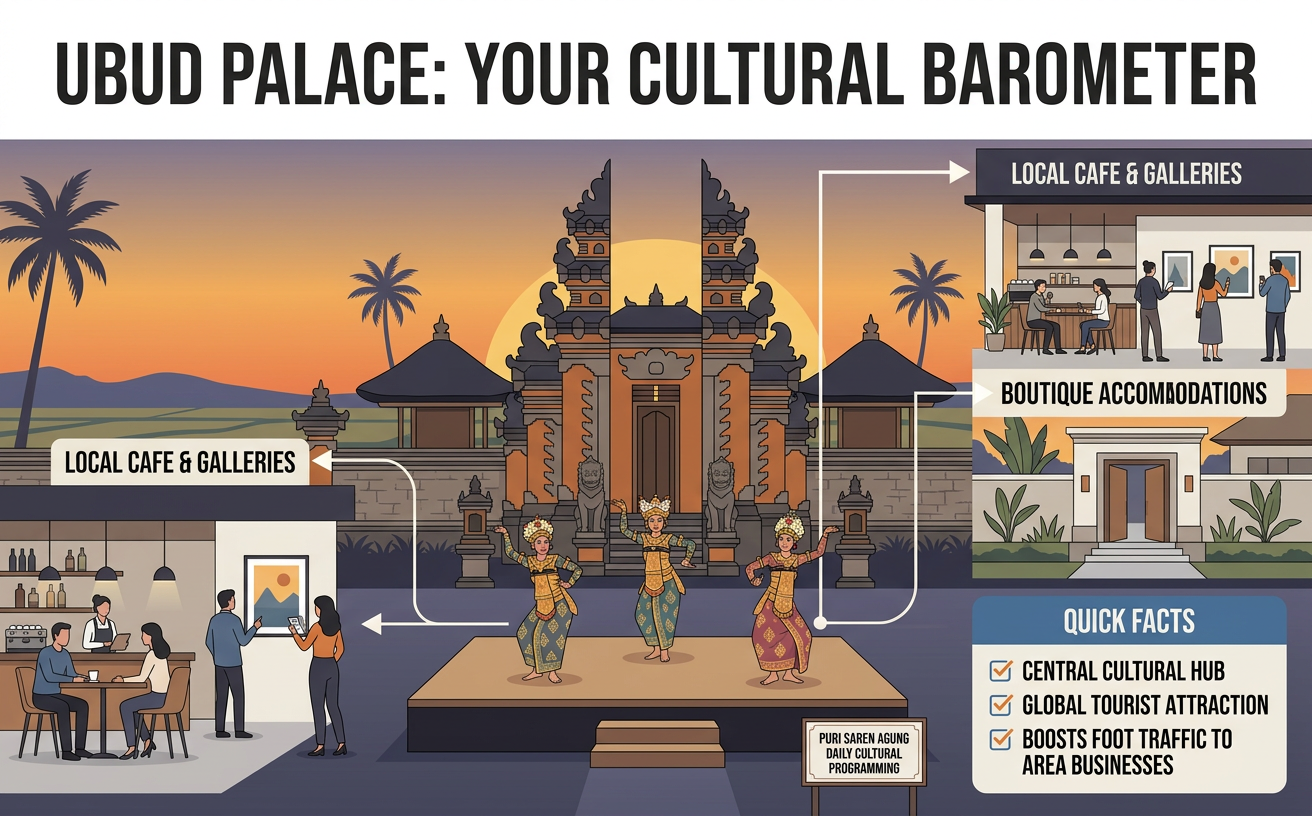
Ubud Palace (Puri Saren Agung) stands as one of Bali’s most recognizable cultural landmarks, combining royal architecture, traditional dance performances, and a central location within Ubud’s pedestrian network. Its significance extends beyond heritage preservation: the palace functions as a staging ground for daily cultural programming that draws both international tourists and local patrons, making it a consistent barometer for cultural tourism demand in central Bali.
As a public-facing heritage site, Ubud Palace influences nearby micro-economies—street vendors, cafes, galleries, and boutique accommodations all benefit when the palace draws strong daily attendance. Its role in curated cultural experiences means fluctuations in visitor numbers can quickly translate into measurable changes in local retail sales, tour bookings, and short-stay occupancy for nearby villas and guesthouses.
Quick facts
- Central cultural hub in Ubud with daily dance performances and ceremonial events.
- Attracts a mix of international tourists, regional visitors, and local attendees.
- Strong influence on foot traffic to surrounding businesses and hospitality providers.
What Could Your Bali Villa Really Earn?
Current Visitor Flow at Ubud Palace: Real-Time Observations and Atmosphere
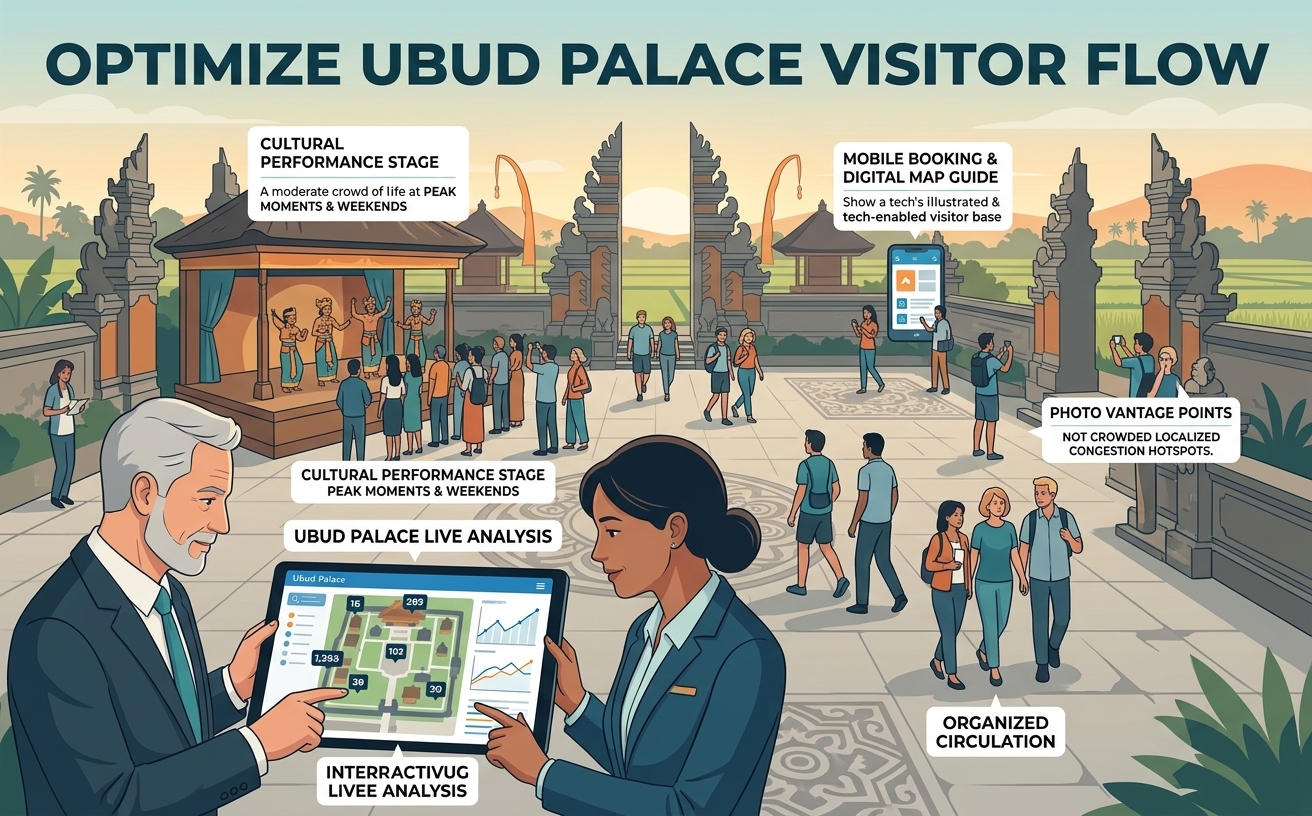
Observed on the ground, visitor flow at Ubud Palace presented a steady, moderate density with peak moments aligned to cultural performance schedules and midday shopping patterns. Foot traffic was composed predominantly of international travelers with visible clusters near performance stages, photo vantage points, and the palace entrance, while walkways remained navigable—indicative of an organized visitor circulation rather than chaotic overcrowding.
Atmospherically, the site maintained a vibrant but controlled tempo: vendors engaged tourists, photographers occupied preferred sightlines, and small tour groups moved through in waves. The presence of families and solo travelers indicated diversified visitation profiles, and the prevalence of mobile bookings and digital maps suggested a tech-enabled visitor base relying on real-time planning and direction.
On-the-ground indicators to watch
- Peak attendance aligns with scheduled performances and weekend windows.
- Vendor activity and concessions sales increase noticeably during clustered footfall.
- Social-media driven photo hotspots concentrate visitors and can create localized congestion.
Impact on Bali’s Tourism and Economy: Why Palace Footfall Matters
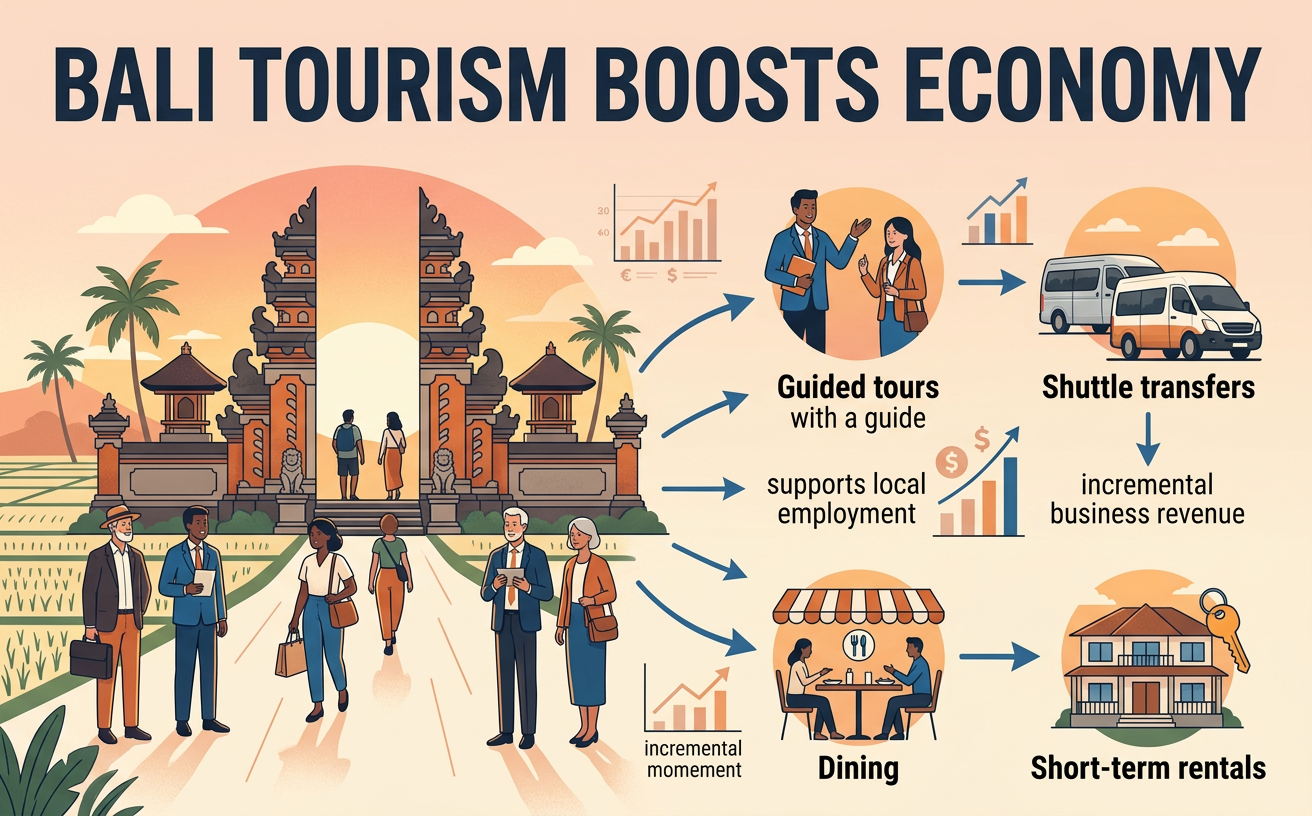
High or sustained visitor traffic at Ubud Palace functions as an early indicator of broader tourism recovery and spending propensity in Ubud. Because the palace anchors culturally driven itineraries, strong visitation suggests elevated demand for related services—guided tours, shuttle transfers, dining, and short-term rentals—thereby supporting local employment and incremental business revenue in adjacent neighborhoods.
Conversely, declines in palace attendance often presage softer retail sales and reductions in ancillary services, which can ripple into occupancy rates for nearby villas and affect seasonal pricing strategies. Monitoring palace footfall alongside booking trends and transportation usage yields a more granular view of economic momentum than headline tourist arrival numbers alone, allowing property managers and investors to adjust pricing, marketing, and operational staffing in near real-time.
Economic signals linked to palace activity
- Correlation between palace attendance peaks and short-stay booking spikes in central Ubud.
- Vendor and F&B revenues rise with sustained visitor density—useful for revenue forecasting.
- Localized congestion patterns can influence guest satisfaction and repeat visitation rates.
Engagement Section: Actionable Next Steps for Property Owners and Investors
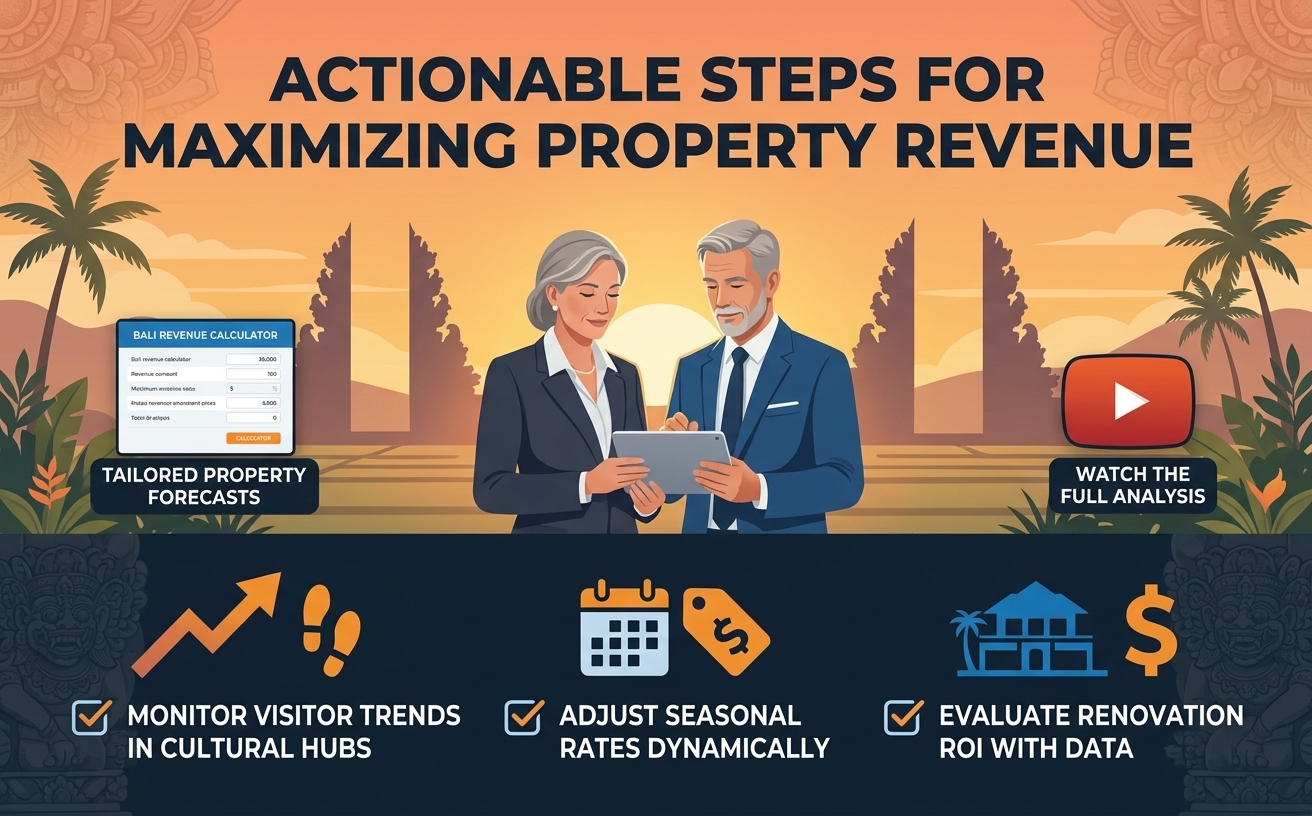
For property owners and investors, the observable visitor trends at Ubud Palace provide actionable context for revenue optimization and investment timing. When cultural hubs like Ubud Palace report steady demand, consider dynamic pricing, targeted short-term rental promotions, and partnership opportunities with local tour operators to capture transient visitor spend. Conversely, lower observed footfall suggests a focus on niche marketing (wellness retreats, longer-stay packages) and cost control.
To translate localized visitation patterns into property-level forecasts, use the Free Bali Property Revenue Calculator to generate a data-informed projection tailored to your villa’s type, area, and bedroom count: Free Bali Property Revenue Calculator. For a full on-the-ground perspective and complete context for these observations, view the full episode on YouTube here: https://www.youtube.com/embed/GBWgXOOIcUw.
Checklist for owners and investors
- Compare your historical occupancy to current palace footfall trends to spot demand shifts.
- Adjust marketing channels to target observed visitor profiles (families, solo travelers, cultural tourists).
- Use revenue calculator outputs to set seasonal rates and evaluate renovation ROI.
Key Takeaways
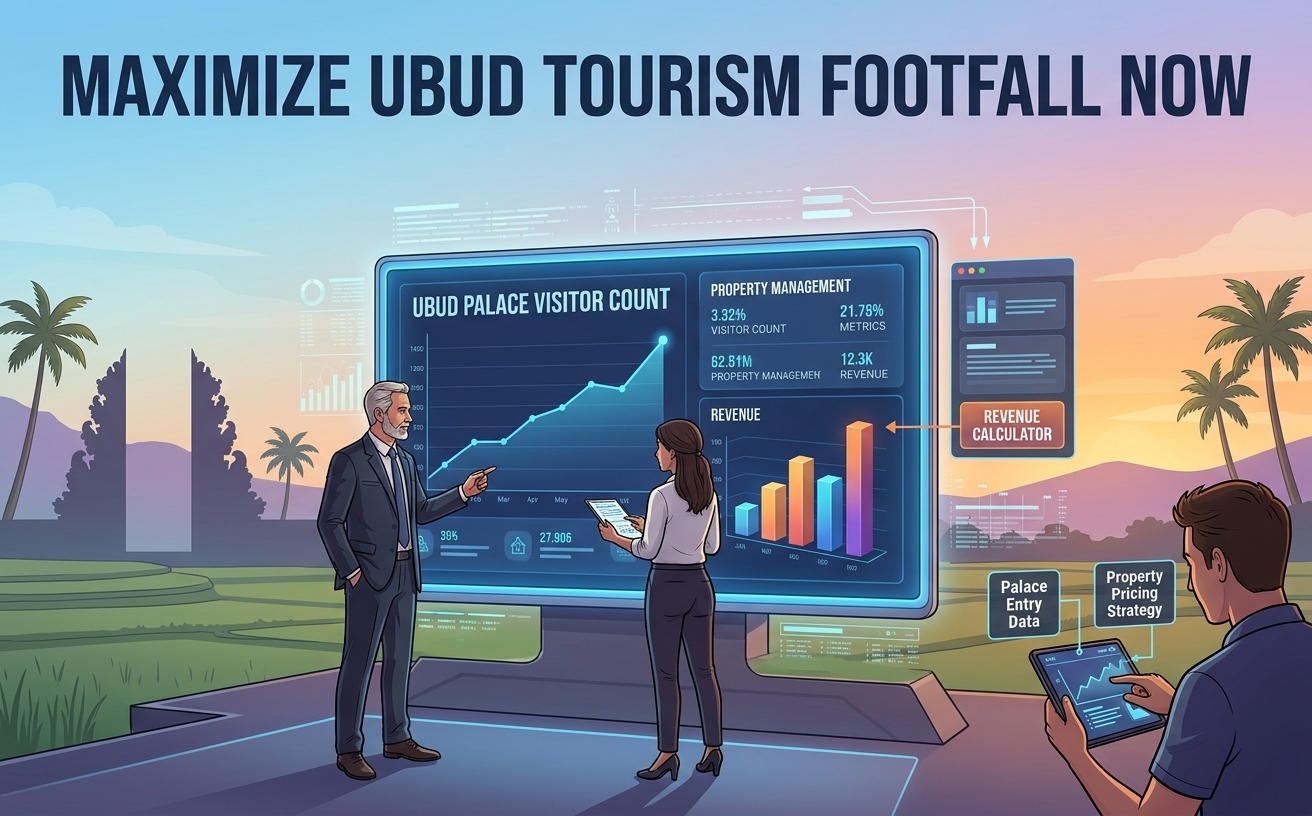
- Ubud Palace remains a core cultural draw; its footfall provides a timely signal for local tourism health.
- Current observations show steady, organized visitation—beneficial for nearby hospitality revenues and retail sales.
- Property owners should align pricing and promotions with palace performance windows to maximize yield.
- Use the Free Bali Property Revenue Calculator to convert on-the-ground trends into property-specific revenue forecasts.
Final word: Ubud Palace’s daily rhythms offer more than cultural value—they are a practical economic indicator for central Ubud. For owners and investors, quick alignment of pricing, product offerings, and local partnerships to observed visitor patterns can turn cultural footfall into measurable revenue uplift.
Jason, Business Journalist at Bukit Vista
You’re a property owner? Wondering What Could Your Bali Villa Really Earn?
Get a data-driven revenue projection based on your property type, area, and bedroom count. Discover your villa’s true earning potential in Bali.