

The #1 Reason NOT to Invest in Remote Bali
We are unpacking content from Bali Business Review on YouTube, focusing on the principal data-driven reason to avoid investing in remote Bali. This report highlights occupancy and revenue shortfalls, accessibility limitations, and market dynamics supported by demand and performance metrics referenced in the original material.
Hi, I’m Jason, a Business Journalist at Bukit Vista, and I’ll be unpacking analysis from Bali Business Review. Today, we’ll dive into the risks of investing in remote Bali properties to offer clear, data-driven insights.
Main Reason: Underperformance Driven by Low Demand and Occupancy
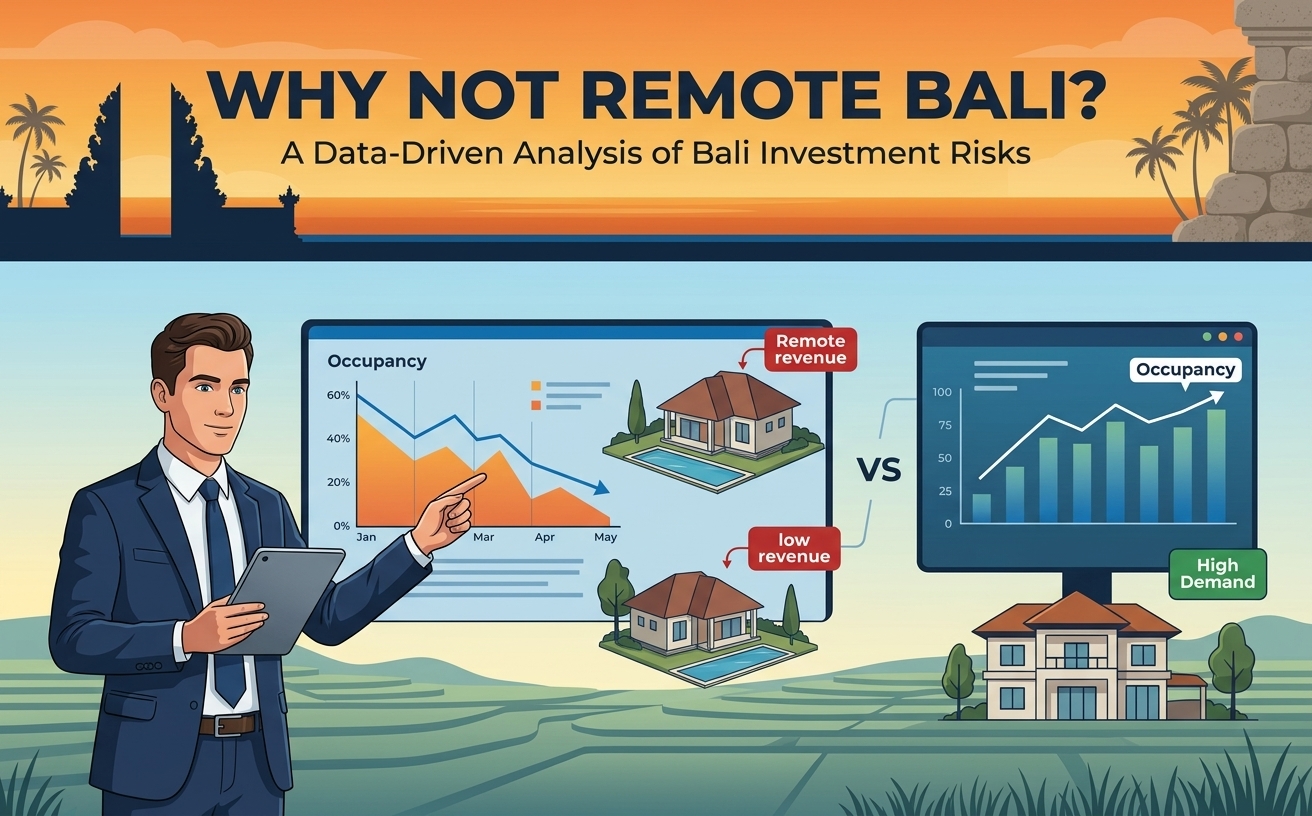
The most compelling reason to be cautious about investing in remote Bali is predictable underperformance caused by limited guest demand and lower occupancy rates. Remote locations tend to draw fewer spontaneous or short-stay visitors, which compresses average occupancy and forces property owners to rely on longer booking lead times or discounted nightly rates to attract guests. When demand is thin, fixed costs such as maintenance, utilities, and management fees eat into margins and prolong the time to reach stable cash flow targets.
Data patterns from comparable markets show that properties in remote areas often experience seasonally exaggerated downtimes and slower recovery during off-peak months. This leads to greater revenue volatility and increased sensitivity to market shifts—factors that compound the investment risk for owners expecting near-term returns. For a direct reference, the original analysis can be viewed at this video for the empirical examples and case comparisons presented by Bali Business Review.
Key contributing factors
- Lower walk-in and short-stay demand compared to central tourist hubs.
- Higher reliance on niche marketing and longer booking windows.
- Revenue volatility due to seasonal and accessibility-based fluctuations.
What Could Your Bali Villa Really Earn?
Local Market Insights: Supply, Demand, and Price Pressure
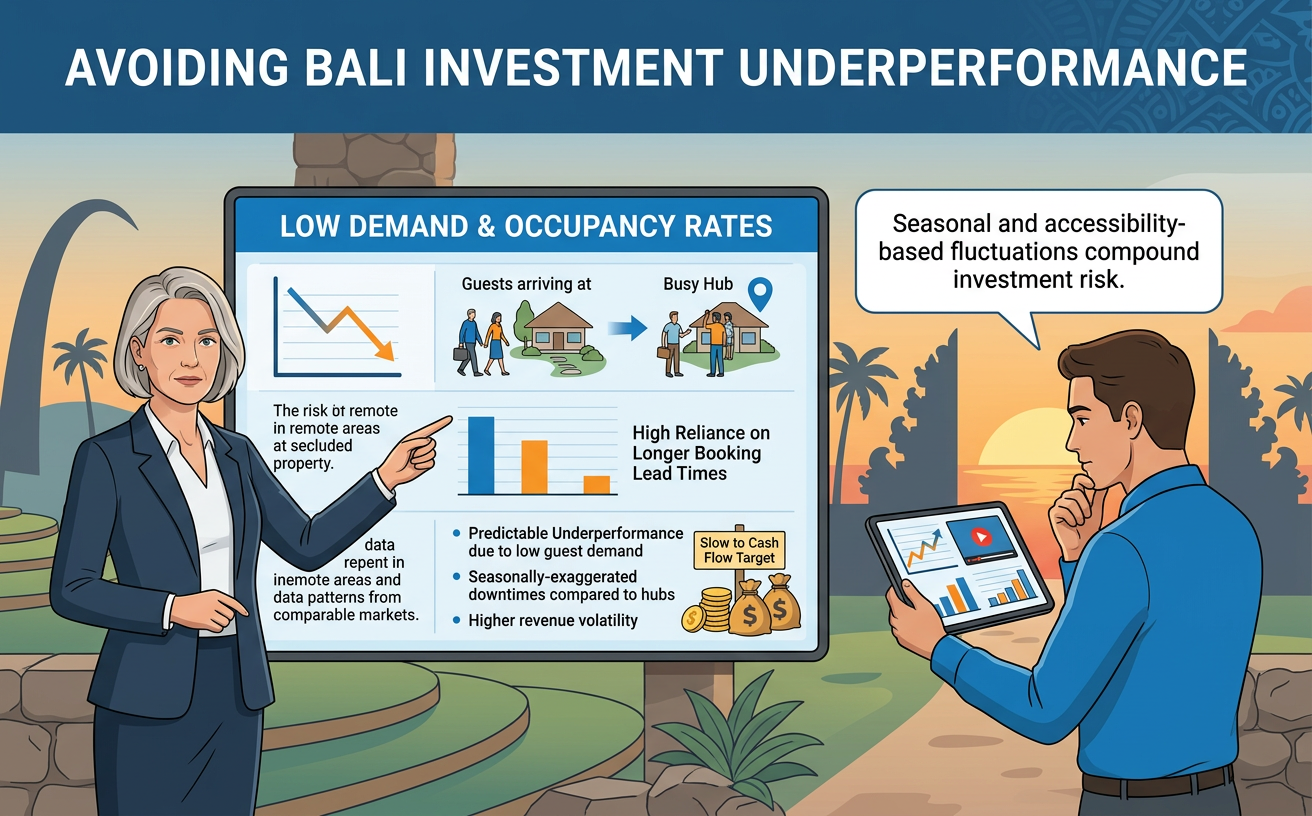
The Bali real estate market has been shifting: supply in peripheral areas has grown while demand has concentrated in accessible hotspots. Remote developments that were once attractive for lower acquisition costs now face increased competition and limited rental markets. Investors who prioritize yield need to weigh locational demand metrics rather than solely purchase price arbitrage.
Key market indicators to monitor include local occupancy comparables, ADR (average daily rate) trends, and length-of-stay patterns. Remote properties often show lower ADR and shorter peak windows, which reduces annualized revenue potential. These dynamics are reinforced by anecdotal and data-driven examples presented by Bali Business Review, which underscore the need for realistic revenue modelling before acquisition.
Market signals to watch
- Comparative occupancy and ADR vs. nearby hubs.
- New supply pipeline and promotional pricing from competitors.
- Visitor profile shifts (long-stay vs. short-stay travelers).
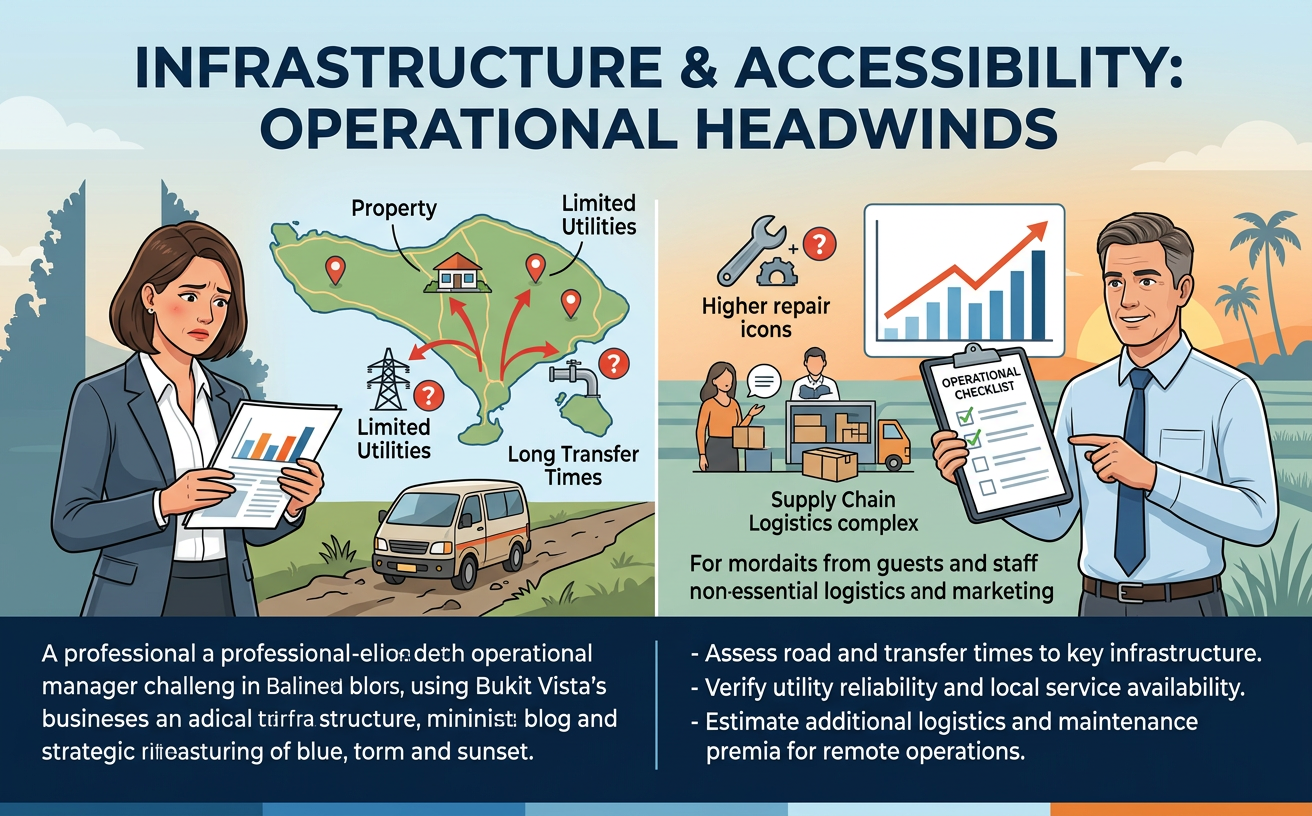
Infrastructure and Accessibility: Operational Headwinds
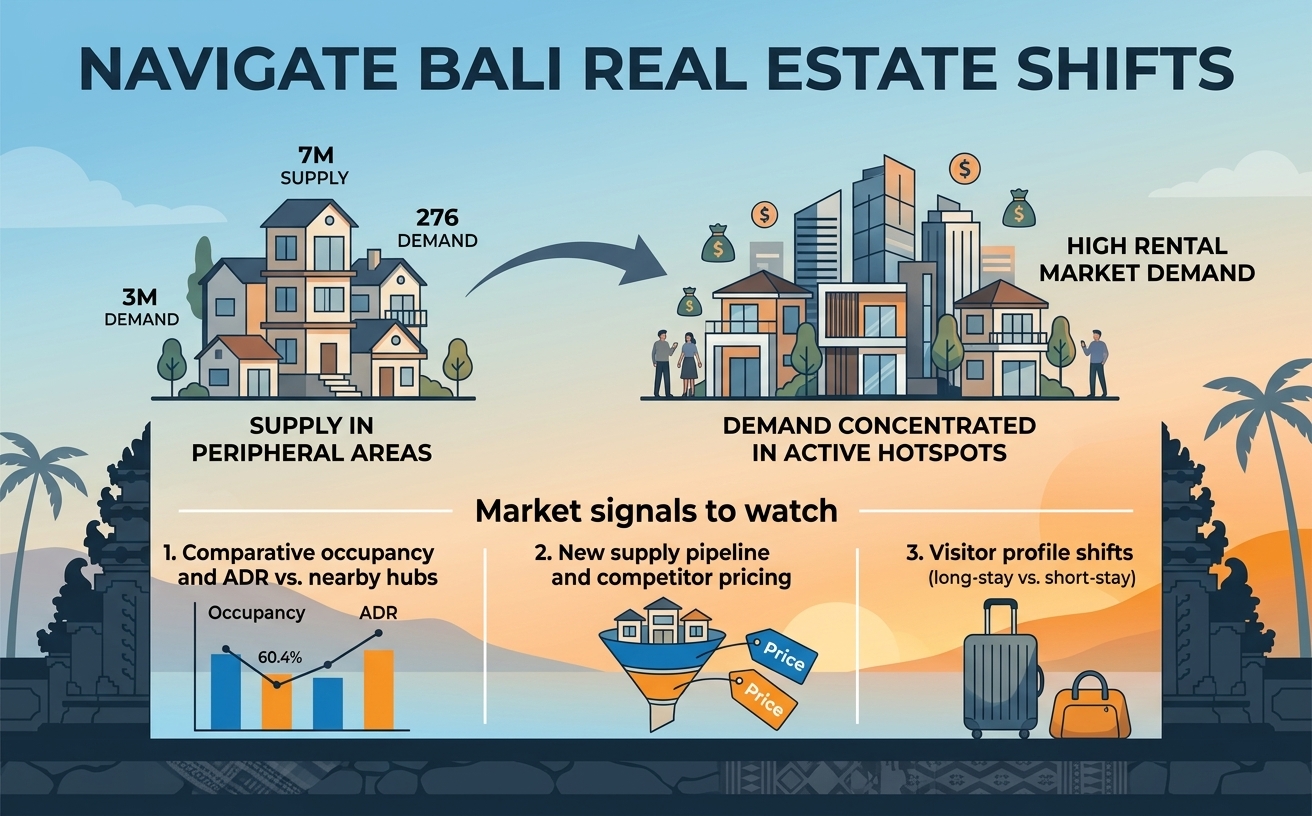
Remote Bali properties frequently confront tangible infrastructure and logistical challenges that directly affect guest experience and operational costs. Limited road quality, longer transfer times from airports, and inconsistent utilities increase friction for travelers and raise maintenance demands for owners. These issues can reduce repeat visitation rates and lengthen vacancy periods.
Operational impacts include higher transportation-related guest complaints, increased scope for unexpected repair costs, and additional marketing expenses to overcome perceived inconvenience. From a management perspective, staffing and supply chain access also become more complex and costly when properties are far from service hubs, further reducing net operating income.
Operational checklist
- Assess road and transfer times to key infrastructure.
- Verify utility reliability and local service availability.
- Estimate additional logistics and maintenance premia for remote operations.
Strategic Considerations: How to Evaluate Remote Property Investments
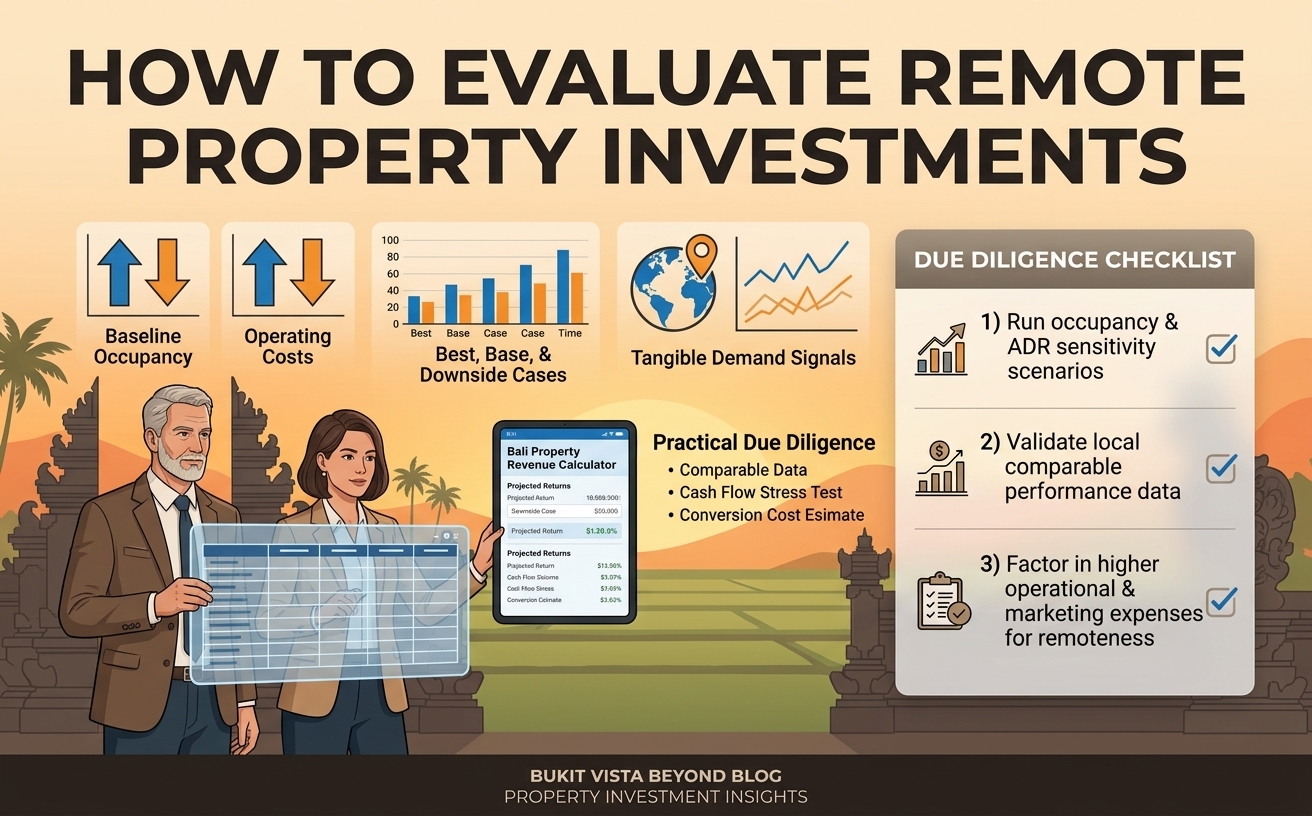
Before committing capital, investors should conduct a rigorous revenue and sensitivity analysis that accounts for lower baseline occupancy, longer marketing lead times, and elevated operating costs. Scenario modelling—best case, base case, and downside—helps quantify time-to-profitability and capital buffers required for underperformance. A location-first KPI approach is essential: prioritize tangible demand signals over acquisition price alone.
Practical due diligence includes confirming comparable performance in similar micro-locations, stress-testing cash flow under reduced ADR and occupancy, and estimating conversion costs to attract guests (marketing, transfers, discounts). Use of a revenue modeling tool like the Bali Property Revenue Calculator can help translate these inputs into realistic projections and identify whether projected returns justify the risk profile for a remote property.
Due diligence checklist
- Run occupancy and ADR sensitivity scenarios.
- Validate local comparable performance data.
- Factor in higher operational and marketing expenses for remoteness.
Actionable Steps for Potential Investors
Start with a location-driven financial model: gather local comparables, estimate realistic occupancy curves, and stress-test for a 20–40% revenue shortfall scenario. Complement quantitative analysis with on-the-ground validation—assess road access, service availability, and the local supply of tourist amenities that influence guest choice. If numbers indicate marginal returns, reconsider or negotiate better terms to offset identified risks.
For practical assessment, leverage tools that convert location and property attributes into revenue projections. Bukit Vista offers a Bali Property Revenue Calculator that helps translate micro-location, bedroom count, and property type into expected earnings and vacancy assumptions. Use the calculator and cross-reference outputs with the analytical points discussed and the original material at this video to form a comprehensive view.
Next steps
- Use the Bali Property Revenue Calculator to generate a baseline projection.
- Conduct a site visit and verify infrastructure and local demand.
- Prepare contingency financing and a phased investment plan.
Key Takeaways
- Primary risk: Remote Bali investments often underperform due to low demand and occupancy volatility.
- Market reality: Supply growth in peripheral areas and concentrated demand in hubs compress revenue potential for remote properties.
- Operational costs: Infrastructure, logistics, and service access materially increase expenses and reduce net returns.
- Due diligence: Run realistic, stress-tested revenue scenarios before acquisition and validate with local comparables.
- Tool: Use the Bali Property Revenue Calculator to quantify expected performance and identify downside risks.
Final word: investing in remote Bali can still succeed, but only with conservative revenue assumptions, rigorous on-the-ground validation, and contingency planning. Prioritize demand-driven metrics over purchase price, stress-test projections, and use revenue tools to avoid costly surprises. For deeper numerical comparison and to generate a property-specific projection, run the Bali Property Revenue Calculator and compare outputs with the original analysis at this video.
Jason, Business Journalist at Bukit Vista