


Cash-Only Policies and Famous Restaurants: Revenue, Reputation, and the Path Forward
Unpacking content from Bali Business Review on YouTube, this report examines how a high-profile restaurant’s decision to operate cash-only can influence sales, customer flow, and brand equity. Key operational and market signals indicate that payment strategy is now a strategic lever affecting margins, guest access, and competitive positioning.
Hi, I’m Jason, a Business Journalist at Bukit Vista, and I’ll be unpacking analysis from Bali Business Review. Today, we’ll dive into cash-only policies in famous restaurants to offer clear, data-driven insights.
Customer Access and Direct Revenue Impact

Payment acceptance directly shapes who can transact and how often they convert. A cash-only stance reduces accessibility for tourists and locals who prefer cards or contactless payments, effectively narrowing the pool of potential guests and lowering impulse purchases. In markets where card usage and mobile wallets dominate, insisting on cash can reduce average ticket size and frequency of repeat visits because customers will choose competitors with more flexible payment options.
Pressure Points for Customer Access
- Lost spend from card-preferring tourists and business diners.
- Friction at point-of-sale leading to abandoned purchases.
- Limitations for delivery, online orders, and reservations requiring card holds.
What Could Your Bali Villa Really Earn?
Operational Costs, Cash Handling Risks, and Compliance
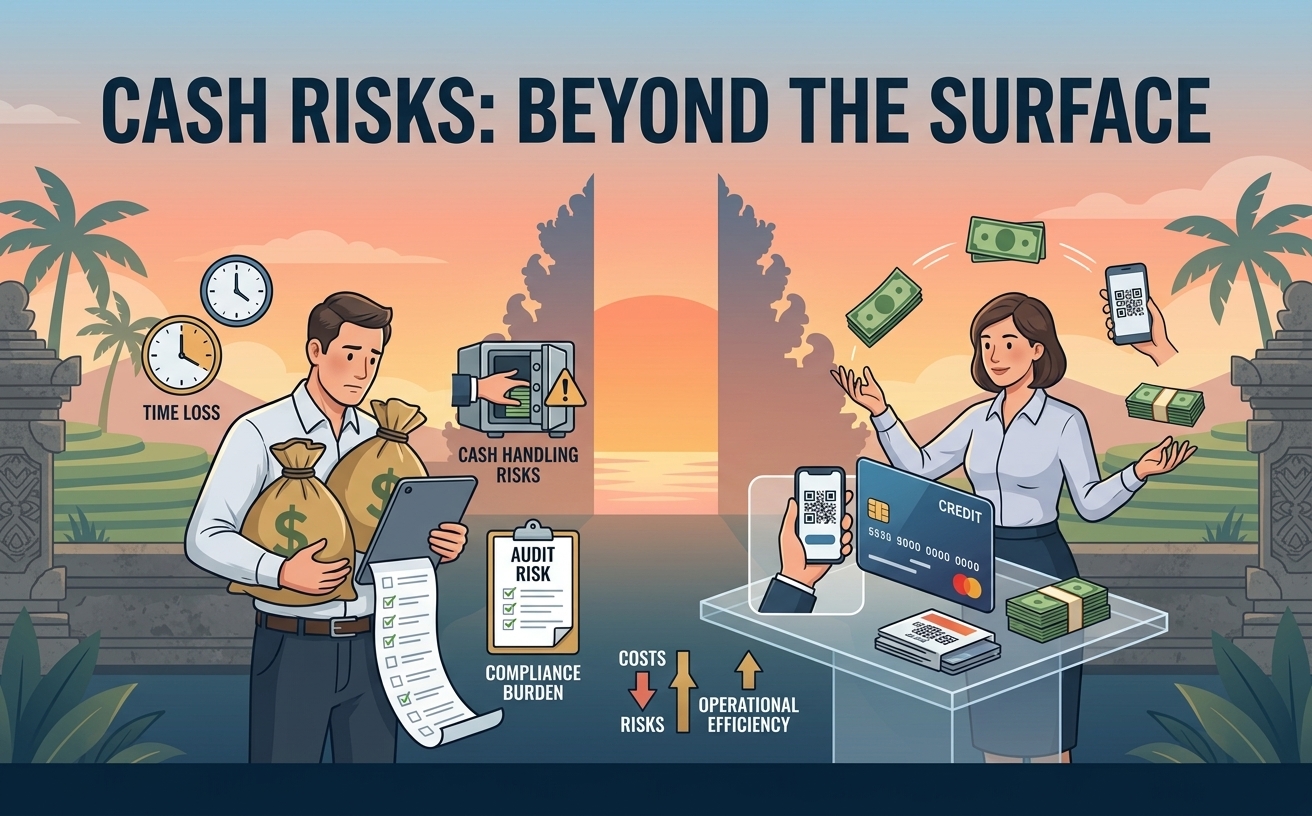
Running a cash-only operation shifts costs rather than eliminating them: increased staff time for handling and reconciling cash, secure storage, and frequent bank deposits add operational overhead. Cash-heavy businesses face heightened theft and employee fraud risks, and they must invest in tighter controls and insurance. Additionally, compliance with tax authorities and transparent reporting can be more complex without integrated digital payment records, exposing businesses to audit risk and administrative burden.
Operational Mitigations
- Implement robust cash controls and dual sign-off processes.
- Adopt hybrid reporting systems to reconcile cash with digital records.
- Budget for security, insurance, and armored transport where applicable.
Brand Perception, Customer Experience, and Marketing Consequences

A high-profile restaurant’s payment policy sends a signal about its brand openness and modernization. Cash-only messaging can be framed as artisanal or traditional, which may appeal to a niche audience, but it risks alienating younger demographics who expect seamless, digital-first experiences. Social media and review platforms amplify customer frustration when payment expectations aren’t met, potentially producing negative word-of-mouth that is costly to reverse.
Brand and Experience Checklist
- Assess target demographics’ payment preferences before policy changes.
- Communicate payment policies clearly at booking, on the website, and at entry points.
- Track sentiment metrics post-policy change to measure reputational impact.
What Could Your Bali Villa Really Earn?
Alternatives and Practical Solutions for Restaurants
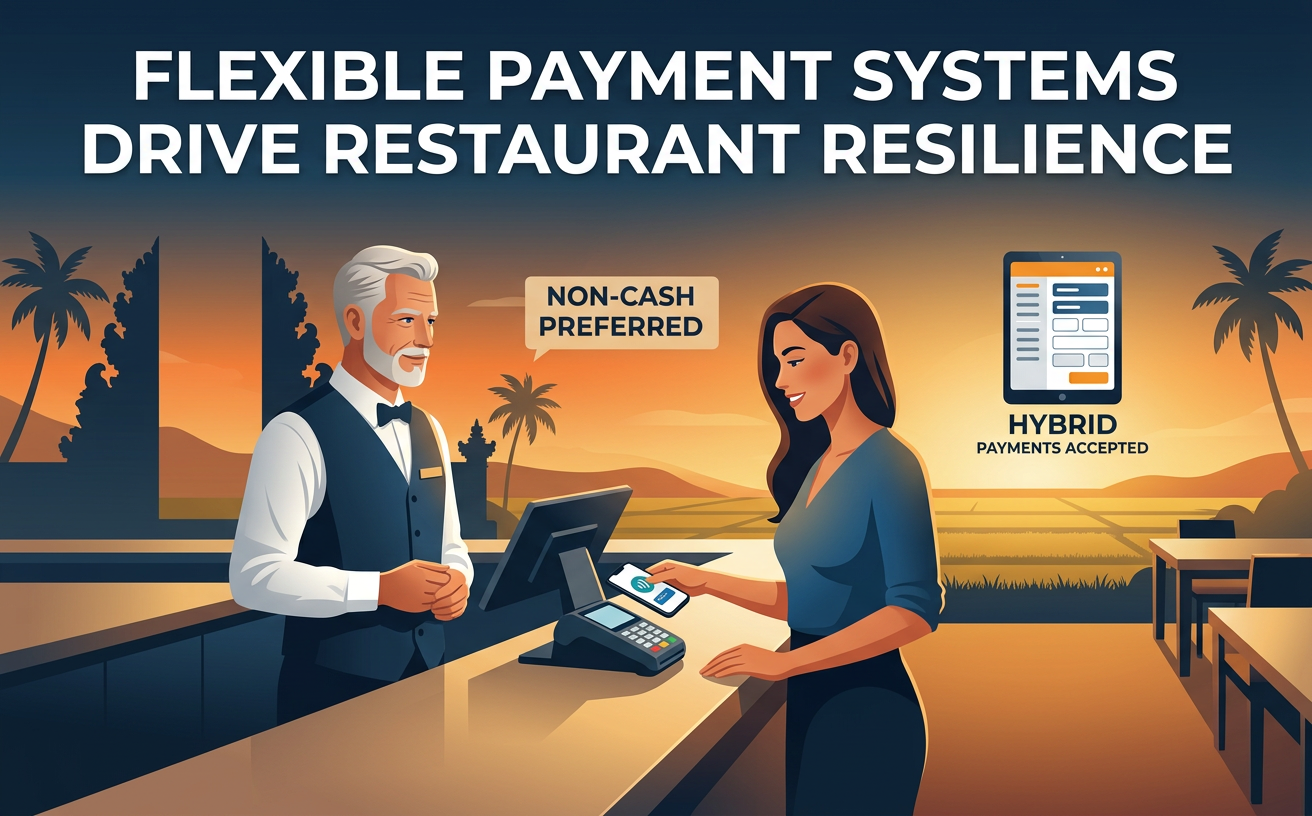
Most resilience comes from flexible, hybrid payment models that accept cash while integrating card and digital wallets for broader reach. Modern point-of-sale systems offer low-cost card acceptance, contactless tap, QR code payments, and simplified reconciliation that can reduce perceived merchant fees through optimized pricing plans. For restaurants concerned about fees or fraud, targeted approaches—such as minimum card spend, surcharges displayed transparently where legal, or membership wallets—provide compromise solutions without fully closing off customers who prefer non-cash options.
Actionable Alternatives
- Adopt a hybrid POS with offline fallback and clear fee structures.
- Use booking platforms that allow card holds and reduce no-shows.
- Consider loyalty or membership programs to offset processing costs with repeat business.
Key Takeaways
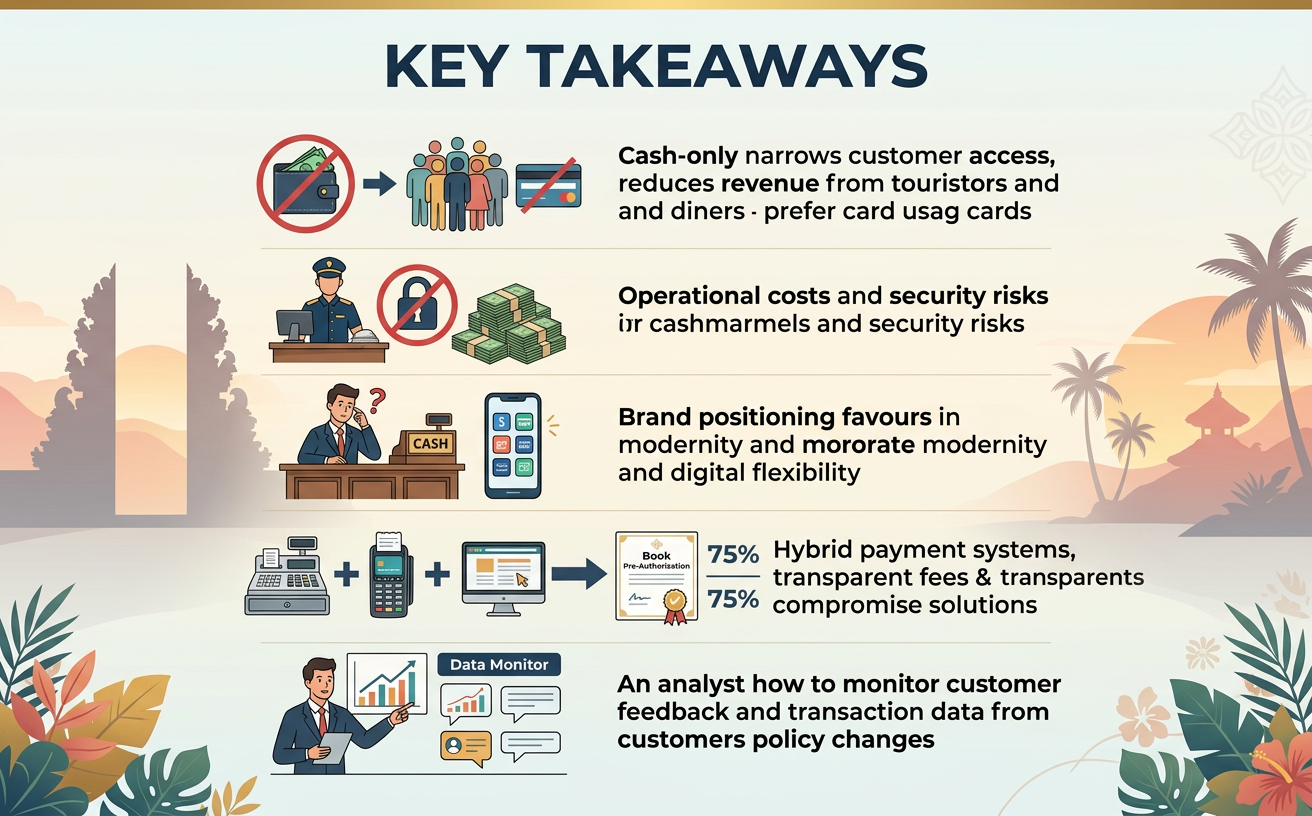
- Cash-only policies can narrow customer access, reducing revenue from tourists and card-preferring diners.
- Operational costs and security risks often outweigh perceived savings from avoiding payment fees.
- Brand positioning matters: tradition can be a selling point, but modern expectations favor payment flexibility.
- Hybrid payment systems, transparent fees, and booking pre-authorizations offer practical compromise solutions.
- Monitor customer feedback and transaction data after any policy change to measure business impact quickly.
Final word: payment policy is a strategic decision that affects revenue, operations, and brand perception. For well-known restaurants, the safest commercial path balances tradition with accessibility—deploying hybrid payment solutions, clear communication, and data-led monitoring to protect both the guest experience and the bottom line.
Jason, Business Journalist at Bukit Vista
You’re a property owner? Wondering What Could Your Bali Villa Really Earn?
Get a data-driven revenue projection based on your property type, area, and bedroom count. Discover your villa’s true earning potential in Bali.