


Same Price, Double The Bali Villa ROI? Data-Driven Comparison of 2BR vs 4BR Investments
Unpacking analysis from Bali Business Review on YouTube: two Bali properties priced identically show starkly different gross returns — a new 2-bedroom projecting an 8.3% gross ROI (315M IDR/year) versus a 4-bedroom delivering 16.3% gross ROI (621M IDR/year). These headline figures highlight revenue potential but omit deductions for operational costs, taxes, management and OTA fees that materially affect net yield.
Hi, I’m Jason, a Business Journalist at Bukit Vista, and I’ll be unpacking analysis from Bali Business Review. Today, we’ll dive into same-price Bali villa ROI comparison to offer clear, data-driven insights.
Head-to-Head ROI Comparison: 2-Bedroom vs 4-Bedroom

The raw comparison is stark: a brand-new 2-bedroom villa projects an 8.3% gross ROI (approximately 315M IDR annually) while a similarly priced 4-bedroom property projects a 16.3% gross ROI (about 621M IDR annually). Gross ROI here is calculated from projected annual revenue divided by purchase price and highlights top-line revenue performance across different asset profiles.
For investors, the difference is not just percentage points but strategic implications: higher bedroom count often unlocks more nightly revenue, group bookings, and premium pricing, which explains the doubled gross yield despite identical entry cost. However, gross ROI does not equal net cash flow — understanding expense structure is essential before assuming the 4-bedroom is always superior for every owner.
Key numerical snapshot
- 2-bedroom gross ROI: 8.3% (~315M IDR/year)
- 4-bedroom gross ROI: 16.3% (~621M IDR/year)
- Same purchase price, different revenue and utilization profiles
What Could Your Bali Villa Really Earn?
Operational Costs, Taxes, and Management Fees: The Real Bottom Line
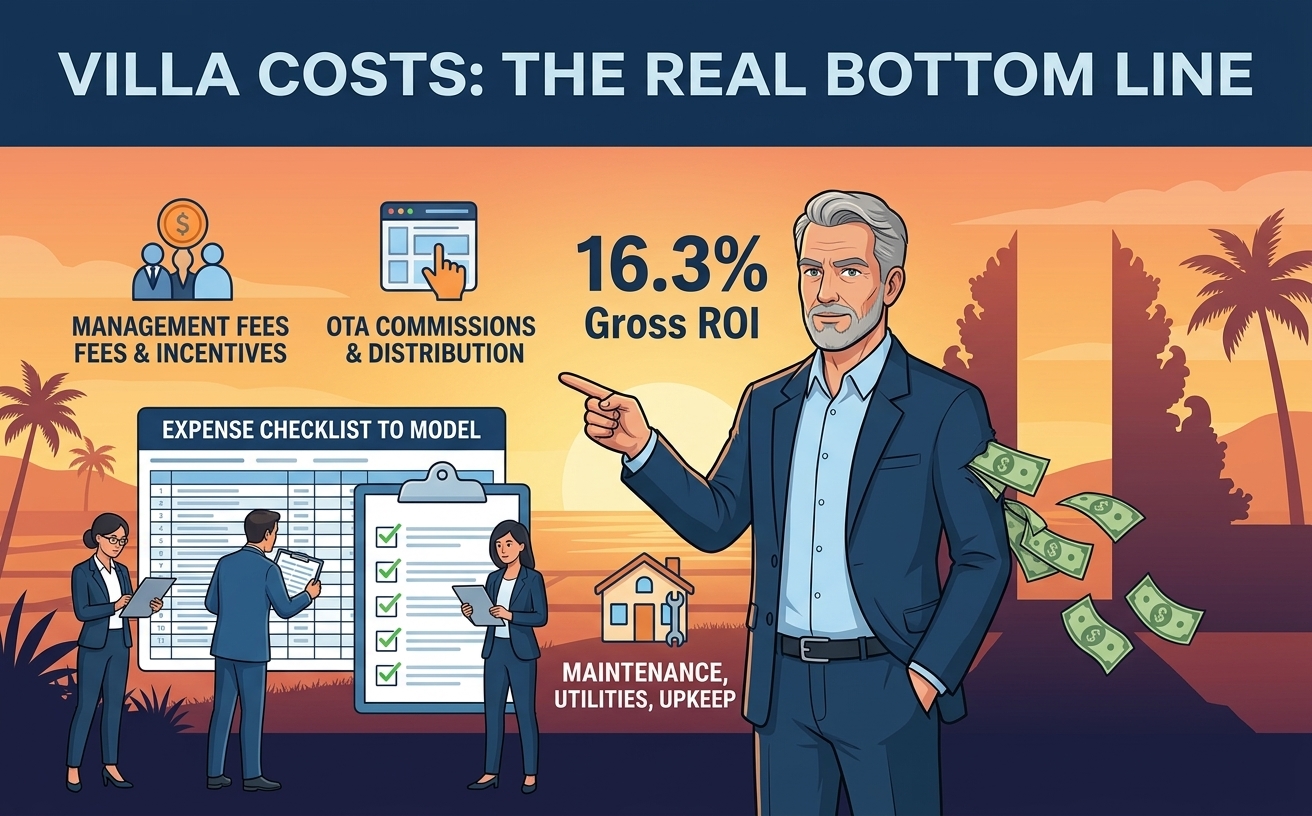
Gross ROI figures presented do not deduct operational costs, local taxes, villa management fees, utilities, maintenance or OTA commissions — all of which reduce net returns. Typical management contracts, service staffing, cleaning, and marketing fees can slice several percentage points from gross ROI and should be modelled into a detailed financial plan prior to purchase.
Taxes and compliance in Bali (government levies, business permits, VAT considerations) further impact net cash flow and investor yield. A 16.3% gross ROI can narrow substantially once these recurring costs are applied; conversely, efficient operations and smart tax planning can improve the net position of either asset.
Expense checklist to model
- Management fee structure and performance incentives
- OTA commissions and distribution costs
- Property taxes, permits, and local levies
- Maintenance, utilities, and seasonal upkeep
Revenue Drivers and Market Positioning for Bali Villas
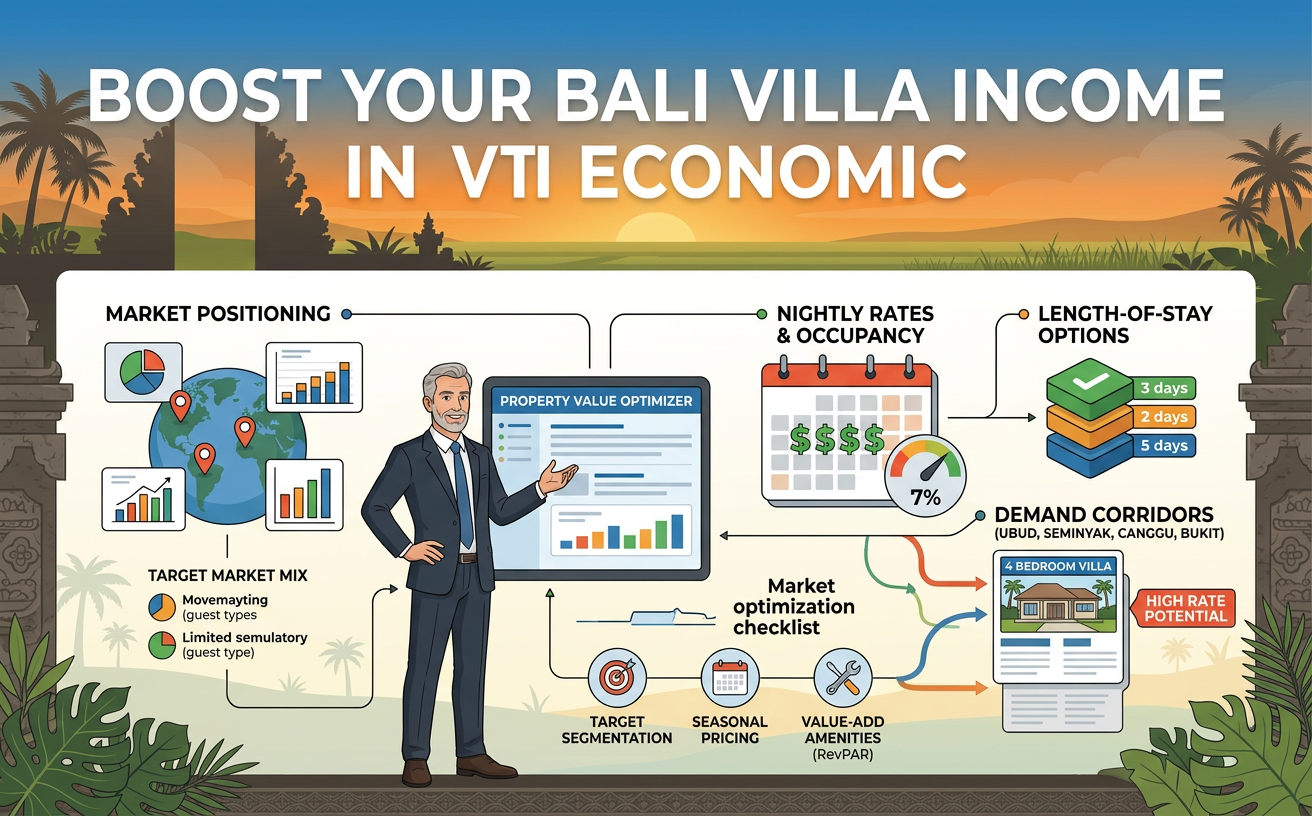
Revenue performance depends on positioning: nightly rates, occupancy patterns, length-of-stay, and target markets (families vs couples, long-stay guests, events). A 4-bedroom often benefits from higher average nightly rates and group demand, but also faces higher vacancy risks in low season and larger upkeep costs.
Market data suggests matching asset profile to demand corridors (Ubud, Seminyak, Canggu, Bukit) and marketing channels to maximize Bali Villa ROI. Investment decisions should weigh upside from premium rates against variable costs and operational complexity.
Market optimization checklist
- Target guest segmentation and channel mix
- Seasonal pricing strategy and minimum-stay policies
- Value-add amenities that improve RevPAR
Professional Appraisals and Business Plans: Reduce Uncertainty

To convert gross ROI into reliable net projections, use a professional property appraisal and a detailed business plan that models all cost lines, taxes, and realistic occupancy scenarios. Bukit Vista offers expert appraisals and business plans that translate headline returns into investor-ready cash flow forecasts, helping you decide between a 2-bedroom and a 4-bedroom based on true bottom-line outcomes.
Engaging a professional appraisal reduces assumptions, surfaces hidden costs, and improves negotiation leverage at purchase. For investors serious about optimizing Bali Villa ROI and long-term Property Investment performance, a tailored business plan is essential.
How a business plan helps
- Detailed P&L with operational expense lines
- Sensitivity analysis across occupancy and rate scenarios
- Clear net ROI and payback timelines for decision-making
Key Takeaways
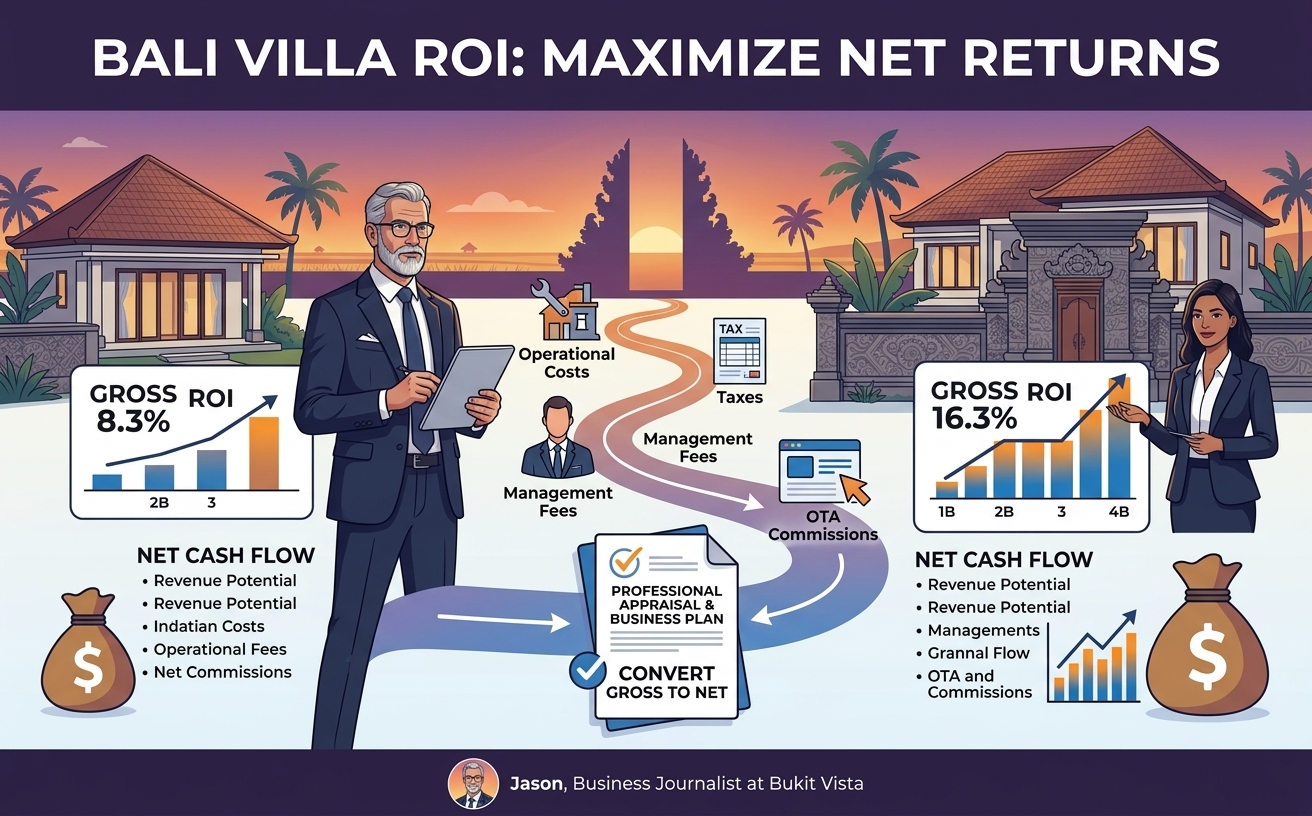
- Bali Villa ROI headline figures (8.3% vs 16.3%) show revenue potential but are gross metrics, not net cash flow.
- Operational costs, taxes, management fees and OTA commissions materially reduce gross ROI — model them before investing.
- 4-bedroom units can deliver higher gross yields but come with greater operating complexity and costs.
- Use professional property appraisal and a detailed business plan to convert gross ROI into accurate net projections.
- For prudent Property Investment in Bali Villas, align asset profile with market demand and operational capability.
Final word: identical purchase prices can produce very different financial outcomes. The 4-bedroom’s doubled gross yield is compelling, but only a full appraisal and business plan will reveal whether it truly provides superior net returns for your portfolio. For accurate projections and an investor-ready plan, start with a professional appraisal and detailed financial model.
Jason, Business Journalist at Bukit Vista