


Is Lombok Better Than Bali? Investment Trade-offs Between Stability and Growth
We’re unpacking content from Bali Business Review on YouTube to compare investment fundamentals between Bali and Lombok. Bali functions as a massive global gateway delivering high-volume stability and consistent daily occupancy, while Lombok represents a secondary market with stronger capital-appreciation potential but more pronounced seasonal traffic swings.
Hi, I’m Jason, a Business Journalist at Bukit Vista, and I’ll be unpacking analysis from Bali Business Review. Today, we’ll dive into Bali vs Lombok property investment to offer clear, data-driven insights.
Market Snapshot: Bali’s Scale and Operational Stability

Bali operates as a global tourism gateway with millions of passengers flowing through annually, creating a broad demand base across short-stay, long-stay, and repeat-visitor segments. That scale translates into reliable daily occupancy for many property types, particularly in established tourist hubs and near major transport nodes. Operationally, Bali benefits from diversified demand — leisure, digital nomads, weddings, and conferences — which smooths revenue volatility and supports consistent cashflow for professional operators. For investors seeking immediate income predictability, Bali’s market depth reduces single-point demand risk and simplifies yield forecasting.
Key Bali characteristics
- High international visibility and continuous visitor arrivals.
- Diversified segment demand (leisure, remote work, events).
- Stronger short-term rental infrastructure and distribution channels.
What Could Your Bali Villa Really Earn?
Lombok’s Growth Trajectory and Long-Term Upside
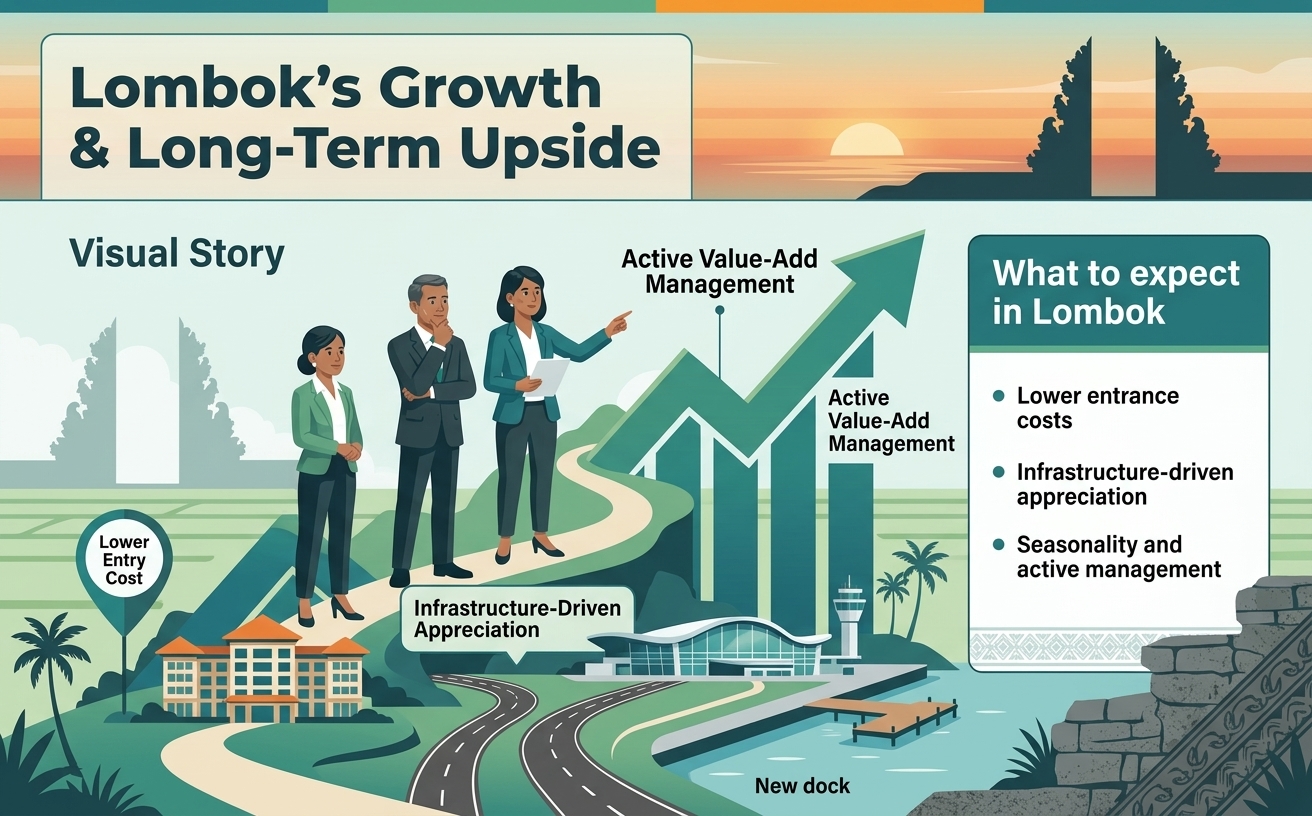
Lombok is a rising secondary market with meaningful upside driven by infrastructure improvements and increasing international interest. As a less mature market, Lombok offers comparative land and acquisition price advantages that can translate into capital appreciation as connectivity and amenities expand. However, growth in Lombok typically comes with more pronounced seasonality: peak windows can generate concentrated revenue but off-peak periods may be leaner without targeted marketing and diversified offerings. Investors attracted to Lombok should plan for a multi-year horizon and active value-add management to capture appreciation.
What to expect in Lombok
- Lower entry costs and higher relative upside potential.
- Infrastructure-driven appreciation as airports, roads, and hospitality mature.
- Greater sensitivity to seasonal inbound flows and niche demand.
Seasonality and Occupancy Dynamics: Revenue Implications
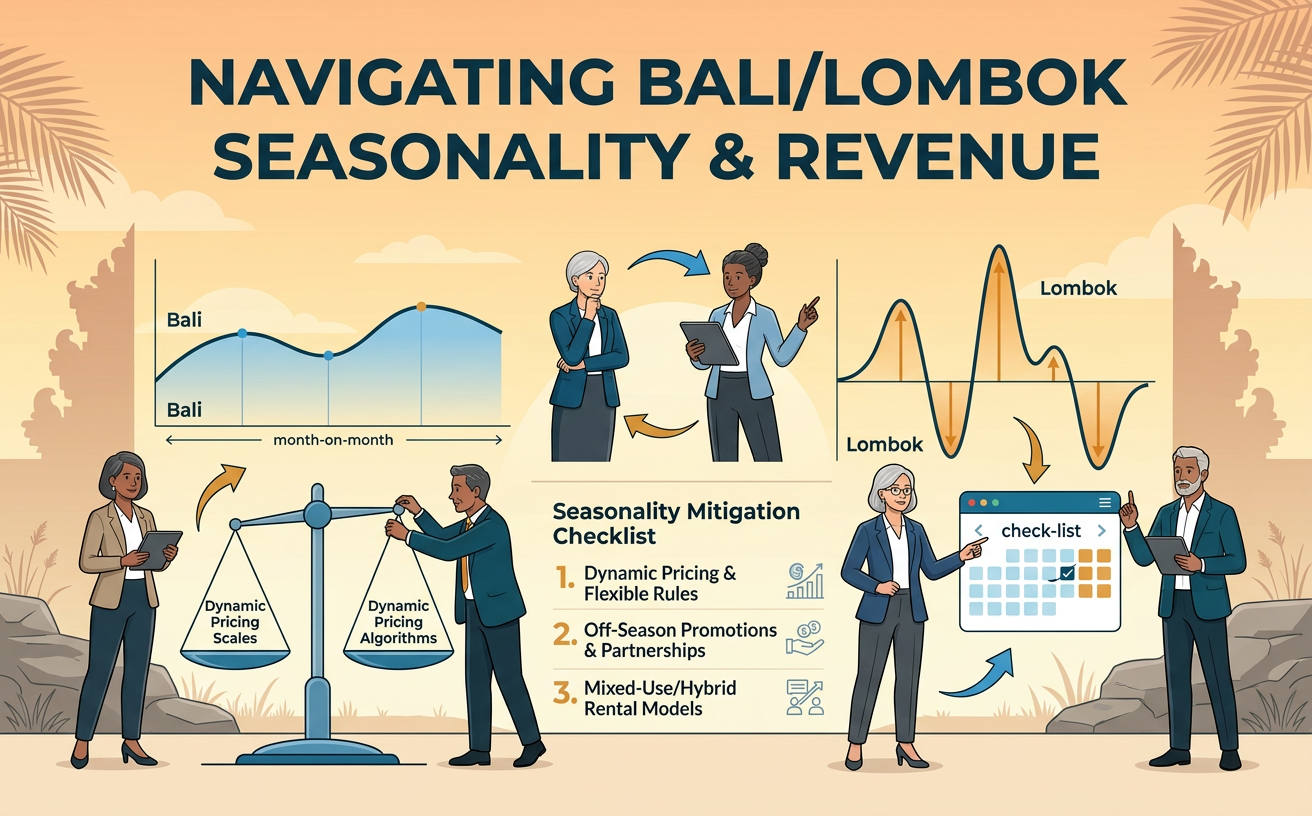
Seasonality is a defining operational variable differentiating Bali and Lombok. Bali’s established calendar of steady arrivals and repeat visitation patterns tempers seasonal troughs, enabling more stable monthly occupancy and predictable revenue management. Lombok exhibits sharper peaks and deeper troughs, which can amplify revenue in high season but create extended low-demand periods that require deliberate mitigation strategies. Effective yield management in Lombok often includes dynamic pricing, targeted promotions during shoulder months, and diversified revenue streams like long-term rentals or experiences to bridge lean periods.
Seasonality mitigation checklist
- Implement dynamic pricing and flexible minimum-stay rules.
- Develop off-season promotions and partnerships with local tour operators.
- Consider mixed-use or hybrid models (short-term + long-term rentals).
What Could Your Bali Villa Really Earn?
Choosing a Strategy: Stability vs Long-Term Growth
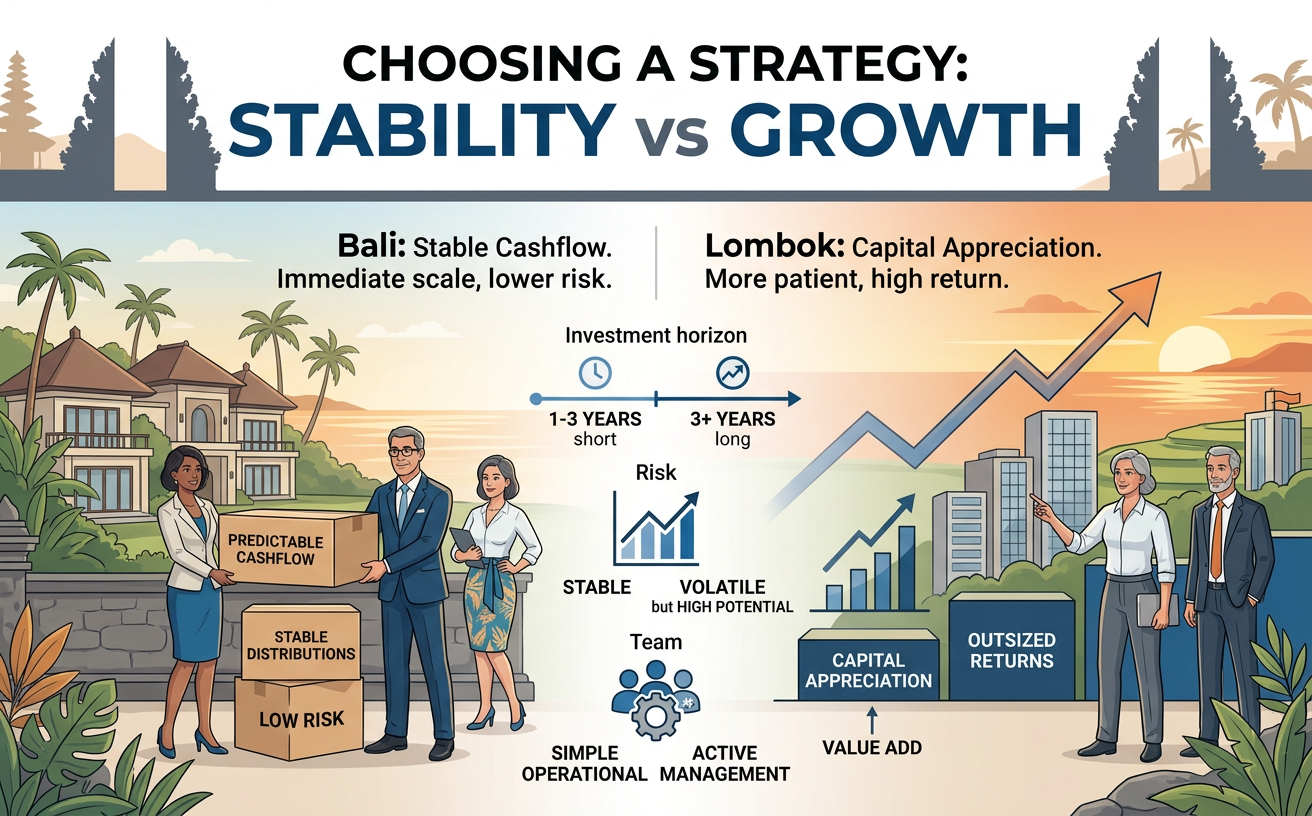
Deciding between Bali and Lombok should start with portfolio-level objectives: prioritize immediate, stable cashflow or pursue longer-term capital appreciation. If an investor needs predictable distributions, quick operational scale, and lower marketing lift, Bali’s market mechanics favor a stability-first approach. Conversely, if the investor has patience, tolerance for higher seasonality risk, and a willingness to actively improve property value, Lombok can deliver outsized returns over time. Financing terms, holding period, and operational bandwidth must align with the selected strategy to avoid liquidity or cashflow strain during off-peak cycles.
Strategic decision factors
- Investment horizon: short-to-medium for Bali vs medium-to-long for Lombok.
- Risk tolerance for occupancy volatility and marketing spend.
- Operational capacity to execute active asset management and value-add projects.
Practical Steps: Appraisals, Business Plans, and Operational Readiness
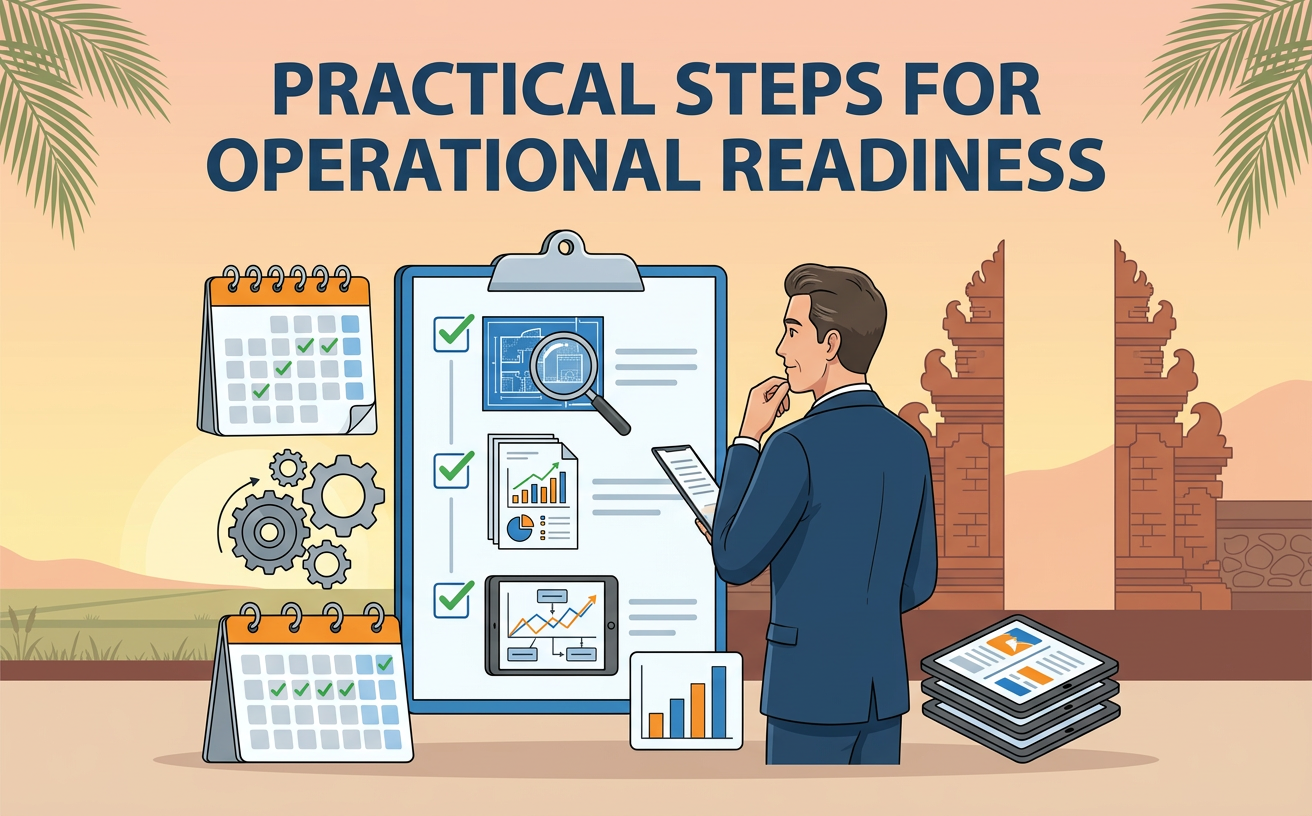
Professional appraisal and a tailored business plan are critical first steps to quantify expected returns, seasonality impact, and break-even occupancy for either market. Accurate forecasts should include local cost structures, expected average daily rates, occupancy curves by month, and capex requirements for positioning the property competitively. Operational readiness — distribution partnerships, channel management, housekeeping standards, and local guest services — will determine how quickly revenue stabilizes and whether seasonal peaks are fully monetized. For Lombok, emphasize off-season activation plans and diversified income streams; for Bali, focus on sustaining yield through quality and distribution efficiency.
Operational readiness checklist
- Obtain a professional property appraisal and competitor benchmarking.
- Build a month-by-month occupancy and cashflow model.
- Set up distribution, channel managers, and local operations before launch.
Key Takeaways
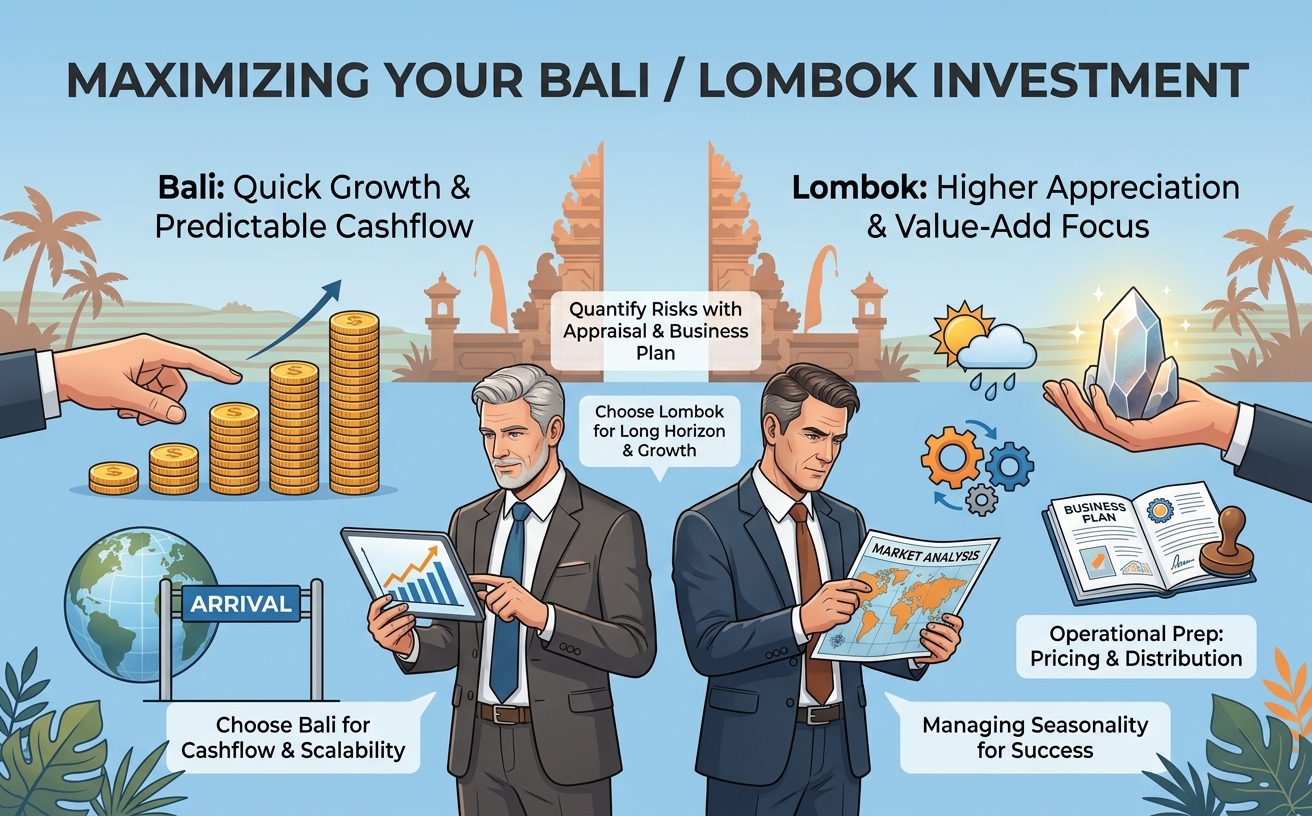
- Bali delivers immediate, high-volume stability due to its global gateway status and diversified demand segments.
- Lombok offers stronger long-term capital appreciation but requires readiness for heavier seasonality and active value-add management.
- Choose Bali if you need predictable cashflow and operational scalability; choose Lombok if you have a longer horizon and higher risk tolerance for growth.
- Professional appraisal and a detailed business plan are essential to quantify risks, seasonality, and profitability for either market.
- Operational preparedness — pricing, distribution, and off-season strategies — is the deciding factor in converting potential into realized returns.
Final word: both Bali and Lombok present viable investment pathways, but they suit different investor profiles. Bali favors immediate income and lower operational volatility, while Lombok rewards patient investors who can manage seasonality and execute value-creation strategies. Start with a professional appraisal and a clear business plan to align market choice with your financial goals and operational capacity.
Jason, Business Journalist at Bukit Vista
You’re a property owner? Wondering What Could Your Bali Villa Really Earn?
Get a data-driven revenue projection based on your property type, area, and bedroom count. Discover your villa’s true earning potential in Bali.