


The Irony of Mandalika: What the Failed Project Means for Property Owners and Investors
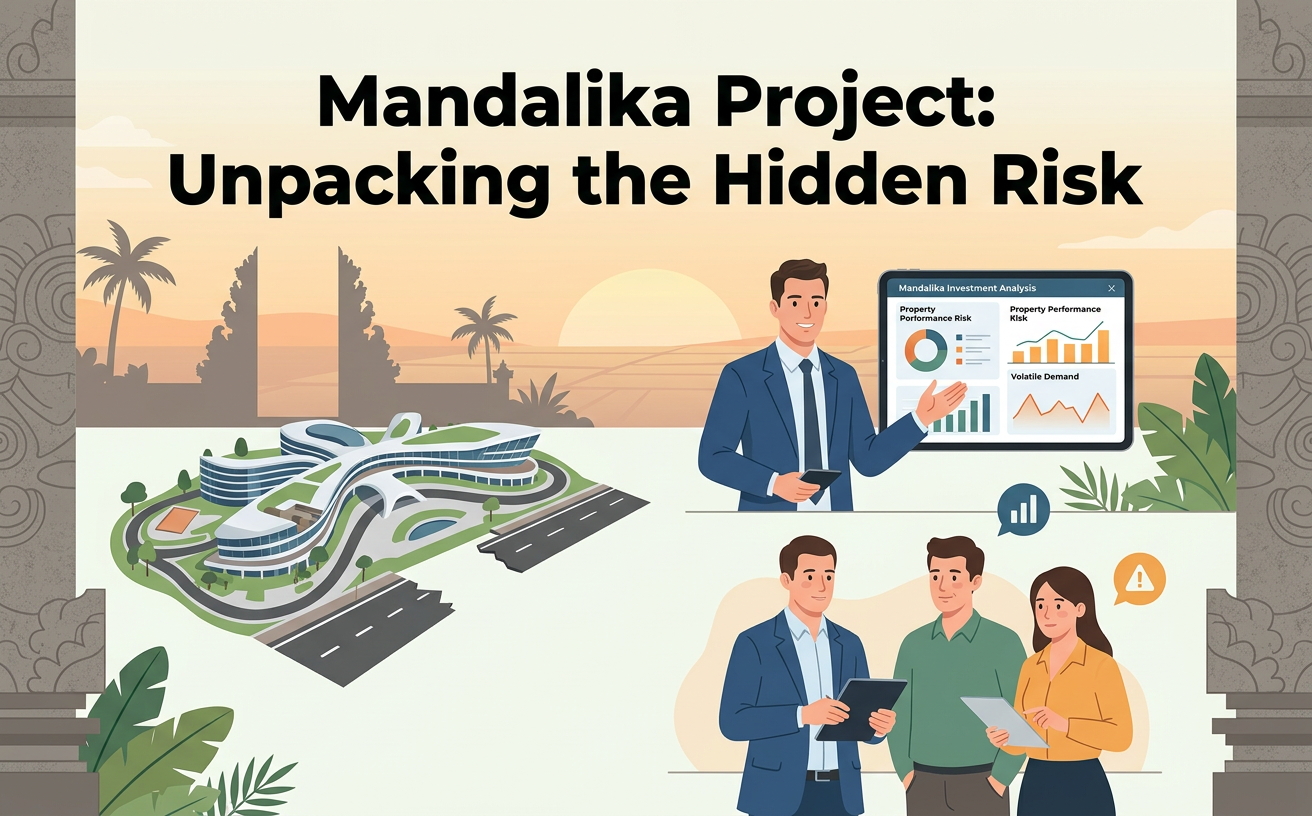
Unpacking content from Bali Business Review on YouTube, this report distills the core problems behind the Mandalika development and the real-world implications for property performance. Key facts: a multi-billion-dollar tourism masterplan, persistent land and infrastructure shortfalls, and volatile demand that together elevate operational risk for owners and investors.
Hi, I’m Jason, a Business Journalist at Bukit Vista, and I’ll be unpacking analysis from Bali Business Review. Today, we’ll dive into The Irony of Mandalika: The Failed Project’s Dirty Secret to offer clear, data-driven insights.
Background and Project Scope: Promises versus Delivery
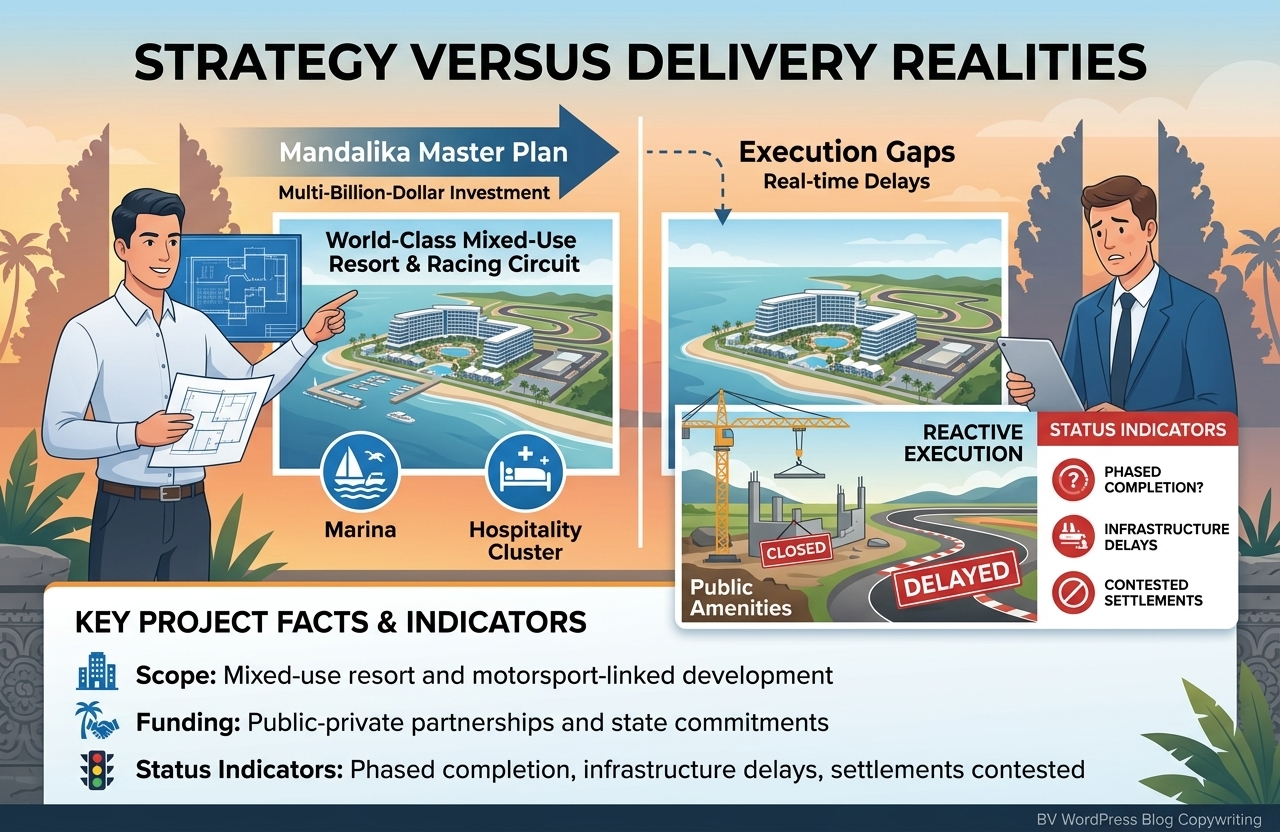
The Mandalika initiative was launched as a flagship tourism corridor intended to transform Lombok into a world-class destination through mixed-use resorts, racing circuits, marinas, and hospitality clusters. Backed by national and regional authorities and described as a multi-billion-dollar investment, the project promised infrastructure upgrades, increased airlift, and a tourism-driven economic uplift for the region.
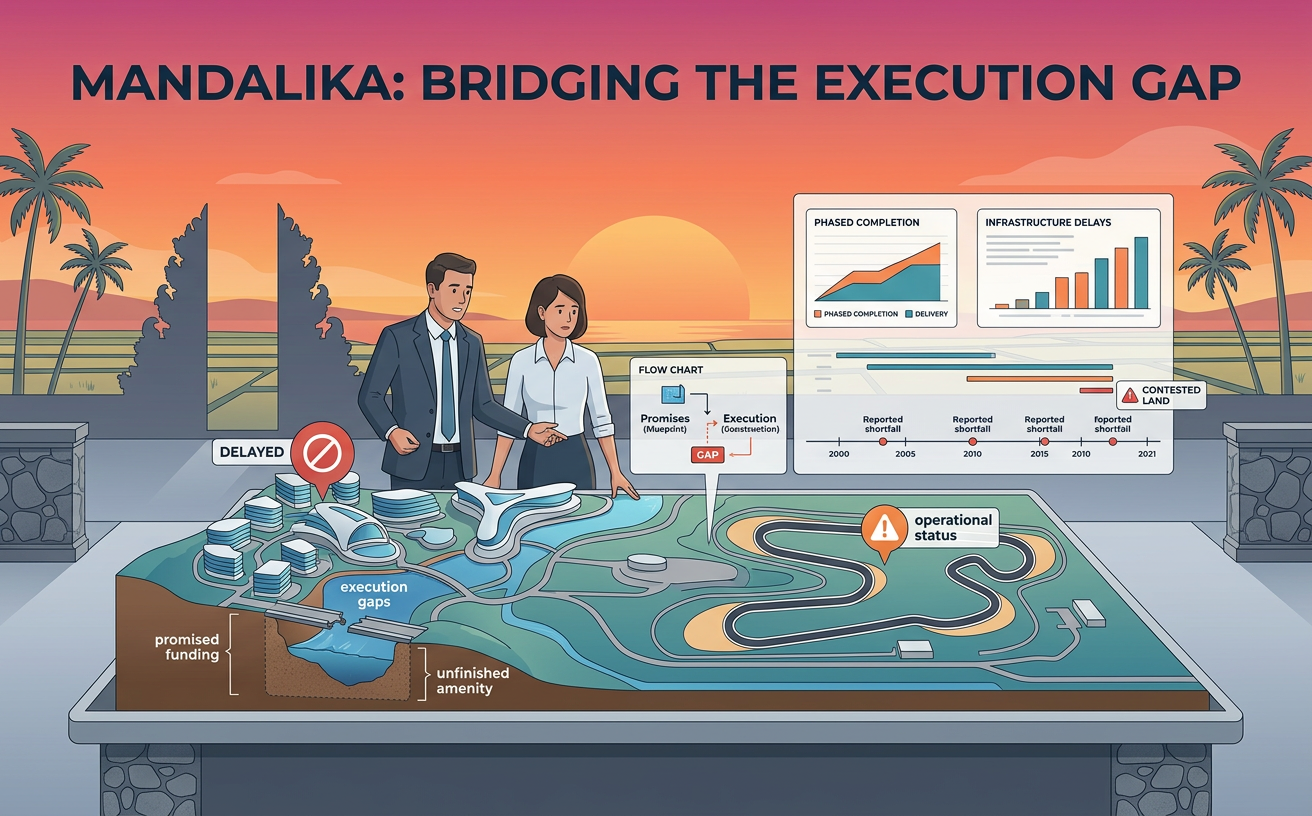
Despite the scale and official backing, execution gaps have emerged—phased construction delays, unfinished public amenities, and uneven contractor performance have prevented the planned tourism ecosystem from stabilizing. These shortfalls have a direct bearing on the ability of properties within and near Mandalika to reach projected occupancy and pricing benchmarks.
What Could Your Bali Villa Really Earn?
Project Facts and Indicators
- Scope: mixed-use resort and motorsport-linked tourism development.
- Funding: public-private partnerships and significant state-level commitments.
- Status indicators: phased completion, reported infrastructure delays, and contested land settlements.
Land and Regulatory Challenges: The Underestimated Risk
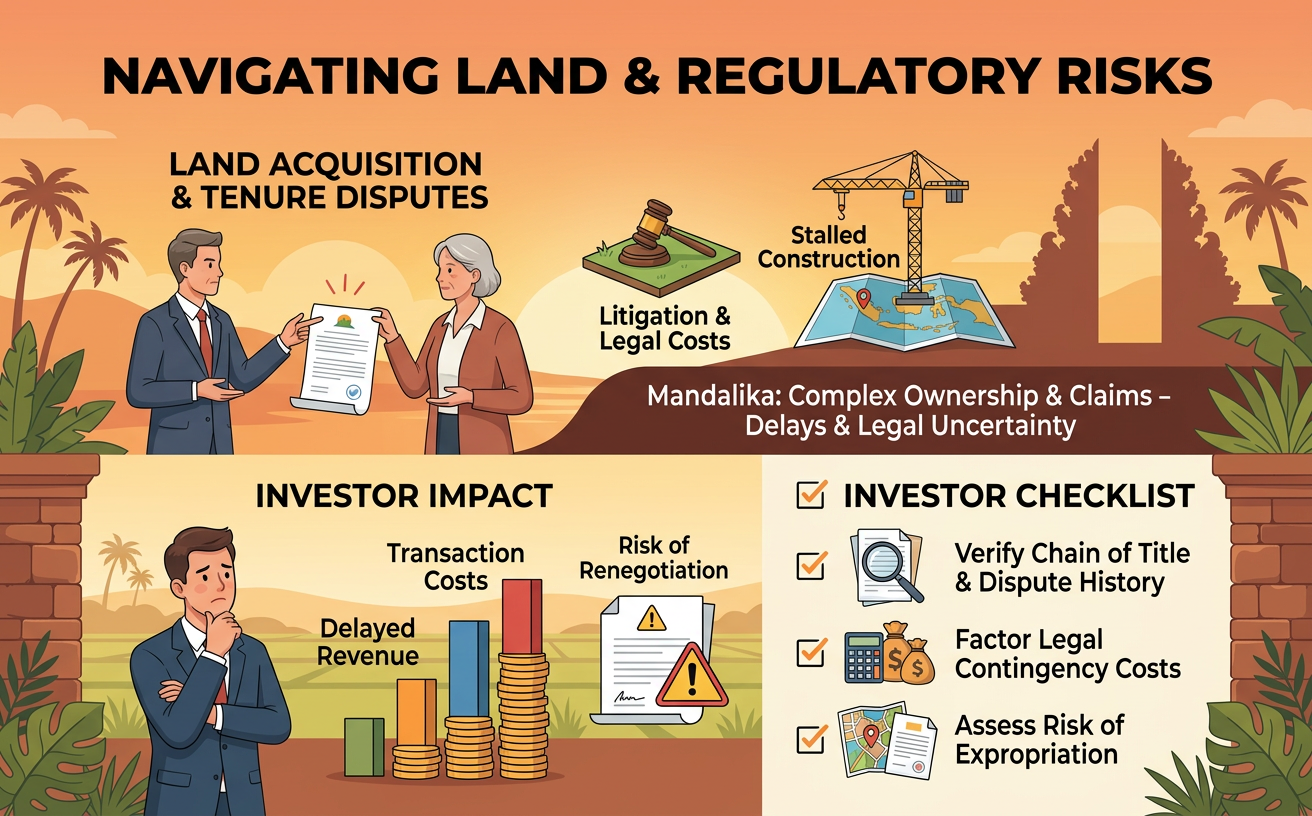
Land acquisition and tenure disputes have repeatedly surfaced as a central constraint for Mandalika. Complex ownership patterns, competing claims, and inadequate compensation frameworks have led to litigation and community pushback that stall construction and raise legal uncertainty for developers and buyers alike.
For investors and property managers, unresolved land titles and regulatory ambiguity translate into higher transaction costs, delayed revenue streams, and the risk of forced renegotiation or remediation. Clear title chains and stable regulatory frameworks are prerequisites for sustainable property performance, and where those are absent, expected returns become speculative.
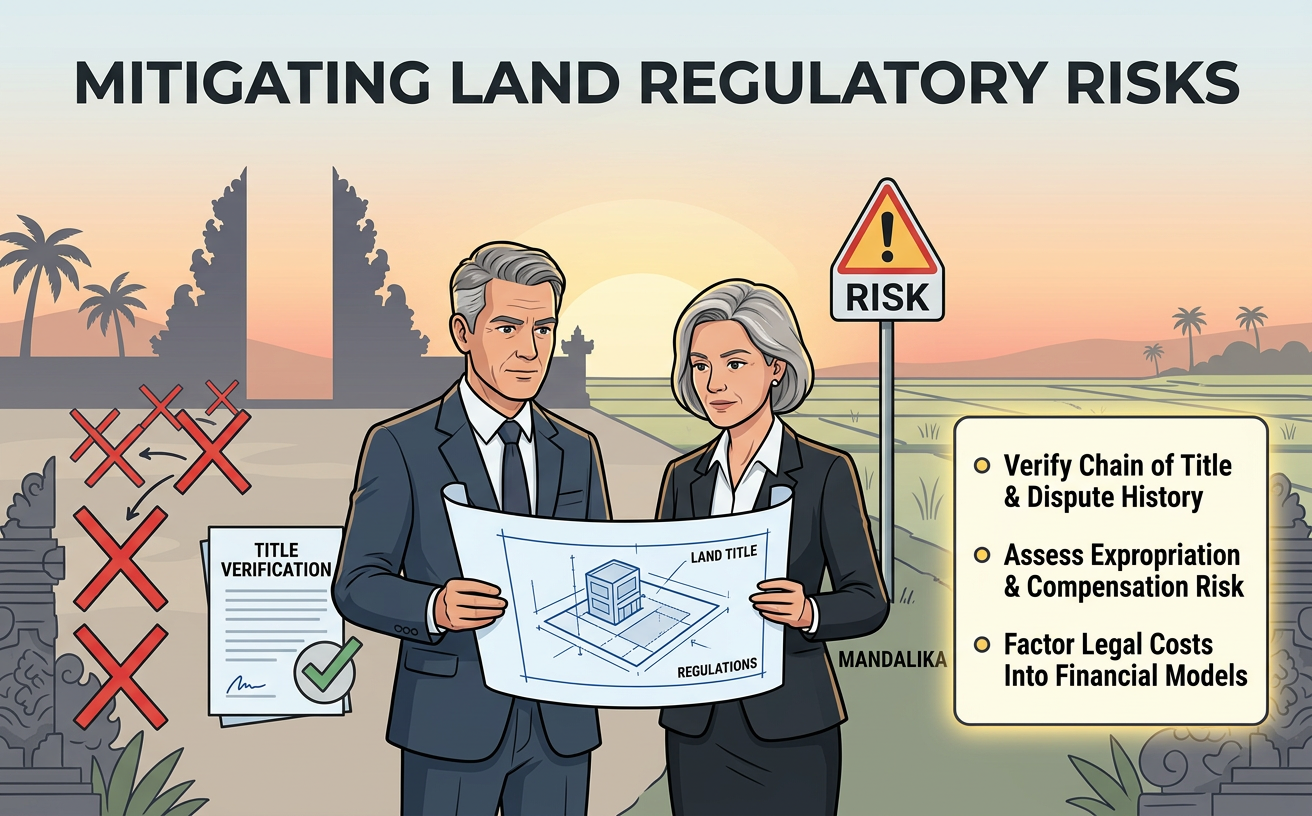
Checklist for Investors
- Verify chain of title and local land dispute history before acquisition.
- Assess risk of expropriation or retroactive compensation claims.
- Factor legal contingency costs into financial models.
Infrastructure Shortfalls and Guest Experience Impact
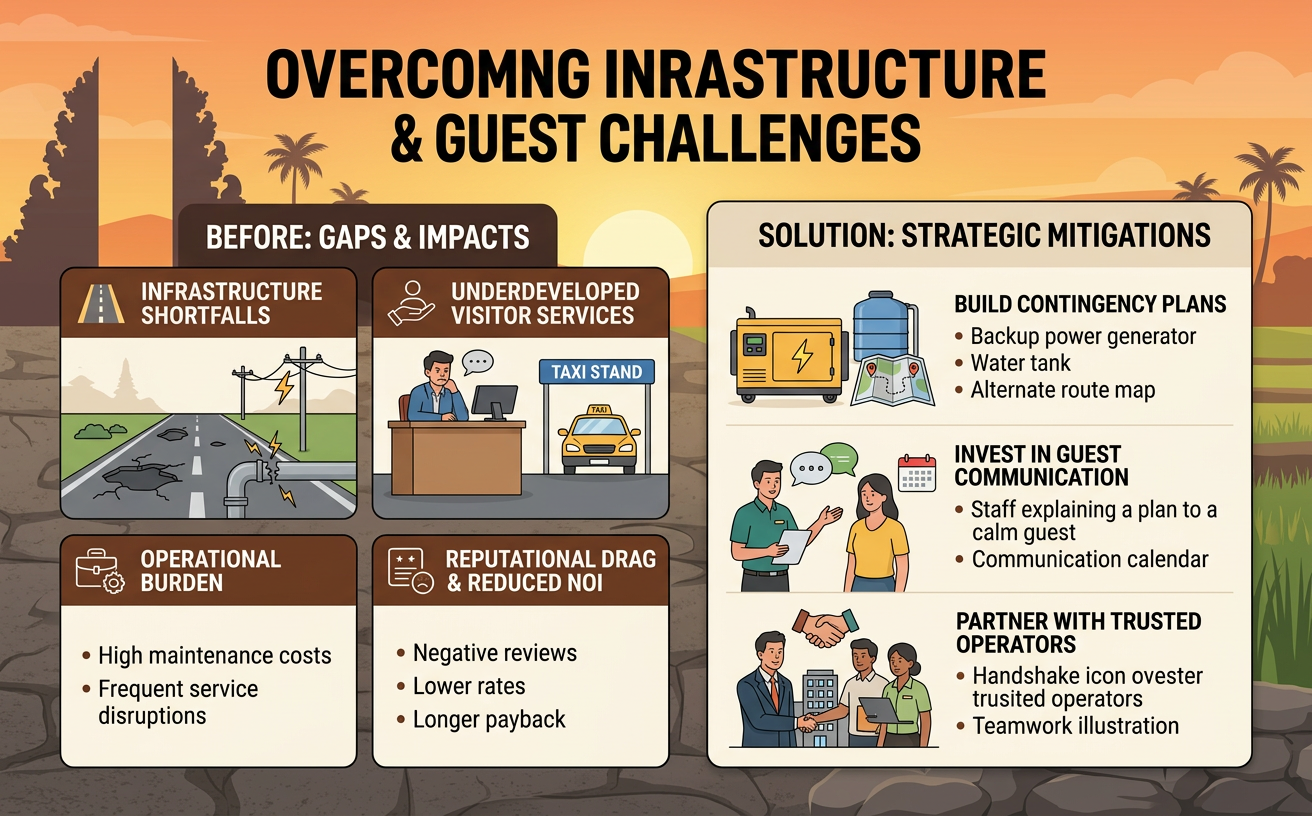
Infrastructure gaps—ranging from incomplete road links to intermittent utilities and underdeveloped visitor services—have undermined the guest experience Mandalika aimed to deliver. When transport connectivity, reliable water, and waste management are inconsistent, properties struggle to maintain service standards that justify premium rates.
Operationally, managers face higher maintenance and guest-management costs, frequent service disruptions, and reputational drag from negative reviews. In turn, these factors depress average daily rates and occupancies, reducing net operating income and elongating payback periods for investors.
Operational Mitigations
- Build contingency plans for alternative utilities and transport arrangements.
- Invest in guest communication and flexible pricing to manage expectations.
- Partner with trusted local operators to shore up service consistency.
Market Demand, Sales Performance, and Pricing Pressure
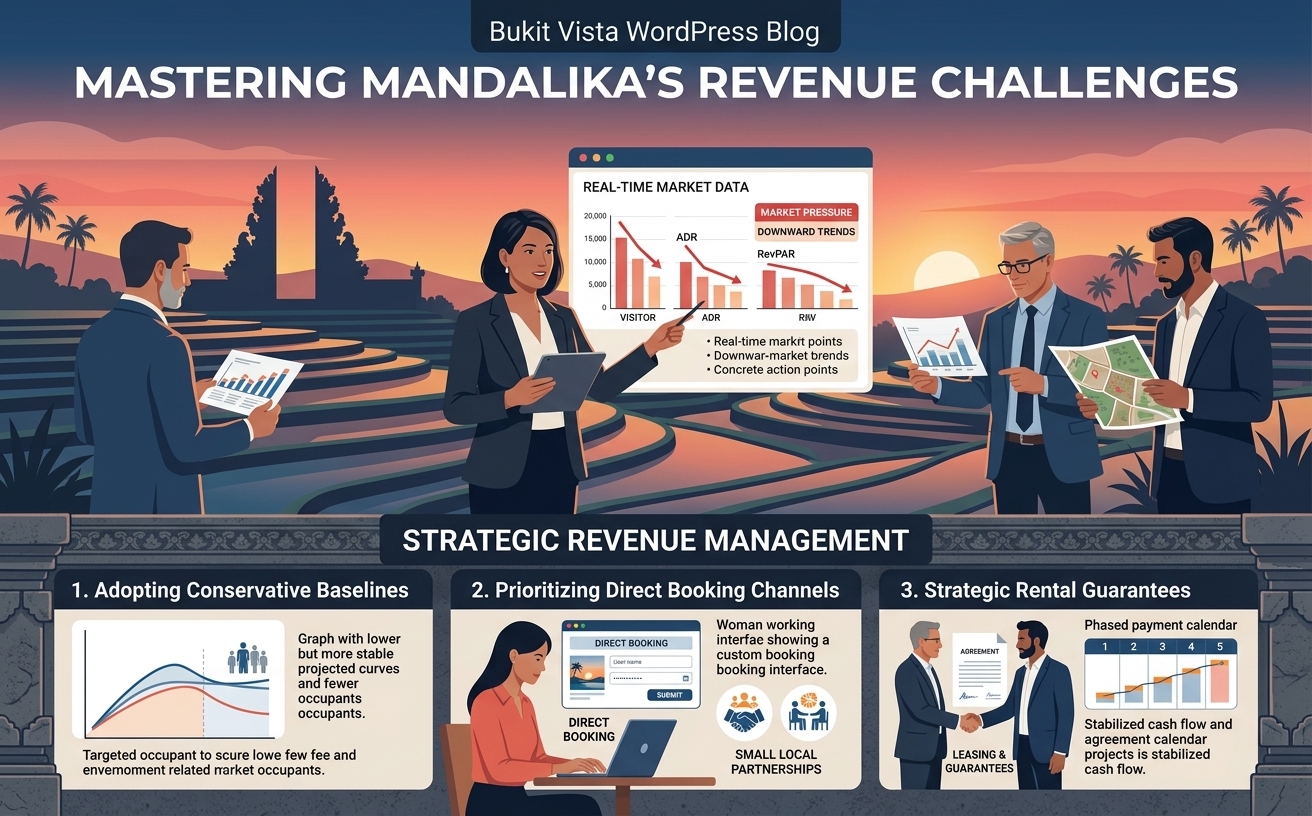
Initial demand forecasts for Mandalika anticipated significant inbound tourism growth tied to events and resort launches. However, inconsistent marketing, event scheduling risks, and broader macroeconomic volatility have constrained visitor numbers and length of stay metrics, exerting downward pressure on projected ADR and RevPAR.
Secondary market signals show slower-than-expected resales and discounts on new units as speculators and end-users recalibrate expectations. For portfolio managers, this environment necessitates conservative revenue assumptions, stress-tested occupancy scenarios, and active revenue-management strategies to protect cash flow.
Revenue Management Actions
- Adopt conservative occupancy and rate baselines when modeling returns.
- Prioritize direct-booking channels and local partnerships to stabilize demand.
- Use phased leasing or rental guarantees to bridge early-year cash shortfalls.
Investment Risk Profile and Exit Considerations
Mandalika’s combination of construction uncertainty, legal complexity, and softer-than-projected demand elevates its investment-risk profile above typical resort developments. Capital deployed in such environments faces higher holding costs, extended timelines to profitability, and a narrower pool of exit buyers willing to assume unresolved liabilities.
Buyers and lenders should demand enhanced due diligence, stronger contractual protections, and realistic liquidity planning. Structuring investments with milestone-based disbursements, escrowed proceeds, and clear remediation clauses can help mitigate downside while preserving upside if the project recovers momentum.
Due Diligence Priorities
- Obtain comprehensive title and encumbrance reports and verify permits.
- Require construction and completion guarantees where possible.
- Stress-test financing against extended vacancy and price compression.
Key Takeaways
- Project-scale ambition does not substitute for enforceable land rights—title clarity is essential before investing.
- Operational resilience (utilities, transport, service standards) directly affects revenue; plan contingencies early.
- Adopt conservative financial assumptions: model multi-year recovery and higher holding costs.
- Structure deals with milestone payments, guarantees, and clear exit provisions to reduce downside exposure.
- Active asset management and local partnerships are critical to stabilize performance in uncertain development zones.
Final word: Mandalika illustrates how even large, high-profile developments can underdeliver when land, infrastructure, and governance issues collide. For property owners and investors, the imperative is pragmatic underwriting, rigorous due diligence, and operational strategies focused on resilience rather than speculative upside.