
Thriving Uluwatu: Inside a Fast-Growing Lifestyle Corridor
We’re unpacking content from Bali Business Review on YouTube to highlight key market shifts in Uluwatu’s lifestyle corridor. The report details rising visitor demand, new hospitality and retail openings, evolving transport links, and how these changes are reshaping rental performance and investor interest across Bukit and surrounding zones.
Hi, I’m Jason, a Business Journalist at Bukit Vista, and I’ll be unpacking analysis from Bali Business Review. Today, we’ll dive into Inside Uluwatu’s Fast Growing Lifestyle Corridor to offer clear, data-driven insights.
Market Growth and Visitor Trends in Uluwatu
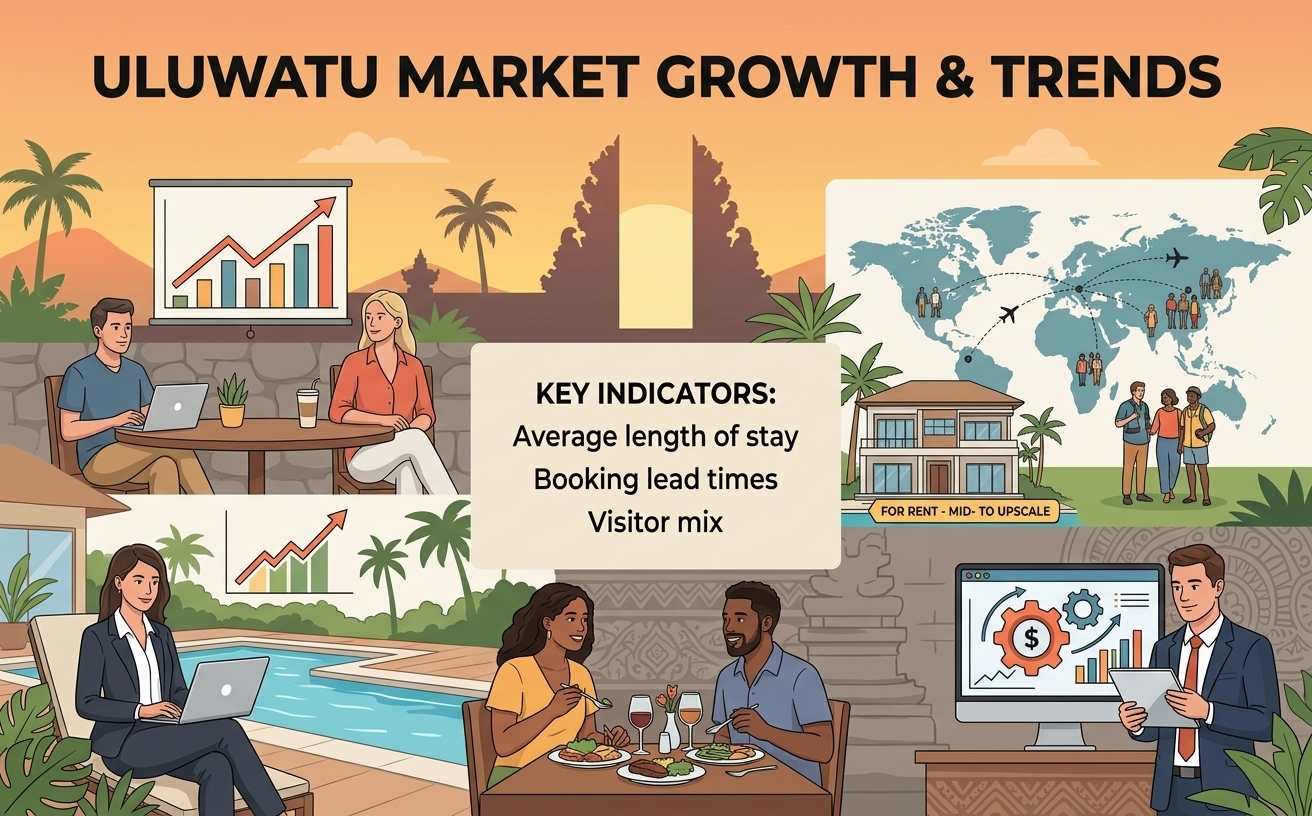
Uluwatu has transitioned from a surf-centric enclave to a broader lifestyle destination, attracting longer-stay leisure visitors and digital nomads. Visitor profiles are diversifying: international tourists remain core, while regional travelers and remote workers now make up a larger share of arrivals, lengthening average stays and smoothing seasonality effects.
What Could Your Bali Villa Really Earn?
This change translates into steadier short-term rental demand and higher interest in mid- to upscale villa inventory. Operators report improved occupancy trends during shoulder months, which increases the importance of dynamic pricing and targeted marketing toward experience-driven guests rather than purely surf tourists.
Key indicators to watch
- Average length of stay: trending upward as remote work grows.
- Booking lead times: widening for premium properties, compressing for budget options.
- Visitor mix: higher proportion of experience-focused travelers and nomads.
Real Estate Performance and Rental Yield Dynamics
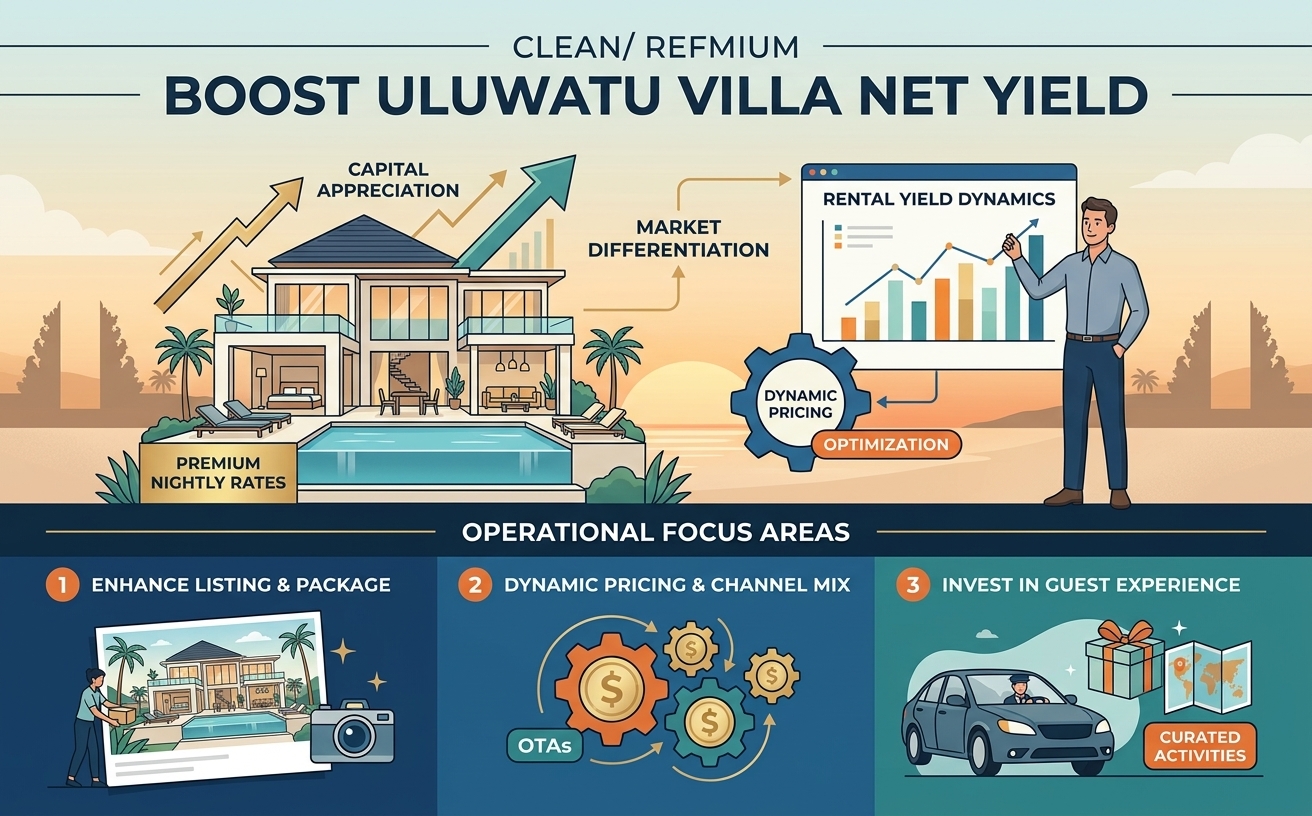
Property owners in Uluwatu are seeing two parallel effects: capital appreciation driven by development appetite and variable short-term rental yields depending on positioning. Villas with lifestyle amenities and proximity to beach clubs capture premium nightly rates, while peripheral inventory competes heavily on price.
Net yield optimization increasingly depends on professional management, curated guest experiences, and seasonal revenue management. For investors, the corridor’s growth suggests upside but also underscores the need for asset differentiation—properties that lean into lifestyle offerings outperform generic stock in both ADR and occupancy.
Operational focus areas for better returns
- Enhance listing presentation and amenity packages to justify premium ADR.
- Implement dynamic pricing and channel mix to capture demand peaks.
- Invest in guest experience (transport, local partnerships, curated activities).
Infrastructure, Development, and Planning Impact
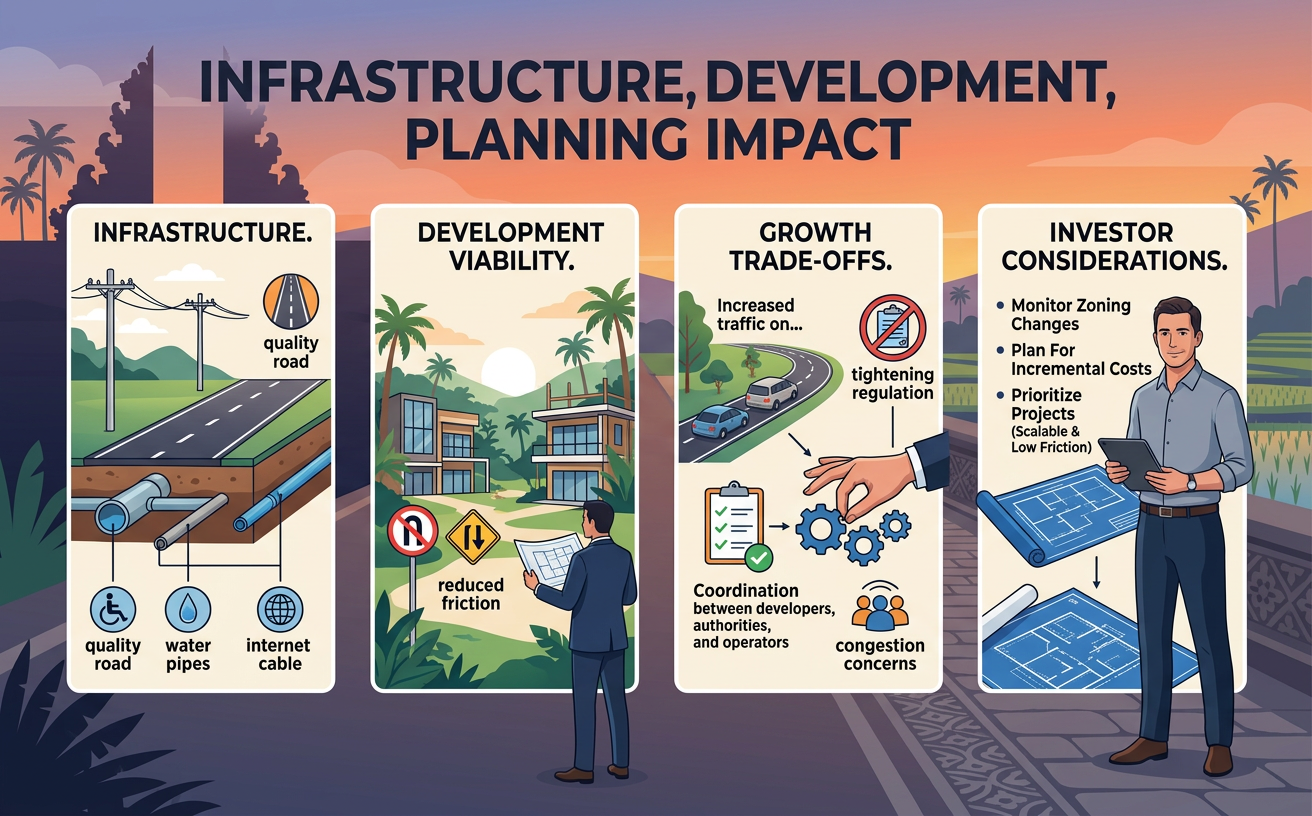
Recent and planned infrastructure improvements—road upgrades, expanded utilities, and boutique commercial nodes—are accelerating accessibility and commercial viability across the corridor. Improved connectivity reduces friction for guests and makes previously remote plots viable for hospitality or mixed-use development.
However, growth brings trade-offs: congestion and regulatory tightening are rising concerns that can affect operating costs and permitting timelines. Stakeholder coordination between developers, local authorities, and hospitality operators will determine how sustainably the corridor expands and whether value is preserved for long-term investors.
Development considerations for investors and operators
- Monitor local zoning changes and environmental regulations closely.
- Plan for incremental infrastructure costs and potential community-impact mitigations.
- Prioritize projects that balance scale with low operational friction.
Lifestyle Offerings: F&B, Retail, and Experience Economy
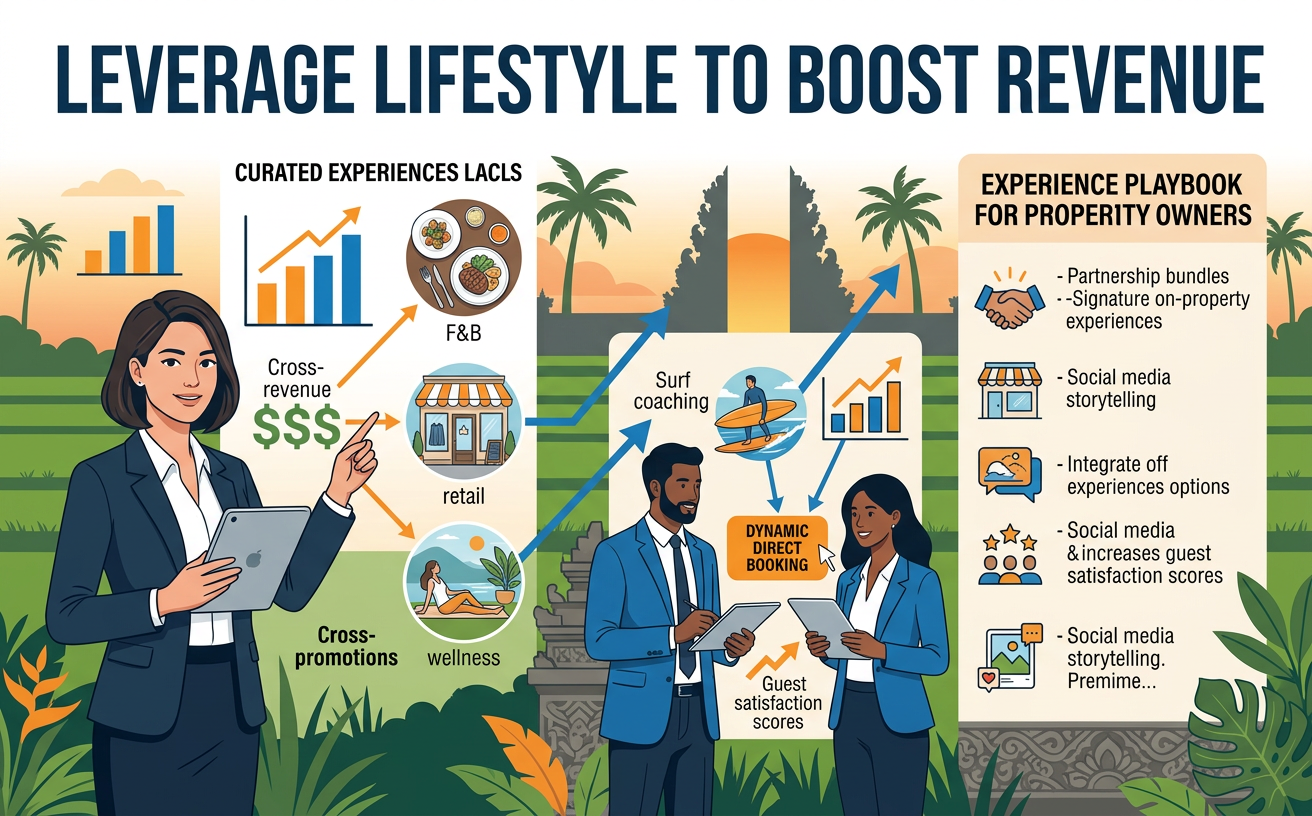
The corridor’s identity now centers on curated F&B, boutique retail, wellness, and beach-club experiences that extend guest spend beyond accommodation. This ecosystem increases on-site and on-route secondary revenue opportunities for villa operators through partnerships and cross-promotions.
Operators that integrate local experiences—wellness retreats, surf coaching, culinary events—can boost direct bookings and ancillary revenue while enhancing guest satisfaction. Positioning a property as part of the broader lifestyle network amplifies marketing reach and increases repeat visitation potential.
Experience playbook for property owners
- Create partnerships with top local F&B and activity providers to build guest packages.
- Develop signature on-property experiences to command higher rates.
- Leverage social and influencer channels to showcase the lifestyle narrative.
Key Takeaways
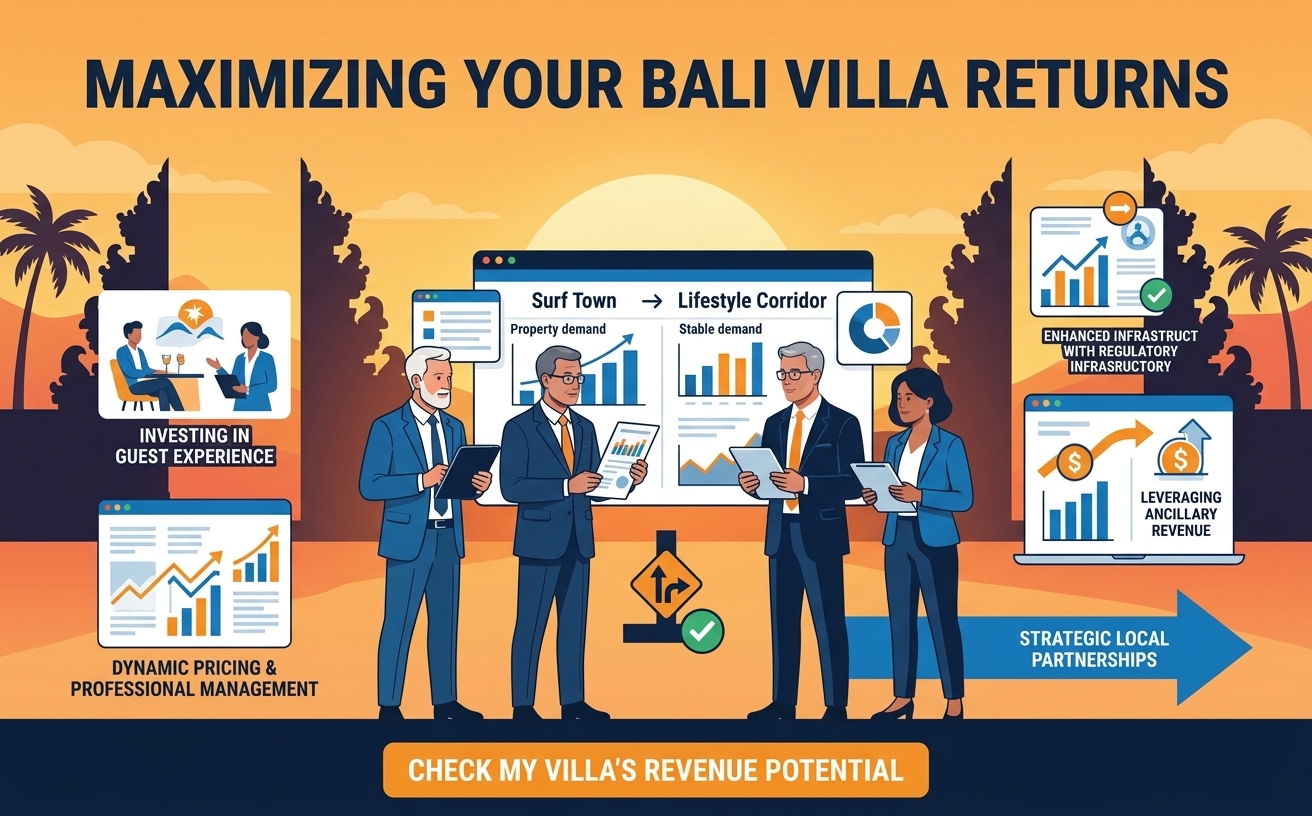
- Uluwatu’s diversification—from surf town to lifestyle corridor—drives more stable, longer-stay demand and supports higher-value villa positioning.
- Revenue upside is concentrated among properties that invest in guest experiences, dynamic pricing, and professional management.
- Infrastructure gains enhance asset viability but require attention to regulatory and community impacts that can affect costs and timelines.
- Ancillary revenue from F&B and experiences is a material lever for profitability and guest retention.
Final word: Uluwatu’s evolution into a lifestyle corridor presents clear business upside for owners who differentiate their assets and align operations with changing visitor profiles. Strategic investment in experience, pricing sophistication, and local partnerships will determine which properties capture the corridor’s growth-driven returns.
Jason, Business Journalist at Bukit Vista
You’re a property owner? Wondering What Could Your Bali Villa Really Earn?
Get a data-driven revenue projection based on your property type, area, and bedroom count. Discover your villa’s true earning potential in Bali.