


How Bali’s Property Market Was Destroyed & Reborn: Lessons for Investors
We are unpacking content from Bali Business Review on YouTube to trace how Bali’s property market collapsed under multiple shocks and how strategic recovery efforts have driven a cautious rebirth. This report highlights the main data points, causal factors, and practical implications for owners and investors.
Hi, I’m Jason, a Business Journalist at Bukit Vista, and I’ll be unpacking analysis from Bali Business Review. Today, we’ll dive into how Bali’s property market was destroyed and reborn to offer clear, data-driven insights.
Introduction to Bali’s property market situation
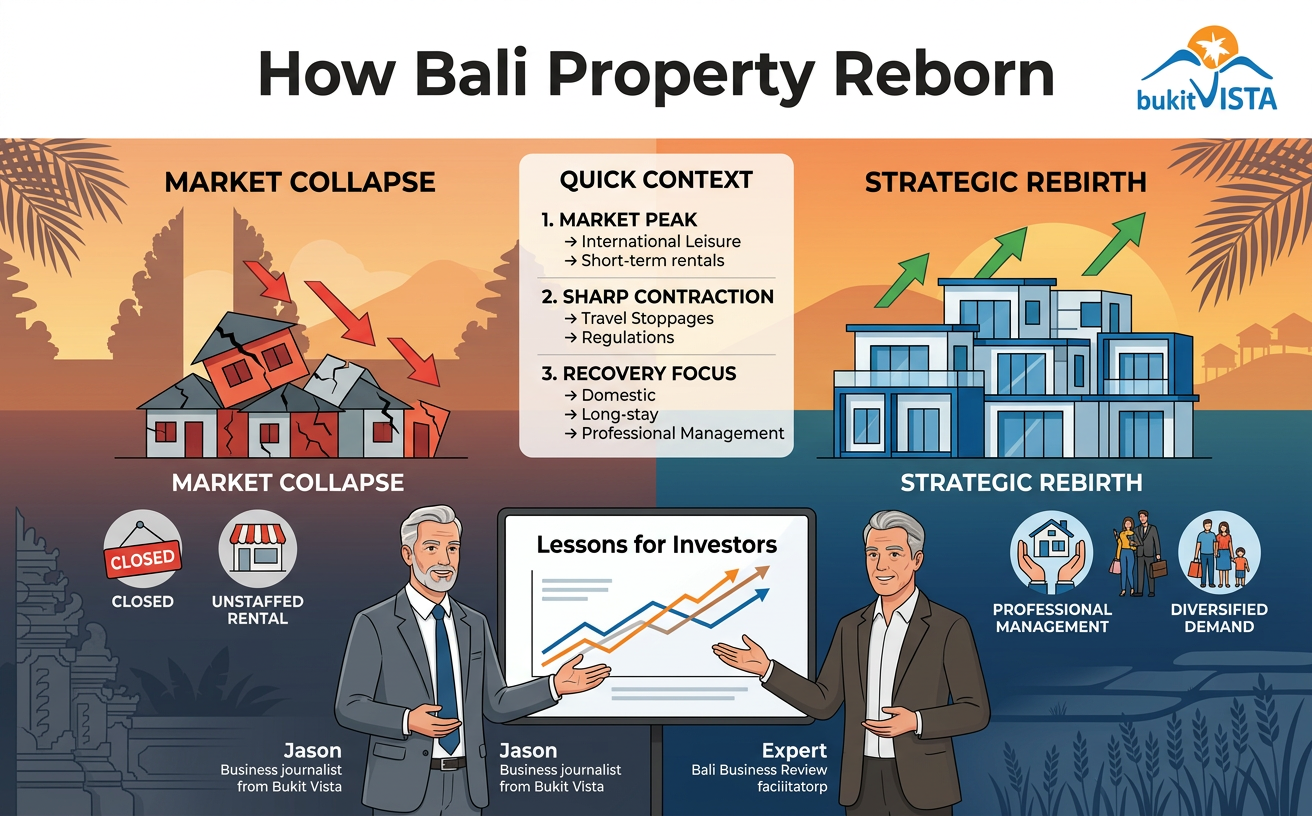
Bali’s property market has been a study in extremes: from rapid expansion driven by international tourism and short-term rentals to a steep contraction when visitor flows stopped. The island’s popularity attracted heavy development and speculative buying, which inflated prices and spurred an oversupply of villas, hotels, and rental units concentrated in key corridors. When external shocks halted tourism and triggered regulatory shifts, the imbalance exposed vulnerabilities in financing, occupancy, and price resilience across segments of the market.
The recovery narrative is not simply a reversal of decline but a structural reset: stakeholders have adjusted expectations, repurposed assets, and refined revenue models for a market that now prizes operational resilience and diversified demand. For prospective investors and current owners, understanding this baseline—how price discovery, occupancy rates, and guest mix evolved—is essential before committing capital or revising operating strategies.
Quick context
- Market peak driven by international leisure travel and short-term rentals.
- Sharp contraction after travel stoppages and tightened regulations.
- Recovery focused on domestic demand, long-stay conversions, and professional management.
What Could Your Bali Villa Really Earn?
Factors that led to the market’s downturn
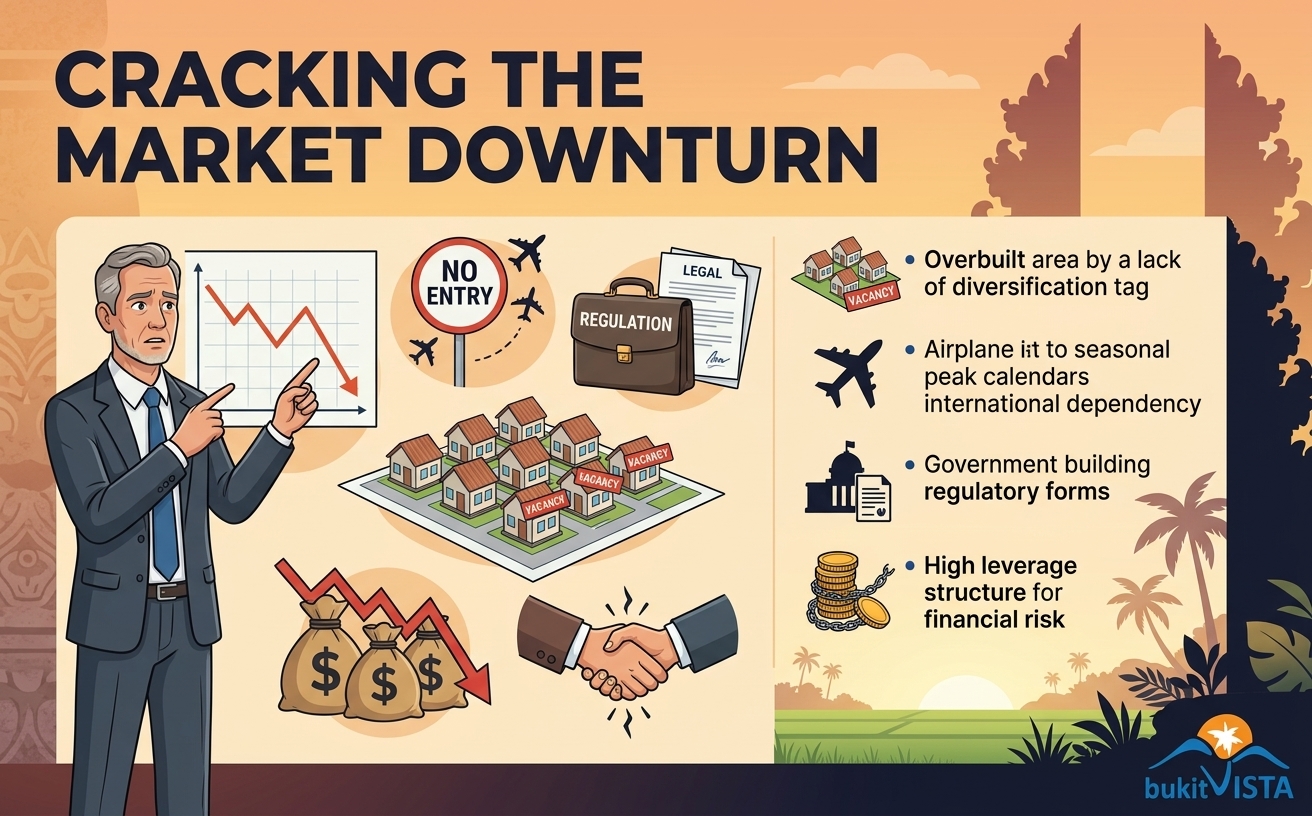
The downturn was driven by a convergence of demand collapse, policy shifts, and structural oversupply. International arrivals dropped sharply, eliminating the primary revenue stream for many properties that depended on tourist seasonality and high ADRs. Concurrently, regulatory scrutiny and local policies around licensing and short-term rentals created operational uncertainty and increased compliance costs for owners and managers.
Financial strain intensified where leverage was high: developers and owners who had financed purchases with optimistic revenue projections faced cash-flow gaps and distressed sales. Market psychology also turned; buyers paused, lenders tightened underwriting, and properties that lacked professional management or multi-channel distribution saw occupancy and yield deterioration most acutely.
Key contributing issues
- Overbuilding in popular submarkets and lack of diversified demand sources.
- Dependence on international tourism and seasonal peaks.
- Regulatory ambiguity and rising compliance requirements for rentals.
- High leverage and short-term financing structures that amplified risk.
Recovery strategies and current market trends

Recovery emerged from pragmatic shifts: operators pivoted to capture domestic and regional demand, lengthened average stays, and focused on operational efficiency to restore cash flow. Professional management companies scaled channel optimization, dynamic pricing, and cost control to stabilize yields. Investors and owners who restructured debt, retrofitted assets for longer stays, or pivoted to blended models (long-term leases with seasonal short-term windows) regained occupancy and improved profitability.
Current trends reflect a more measured market: pricing corrections created entry opportunities while demand composition diversified beyond leisure tourists to include remote workers, wellness travelers, and domestic holidayers. Institutional and experienced boutique operators are leading transaction activity, while standalone speculative projects face greater scrutiny from lenders and buyers who prioritize verified performance metrics over promises.
Practical recovery levers
- Shift toward mixed-use and flexible-stay product offerings.
- Investment in professional property management and digital distribution.
- Debt restructuring and equity recapitalization for stressed assets.
- Targeting domestic and regional marketing to smooth seasonality.
What Could Your Bali Villa Really Earn?
Opportunities for investors and property owners
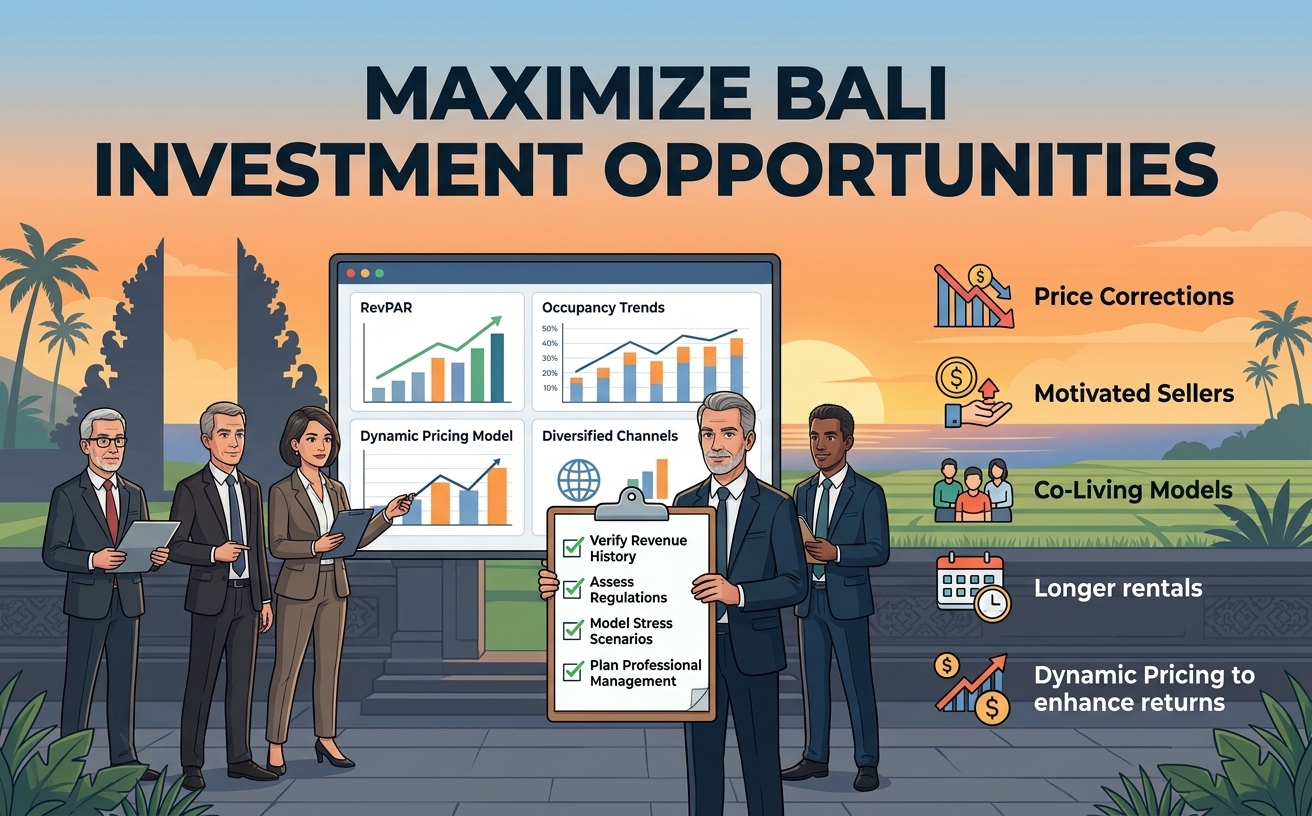
Bali’s reset created concrete opportunities for disciplined investors and proactive owners. Price corrections and motivated sellers have opened acquisition windows, especially for assets with proven operational histories or potential for repositioning. Investors prioritizing cash-flow stability—through longer-term rentals, co-living concepts, or managed villa portfolios—can capture upside with lower downside risk than speculative flips tied to peak tourist pricing.
Property owners can enhance returns by professionalizing operations: adopting dynamic pricing, improving guest experience to raise RevPAR, and diversifying distribution channels to reduce reliance on a single market segment. For those considering acquisition, careful due diligence on occupancy trends, historical performance, and legal compliance is critical. Use data-driven tools to estimate realistic revenue under different scenarios before deciding.
Checklist for prospective buyers and owners
- Verify historical occupancy and revenue streams across seasons.
- Assess regulatory compliance and licensing needs for rentals.
- Model conservative cash flows with stress scenarios for demand shocks.
- Plan for professional management or proven operator partnerships.
Key Takeaways

- Structural oversupply and sudden demand loss caused the market collapse; recovery required operational and investor discipline.
- Successful rebounds prioritized diversification of demand, professional management, and flexible asset use.
- Current market offers selective buying opportunities where due diligence and realistic revenue models are applied.
- Owners should focus on occupancy stability, cost efficiency, and compliance to protect returns.
The rebirth of Bali’s property market is less about returning to previous peaks and more about building a sustainable, resilient market that balances tourism with local needs and professional asset management. For owners and investors, the practical next step is to model revenue under conservative assumptions and align with operators who can execute consistently. If you want a quick, data-driven estimate of what your Bali property could earn, try the Bali Property Revenue Calculator at https://www.bukitvista.com/bali-villa-management?utm_source=youtube&utm_medium=revcalc&utm_campaign=bbr to test scenarios and inform investment decisions.
Jason, Business Journalist at Bukit Vista
You’re a property owner? Wondering What Could Your Bali Villa Really Earn?
Get a data-driven revenue projection based on your property type, area, and bedroom count. Discover your villa’s true earning potential in Bali.