


Alarming Wake-Up Call: Nusa Penida’s Rise and Fall — A Critical Warning for Bali’s Tourism and Property Markets
We are unpacking content from Bali Business Review on YouTube to outline core facts: rapid visitor growth on Nusa Penida outpaced infrastructure, leading to environmental degradation, volatile short-term property gains, and mounting social strain. These data-driven patterns serve as an early warning for Bali’s tourism and real estate sectors.
What Could Your Bali Villa Really Earn?
Hi, I’m Jason, a Business Journalist at Bukit Vista, and I’ll be unpacking analysis from Bali Business Review. Today, we’ll dive into Nusa Penida’s rise and fall and its warning for Bali’s tourism and property sectors to offer clear, data-driven insights.
From Hidden Gem to Overcrowded Destination
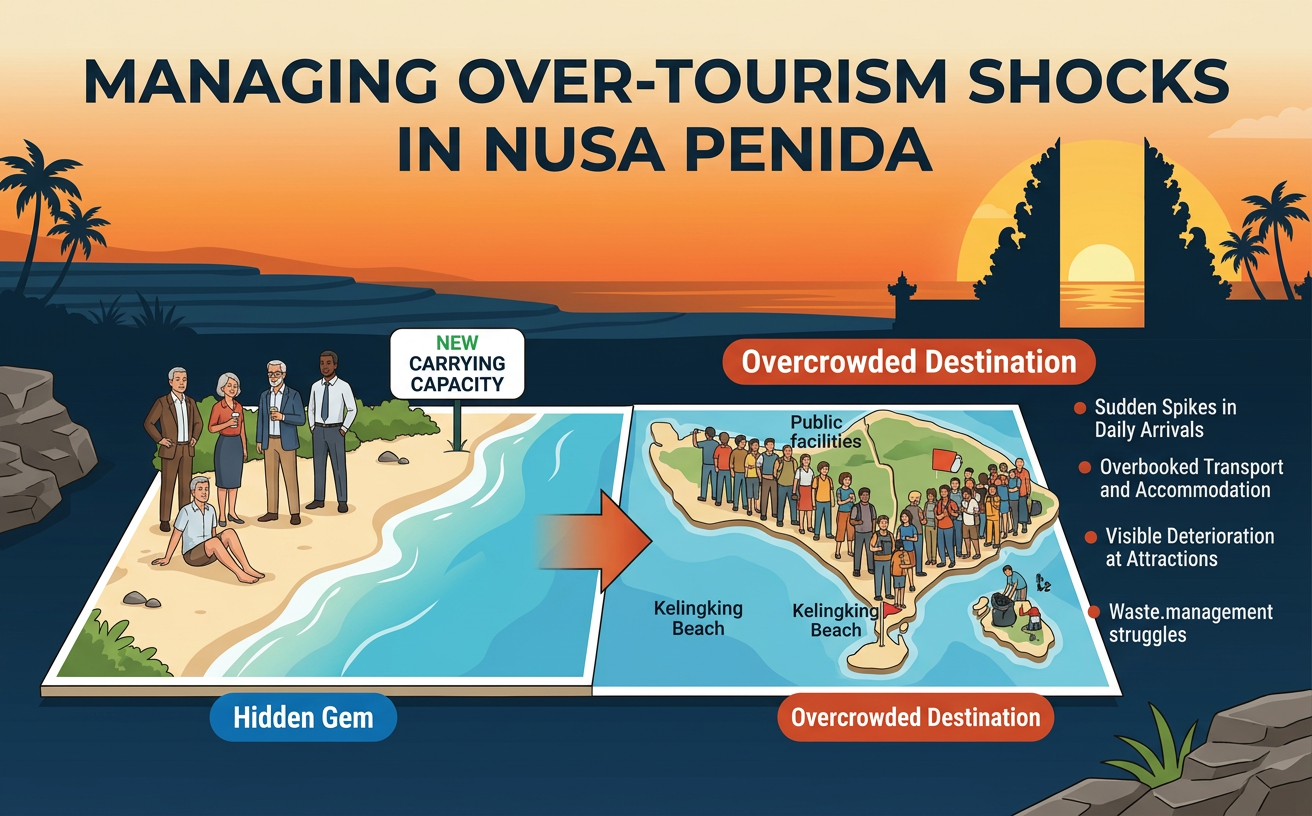
Nusa Penida experienced a steep influx of visitors within a short time frame, driven by social media exposure and low-entry infrastructure. Visitor numbers surged faster than transport, waste management, and local services could scale, creating acute crowding at key sites and straining basic amenities. The rapid popularity produced immediate revenue but revealed how quickly carrying capacity can be exceeded without phased planning.
Indicators of rapid over-tourism
- Sudden spikes in daily arrivals and peak-season congestion
- Overbooked transport and accommodation without proportional service upgrades
- Visible deterioration at natural attractions and public facilities
Environmental Degradation and Infrastructure Strain
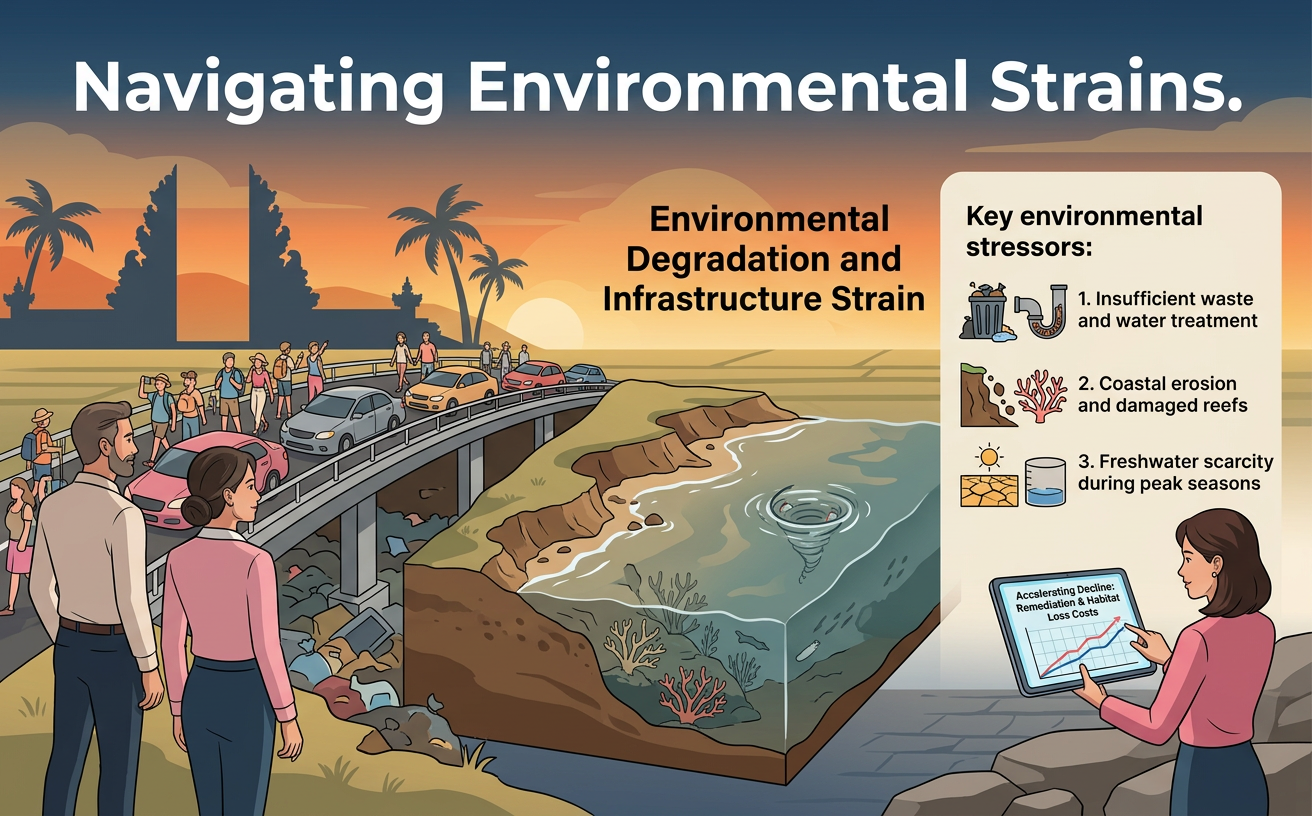
Unchecked visitor growth translated into mounting waste, sewage stress, and erosion at fragile coastal sites. Local infrastructure—roads, freshwater supplies, and waste processing—was often not upgraded in step with demand, accelerating environmental decline. The long-term costs of remediation and habitat loss now threaten future tourism value and local livelihoods.
Key environmental stressors
- Insufficient waste collection and wastewater treatment
- Coastal erosion and damage to reef and beach ecosystems
- Freshwater scarcity during peak seasons
What Could Your Bali Villa Really Earn?
Economic Boom, Then Bust: Short-Term Gains vs Long-Term Risk
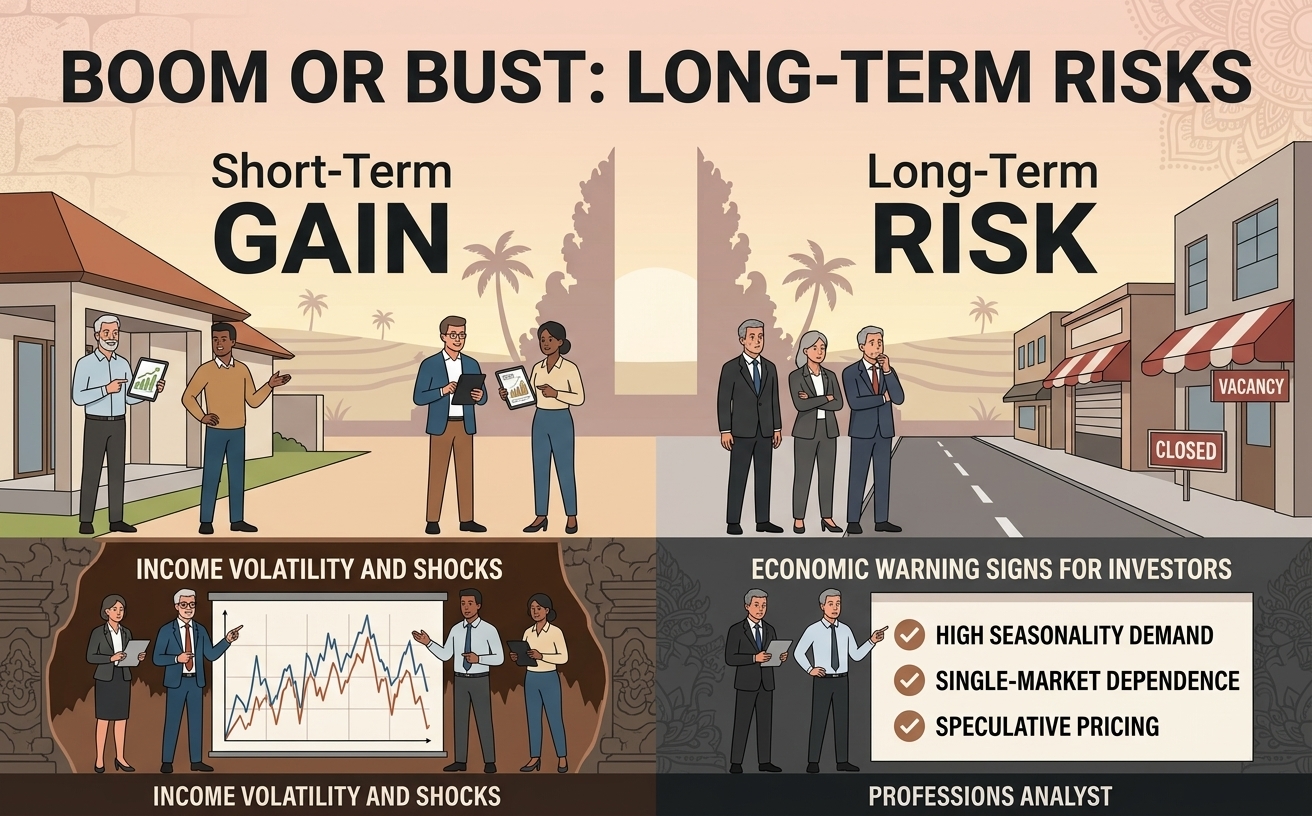
The island saw rapid property speculation and a service-economy pivot that rewarded fast returns, but the model left owners exposed to demand shocks. When environmental limits or access issues reduced visitor flows, income volatility spiked and many small operators faced unsustainable margins. This cycle highlights how short-term rental windfalls can mask systemic vulnerability.
Economic warning signs for investors
- High seasonality with weak off-season demand
- Dependence on single-market visitor segments
- Speculative pricing disconnected from infrastructure capacity
Governance and Planning Failures: Lessons for Bali
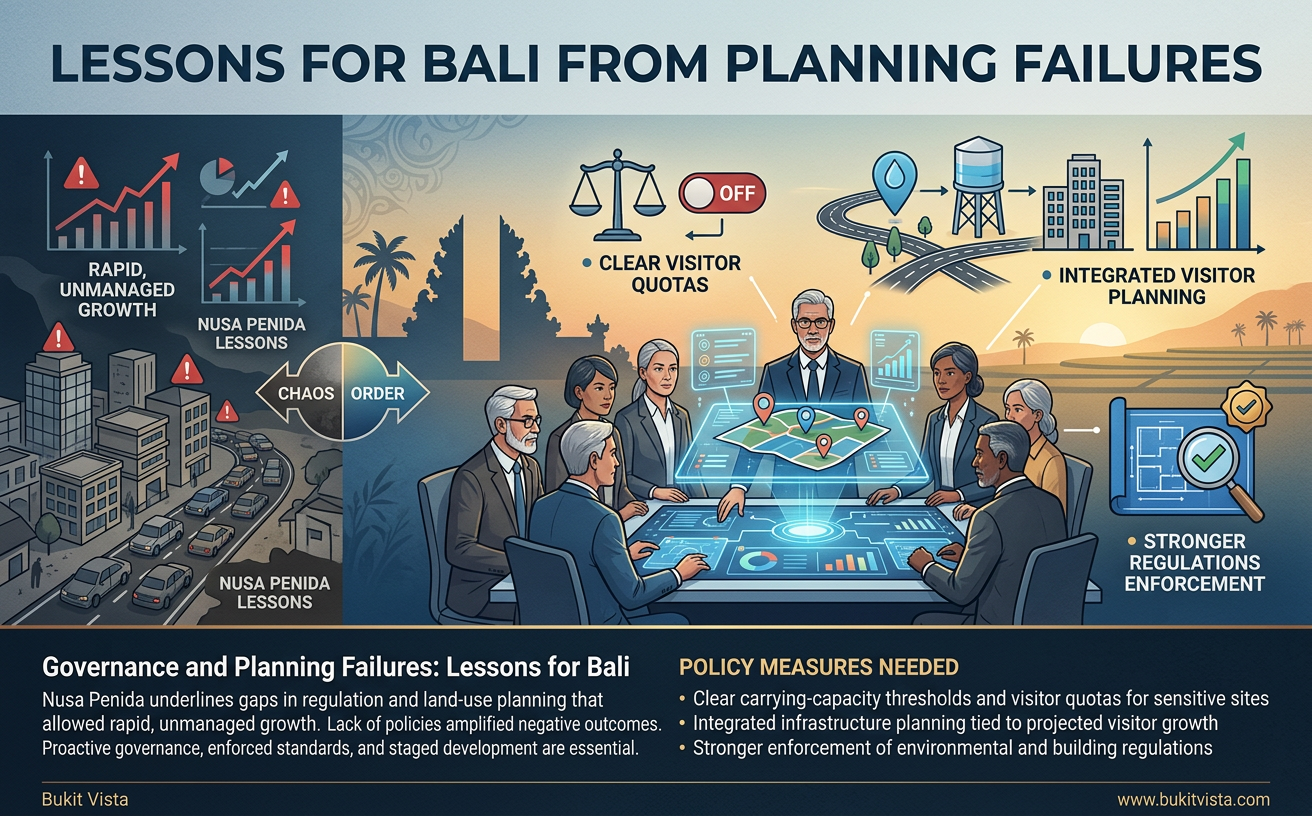
Nusa Penida’s experience underlines gaps in coordinated regulation, land-use planning, and enforcement that allowed rapid, unmanaged growth. Lack of timely policies on carrying capacity, zoning, and environmental safeguards amplified negative outcomes. For Bali, proactive governance, enforced standards, and staged development are essential to avoid replication of these mistakes at scale.
Policy measures needed
- Clear carrying-capacity thresholds and visitor quotas for sensitive sites
- Integrated infrastructure planning tied to projected visitor growth
- Stronger enforcement of environmental and building regulations
What Property Owners and Investors Should Do Now
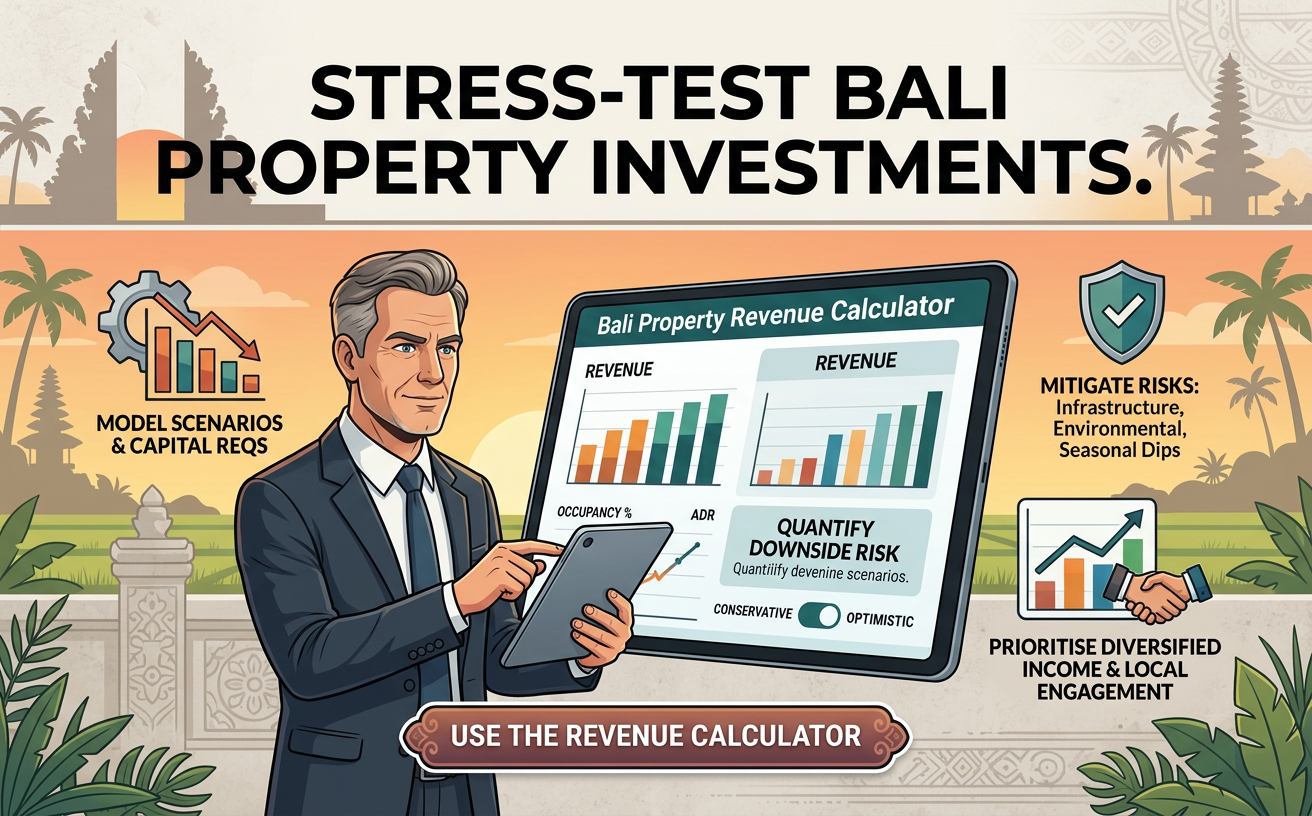
Investors must stress-test assumptions about occupancy, pricing, and long-term demand rather than rely on past spikes. Tools that model realistic revenue under different scenarios are critical to quantify downside risk and capital requirements. The Bali Property Revenue Calculator provides a market-data-driven baseline to assess revenue potential and stress scenarios before committing capital.
How to stress-test investments
- Run conservative occupancy and ADR scenarios using the Bali Property Revenue Calculator: Check the Revenue Calculator
- Factor in infrastructure, environmental mitigation, and seasonal dips
- Prioritise diversified income streams and local community engagement
Key Takeaways
- Rapid tourism growth without phased infrastructure leads to environmental and economic fragility.
- Short-term property gains can quickly reverse when carrying capacity or access limits are breached.
- Effective governance, zoning, and enforcement are essential to sustain long-term tourism value.
- Investors should use data-driven tools like the Bali Property Revenue Calculator to model downside scenarios.
- Proactive local planning and diversified revenue strategies reduce exposure to shocks.
The trajectory of Nusa Penida is a clear business signal: unmanaged growth can erode the very assets that generate tourism value. For Bali’s tourism and property sectors, the imperative is to couple growth with capacity-based planning, enforceable standards, and data-driven investment analysis to protect long-term returns.
Jason, Business Journalist at Bukit Vista
You’re a property owner? Wondering What Could Your Bali Villa Really Earn?
Get a data-driven revenue projection based on your property type, area, and bedroom count. Discover your villa’s true earning potential in Bali.