


Bingin’s Rapid Transformation: What New Villas Mean for Travelers, Owners, and Investors
I’m unpacking content from Bali Business Review on YouTube to report on Bingin’s fast-changing landscape. The report highlights massive construction progress across the area, the emergence of new villa competitors with every completed build, and observable effects on real occupancy and market choice for visitors and investors.
Hi, I’m Jason, a Business Journalist at Bukit Vista, and I’ll be unpacking analysis from Bali Business Review. Today, we’ll dive into Bingin’s accelerating villa development and market dynamics to offer clear, data-driven insights.
Ongoing Developments in Bingin
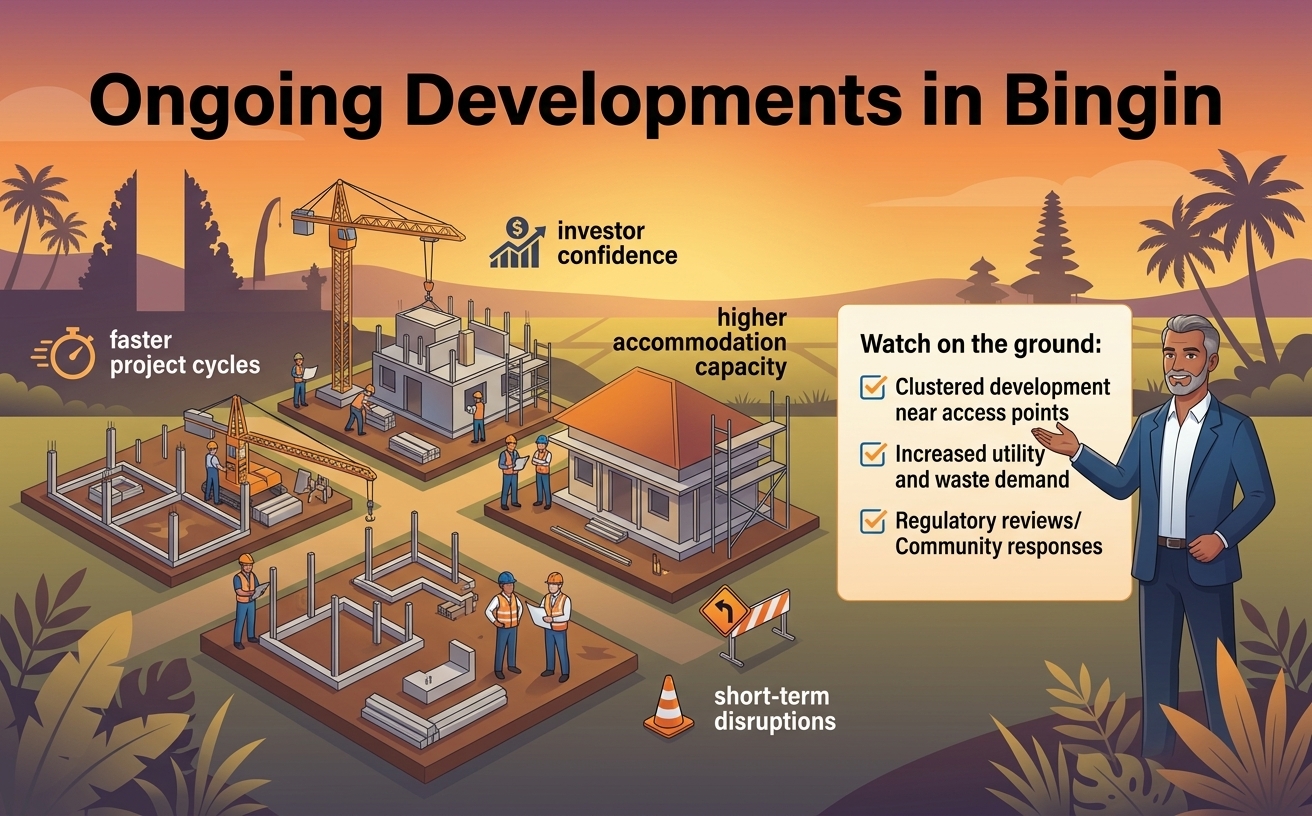
Bingin is undergoing concentrated and visible construction activity across multiple plots, shifting the neighbourhood from a patchwork of individual villas to a denser hospitality cluster. Observers note that new foundations and near-complete structures are appearing with higher frequency than in prior years, indicating both investor confidence and faster project cycles. This construction wave is reshaping infrastructure needs, local services, and short-term disruptions while promising higher accommodation capacity once projects finish.
What to watch on the ground
- Clustered development near key access points that may change traffic and guest arrival patterns.
- Increased demand for utilities and waste management as more properties come online.
- Potential regulatory reviews or community responses that could affect timelines and operations.
What Could Your Bali Villa Really Earn?
Impact of New Villa Constructions
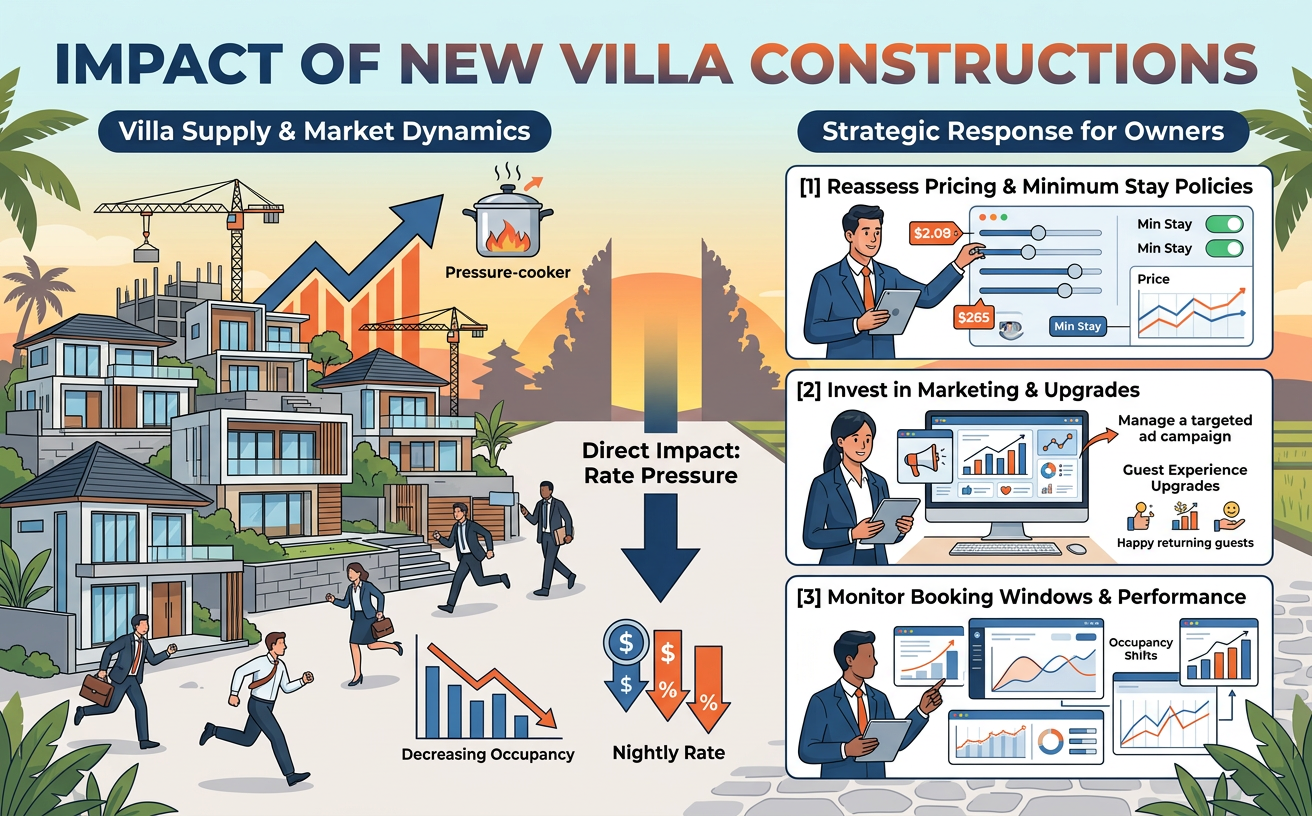
Each newly completed villa effectively adds a direct competitor to the local market, altering supply dynamics and putting pressure on occupancy and nightly rates. While more inventory can attract a broader range of travellers and create ancillary demand for local food and transport services, it also fragments the market and forces owners to differentiate through amenities, design, pricing strategy, or guest experience. The immediate impact is often a short-term dip in achievable rates for existing properties unless they pivot quickly to maintain relevance.
Operational considerations for owners
- Reassess pricing and minimum stay policies against rising local supply.
- Invest in targeted marketing and guest experience upgrades to retain repeat business.
- Monitor booking windows and channel performance to spot occupancy shifts early.
Dynamics of Competition Among Property Owners
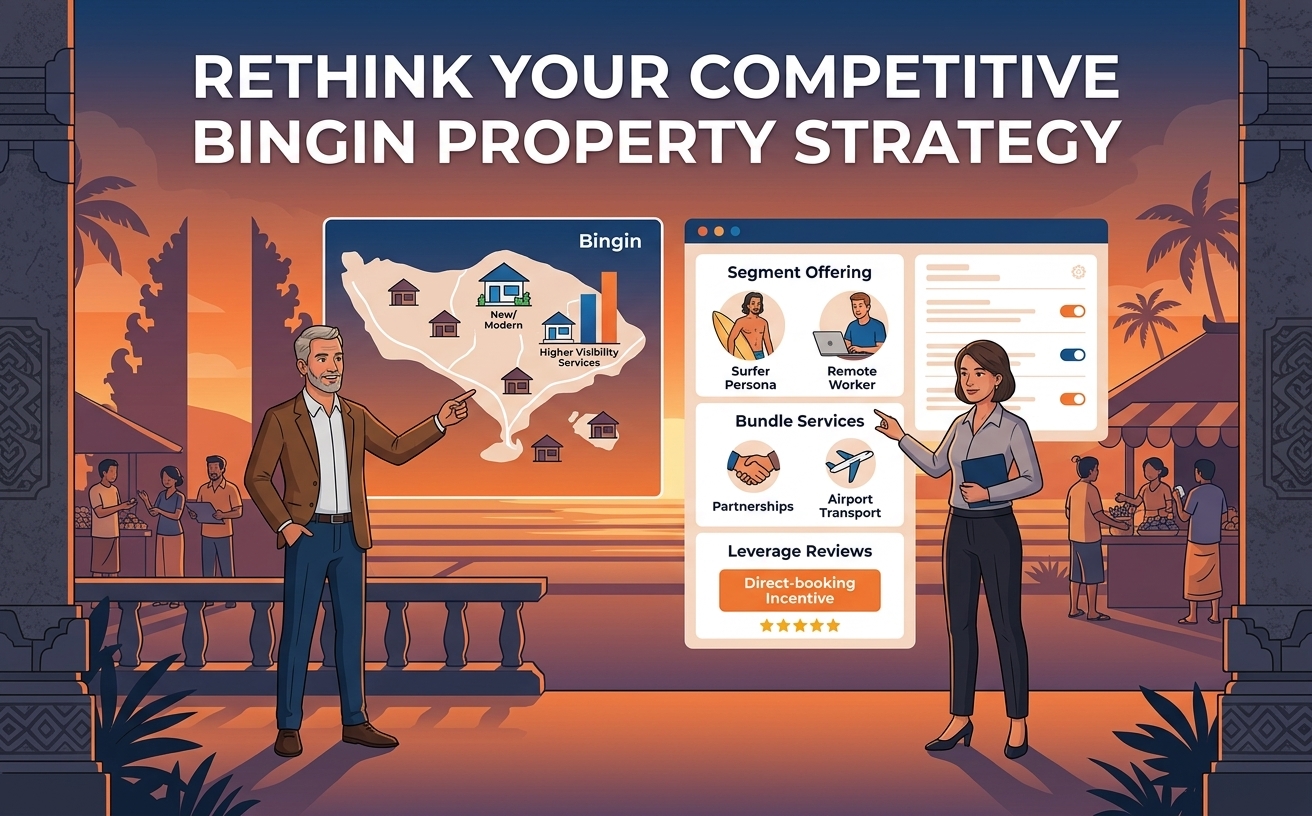
Competition in Bingin is evolving from a small-scale neighborhood rivalry to a structured market where positioning matters. Owners now contend with new entrants that often arrive with modern designs, integrated services, and purpose-built marketing, raising the bar for visibility and guest expectations. Collaboration can emerge as a counter-strategy—cooperative scheduling, shared transport solutions, or curated local experiences—to create differentiated appeal while managing the negative aspects of over-supply.
Competitive strategies to consider
- Segment your offering: target niche traveller personas (surfers, remote workers, families) rather than a generic audience.
- Bundle services or partnerships with local operators to enhance perceived value.
- Leverage guest reviews and direct-booking incentives to reduce dependency on OTAs.
What Could Your Bali Villa Really Earn?
How This Affects Travelers, Property Owners, and Investors
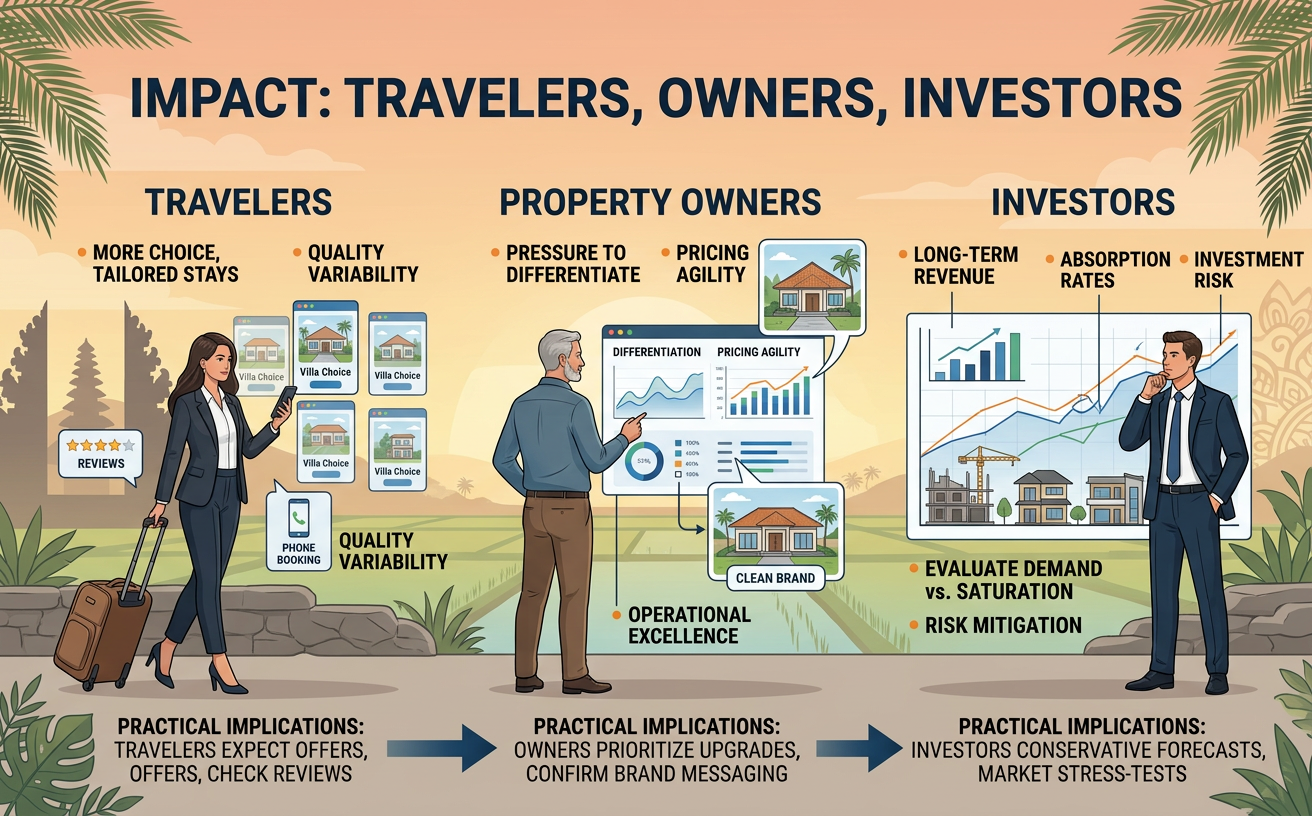
For travellers, the proliferation of villas means more choice and potentially better-tailored stays, but also variability in quality and experience as newer properties enter the market. Property owners face heightened pressure to invest in differentiation, operational excellence, and agile pricing to protect occupancy and revenue. Investors must evaluate not only immediate construction progress but also long-term absorption rates, local infrastructure capacity, and the ability of individual assets to stand out in an increasingly crowded market.
Practical implications by stakeholder
- Travelers: Expect more options and competitive offers, but perform due diligence on reviews and amenities.
- Owners: Prioritize upgrades that directly influence bookings—guest comfort, onboarding speed, and clear brand messaging.
- Investors: Model conservative revenue forecasts and stress-test assumptions about market growth versus saturation.
Key Takeaways
- Rapid construction in Bingin is materially increasing supply; every finished villa is a new competitor in the local market.
- Owners must differentiate via experience, targeted marketing, and operational efficiency to protect occupancy and pricing.
- Travelers benefit from greater choice but should verify quality as new properties proliferate.
- Investors should factor in absorption risk, infrastructure constraints, and the need for active asset management when forecasting returns.
- Collaborative local strategies (partnerships, curated services) can offset some negative effects of oversupply.
Final word: Bingin’s transformation presents both opportunity and risk. The influx of new villas can drive demand and diversify offerings, but it also raises the bar for anyone seeking sustained occupancy and returns. Stakeholders who act on localized data, invest in differentiation, and adopt adaptive strategies will be best positioned to capture long-term value.
Jason, Business Journalist at Bukit Vista
You’re a property owner? Wondering What Could Your Bali Villa Really Earn?
Get a data-driven revenue projection based on your property type, area, and bedroom count. Discover your villa’s true earning potential in Bali.