


The Peter Principle: When Promotions Create Performance Gaps — Practical Management Fixes
Unpacking insights from Bali Business Review on YouTube, this report explains the Peter Principle and its measurable effects on organizational performance. We focus on how well-intentioned promotions can reduce team productivity, cause skill mismatches, and increase turnover, plus practical steps leaders can take to prevent promotion-driven failure.
Hi, I’m Jason, a Business Journalist at Bukit Vista, and I’ll be unpacking analysis from Bali Business Review. Today, we’ll dive into The Peter Principle and promotion-driven failure to offer clear, data-driven insights.
What the Peter Principle Means for Modern Workplaces
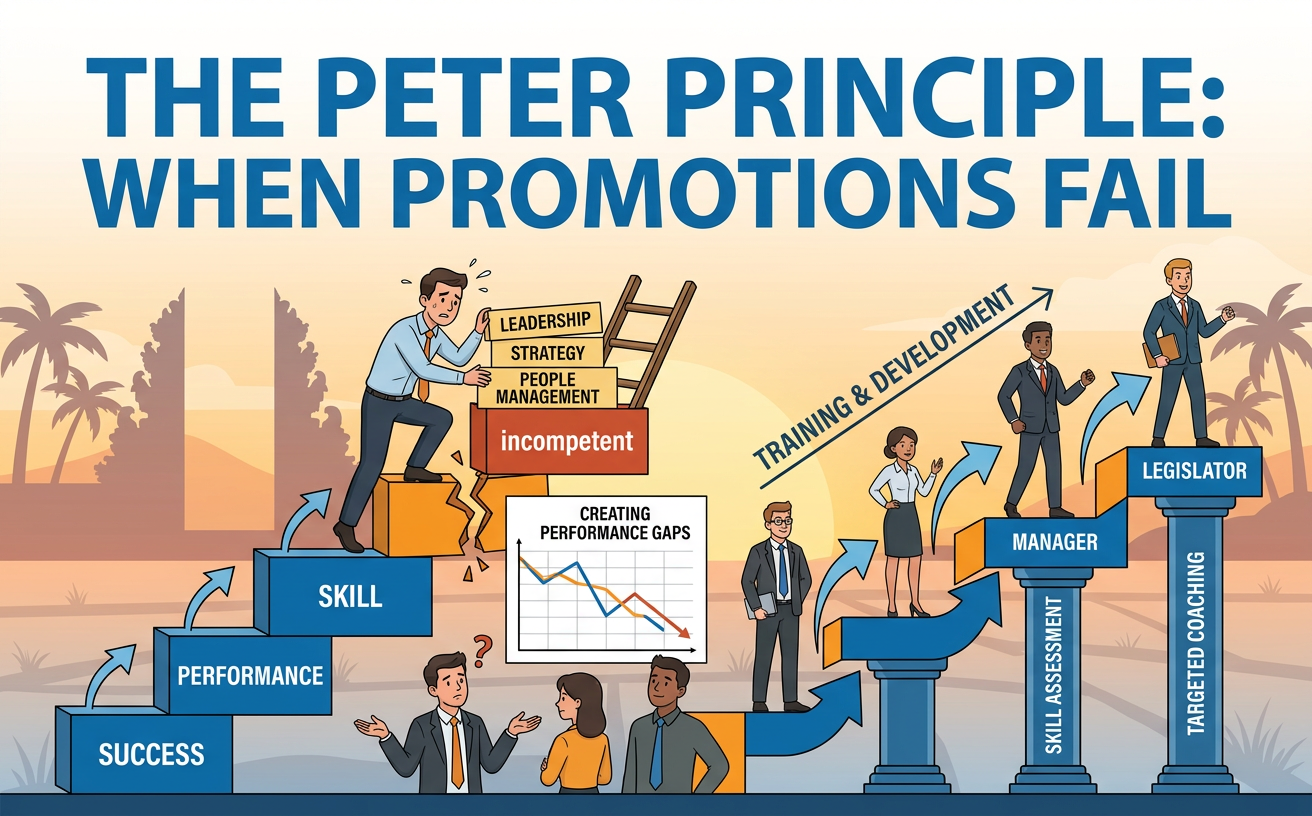
The Peter Principle describes a common organizational dynamic: employees are promoted based on success in their current role until they reach a level where they are no longer competent. This effect creates layers of mismatched skills across hierarchies, where technical performers become managers without the needed leadership capabilities. The principle highlights a systemic risk for companies that equate past performance with future suitability, rather than assessing role-specific competencies.
Understanding this dynamic reframes how organizations approach career progression. Rather than an automatic reward, promotion should be treated as a role change that requires new assessments, targeted development, and clear success metrics. Recognizing the distinction between task expertise and managerial capability is the first step to preventing competence gaps that erode productivity and morale.
Key elements of the concept
- Promotion based on performance in current role, not aptitude for next role
- Resulting competence ceiling that limits effectiveness at higher levels
- Systemic buildup of underqualified managers or role mismatches
What Could Your Bali Villa Really Earn?
How Promotions Impact Individual and Team Performance
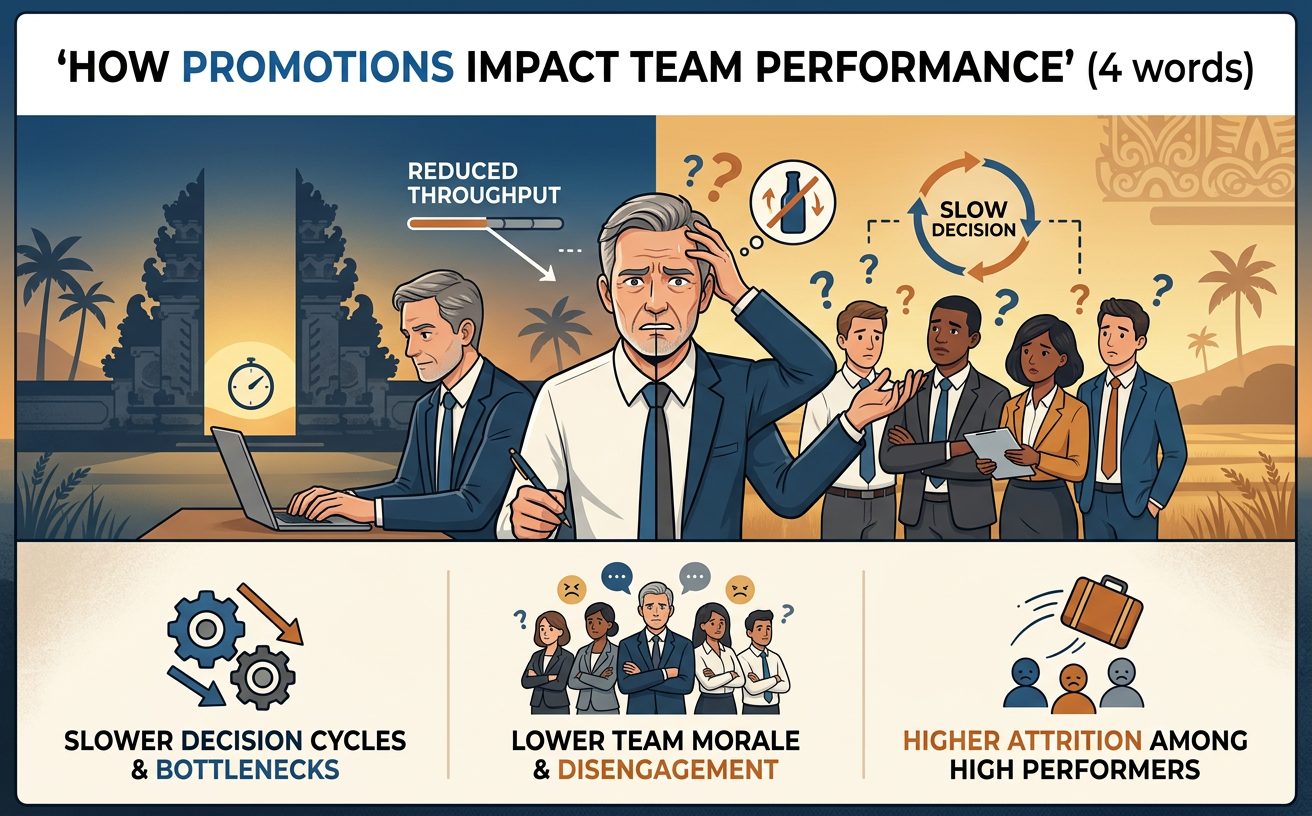
When a high-performing individual moves into a role that demands different skills, the immediate effect can be reduced individual effectiveness and slower team performance. The promoted person may struggle with delegation, strategic planning, or people management—skills that are often not required in their previous position. The mismatch leads to bottlenecks, poorer decision-making, and increased stress for both the individual and their reports.
At the team and company level, these effects compound: projects miss deadlines, innovation stalls, and employee engagement drops when leadership lacks role-appropriate competence. The resulting costs include hidden productivity losses and higher turnover as capable contributors become disengaged or leave for better-managed environments. Treating promotions as role redesigns helps quantify and mitigate these risks.
Common performance consequences
- Reduced throughput and slower decision cycles
- Lower team morale due to unclear direction or micromanagement
- Higher attrition among high performers who face poor leadership
Management Practices to Prevent Promotion-Driven Failure
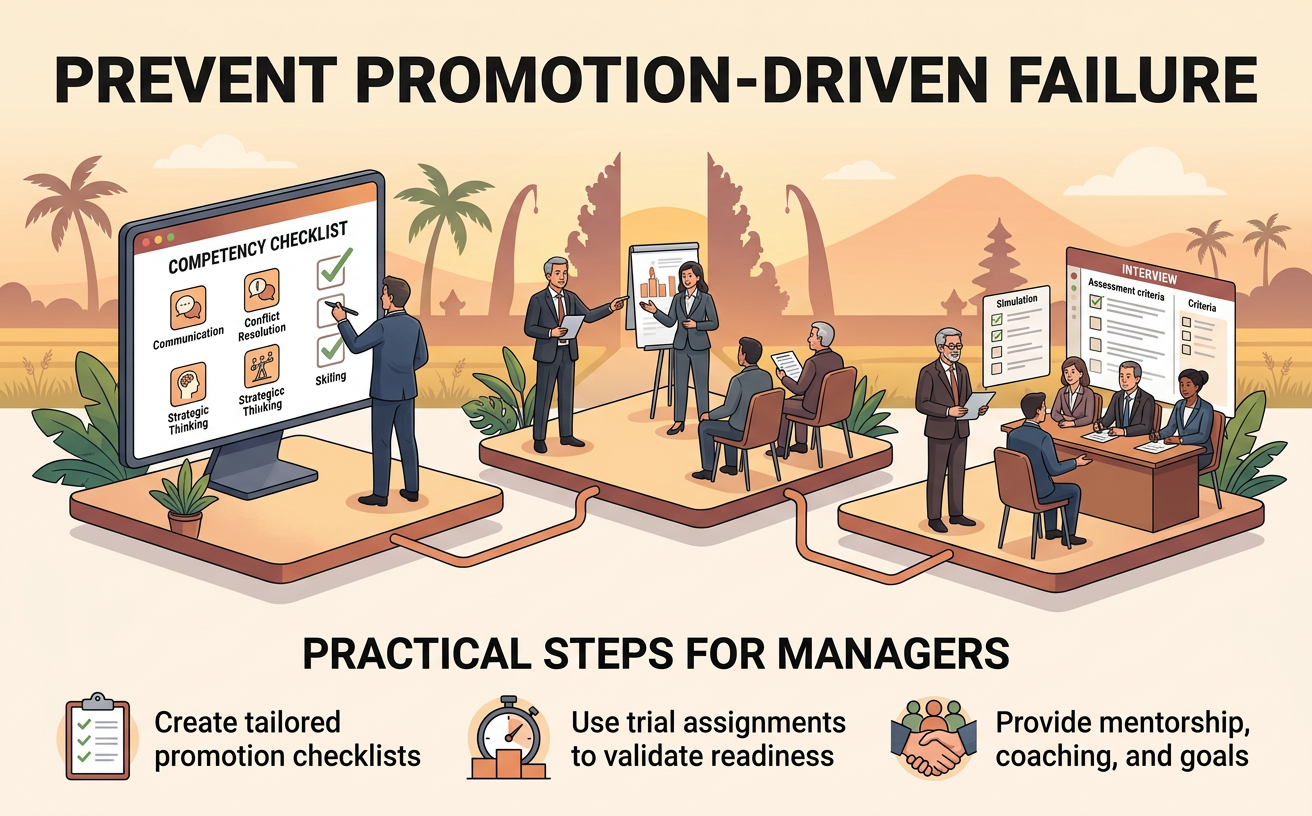
Effective organizations separate recognition from role changes by establishing competency frameworks and promotion assessments. Rather than promoting solely for past results, leaders should define the competencies required for the next role—communication, conflict resolution, strategic thinking—and assess candidates against those criteria. Structured interviews, simulations, and trial leadership assignments reveal aptitude for the new responsibilities before a formal promotion.
In addition to selection, invest in targeted onboarding and leadership development programs that accelerate capability building. Pair new managers with mentors, provide short-term coaching, and set clear, measurable objectives for the first 90–180 days. These deliberate steps reduce the risk of failure and create a culture where career growth is aligned with demonstrated readiness.
Practical steps for managers
- Create competency-based promotion checklists tailored to each role
- Use trial assignments or acting roles to validate readiness
- Provide mentorship, coaching, and early performance goals post-promotion
Designing Career Paths That Fit Skills, Not Titles
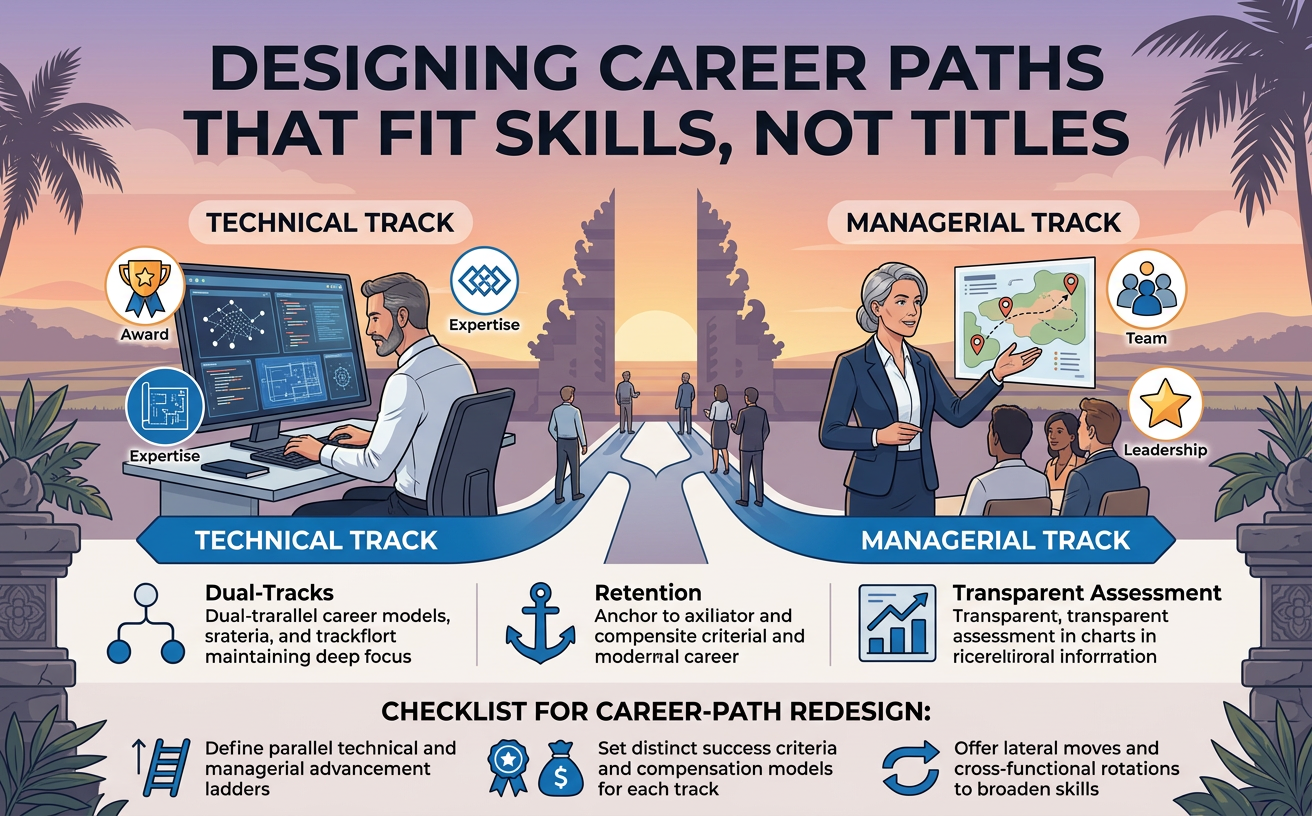
Another durable solution is offering dual tracks: technical and managerial. This allows talented contributors to progress and be rewarded without being forced into leadership roles that don’t match their strengths. Companies benefit by retaining deep technical expertise while also cultivating a separate pipeline for leadership that is assessed and trained for people management and strategic responsibilities.
Implementing robust performance metrics for both tracks makes expectations transparent and reduces bias in advancement decisions. Regular calibration sessions, feedback loops, and transparent career maps ensure employees understand how to grow in ways that match their skills and the organization’s needs. The result is stronger retention, clearer development investments, and fewer misplaced promotions.
Checklist for career-path redesign
- Define parallel technical and managerial advancement ladders
- Set distinct success criteria and compensation models for each track
- Offer lateral moves and cross-functional rotations to broaden skills
Key Takeaways
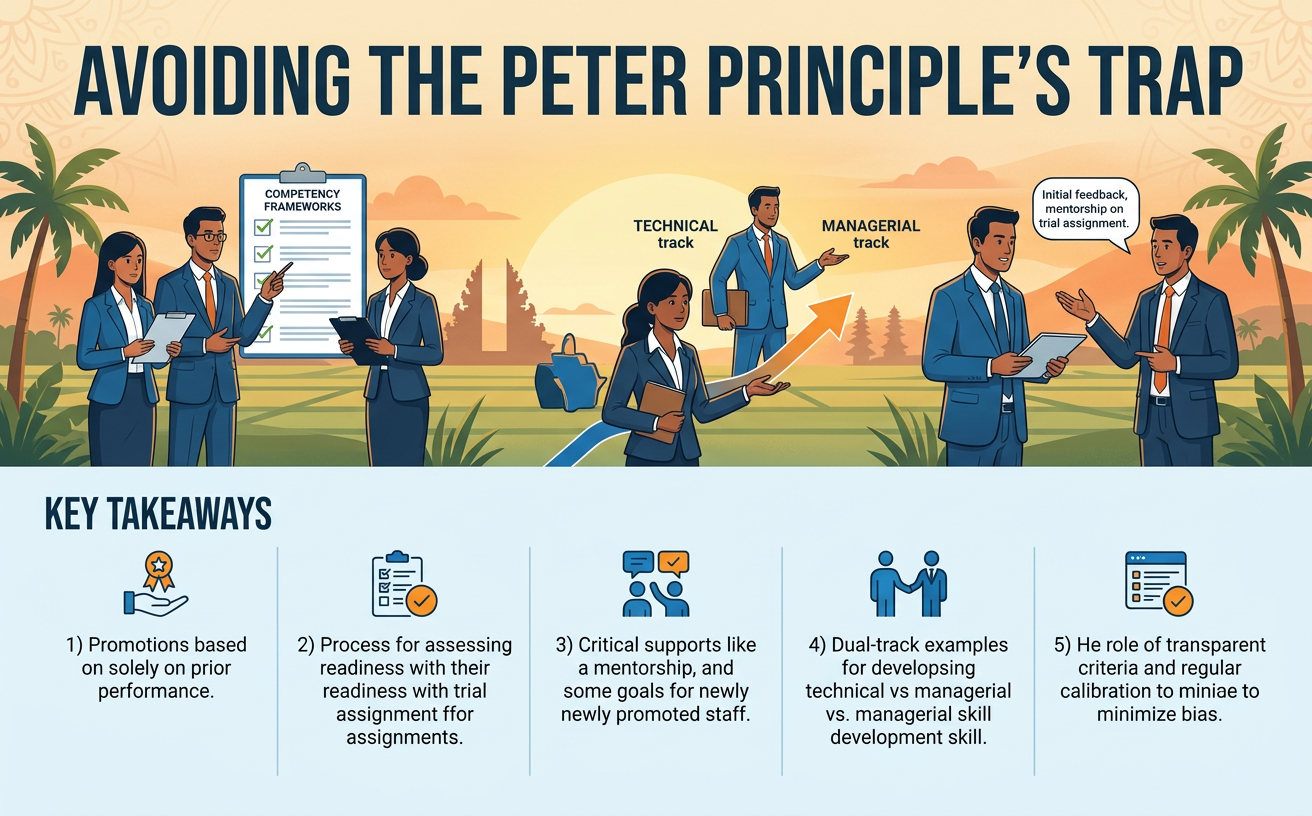
- Promotions based solely on prior role success often create role-skill mismatches that reduce performance.
- Assess readiness with competency frameworks, trial assignments, and structured evaluations before promoting.
- Invest in onboarding, mentorship, and early performance goals to support newly promoted employees.
- Provide dual career tracks (technical and managerial) to retain expertise while building leadership.
- Transparent criteria and regular calibration minimize biased promotions and long-term productivity loss.
Final word: The Peter Principle is not an inevitability; it is a design flaw in talent systems that can be corrected with intentional assessment, training, and career architecture. Organizations that distinguish reward from role and invest in readiness reduce hidden costs, improve retention, and sustain performance across levels. You can access the full discussion and supporting examples here: https://www.youtube.com/embed/SpsNxUY5X6A
Jason, Business Journalist at Bukit Vista
You’re a property owner? Wondering What Could Your Bali Villa Really Earn?
Get a data-driven revenue projection based on your property type, area, and bedroom count. Discover your villa’s true earning potential in Bali.