
The Quest for the Old Bali Experience: Rediscovering Authenticity, Culture, and Sustainable Revenue
Lead: We are unpacking content from Bali Business Review on YouTube to chart the evolving search for Bali’s original cultural identity. This report synthesizes observed shifts in visitor behavior, the status of key cultural and natural landmarks, and concrete data-driven steps property owners can take to measure and improve performance. Source link: https://www.youtube.com/embed/mrv4h4n-WWw
Hi, I’m Jason, a Business Journalist at Bukit Vista, and I’ll be unpacking analysis from Bali Business Review. Today, we’ll dive into The Quest for the Old Bali Experience to offer clear, data-driven insights.
Reframing the Journey: What “Old Bali” Means Today
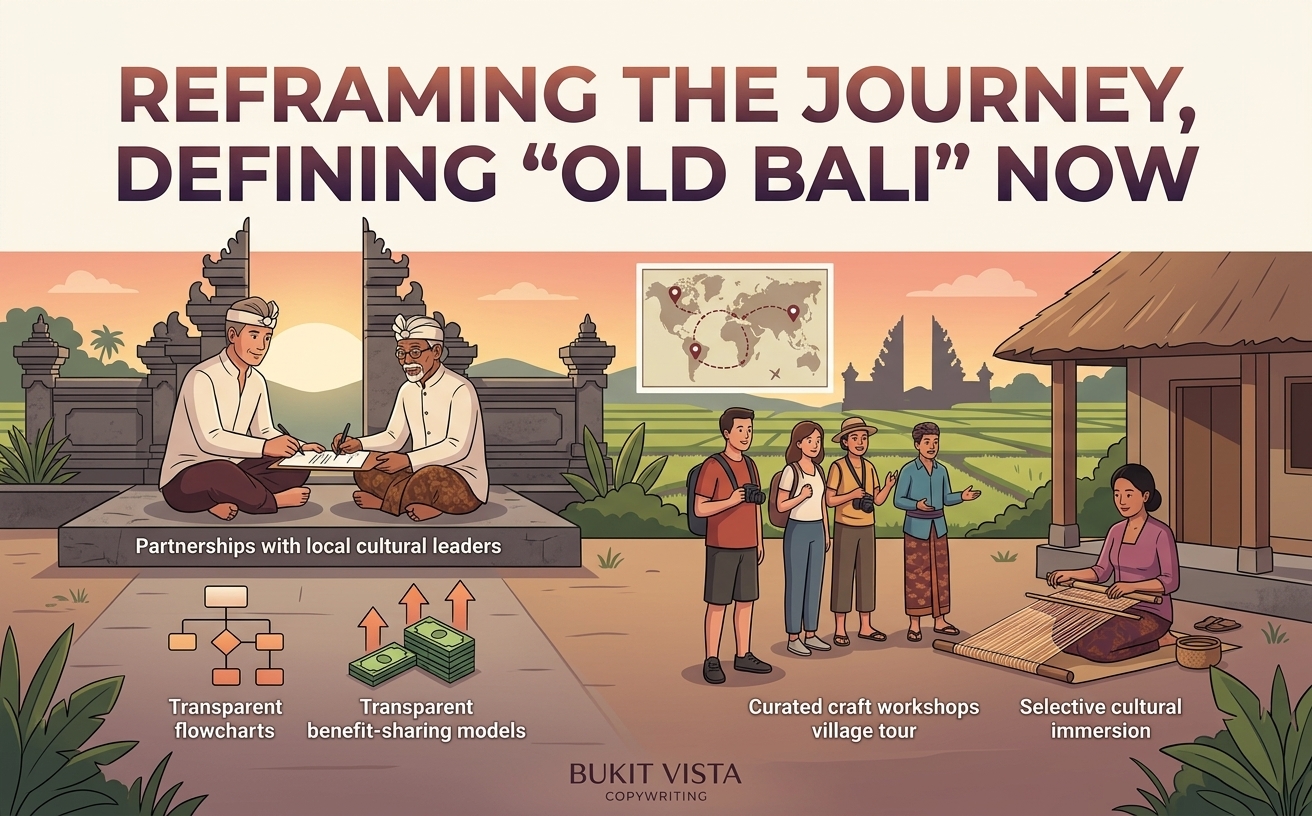
As tourism patterns mature, the search for an “Old Bali” has shifted from nostalgia to a practice of selective cultural immersion. Visitors increasingly want experiences that feel rooted and authentic rather than staged; this demand has encouraged local entrepreneurs, guides, and cultural custodians to adapt by emphasizing smaller-scale offerings such as village tours, traditional ceremonies arranged with community consent, and curated craft workshops. The result is a hybrid model where authenticity is both preserved and repackaged: conservation-minded projects coexist with commercial experiences, and the balance determines community support and visitor satisfaction.
What Could Your Bali Villa Really Earn?
For travel businesses and property owners, this means repositioning offers around verifiable cultural value. Instead of generic “traditional” themes, successful experiences highlight clear provenance, host involvement, and measurable benefits to local communities. That approach reduces critique of cultural commodification while delivering the immersive, slower-paced encounters many visitors now seek.
Practical elements to look for when curating an authentic experience
- Partnerships with local cultural leaders to ensure ceremonies and performances are respectful and compensated.
- Small-group itineraries that prioritize interaction with artisans, farmers, and community members over mass attractions.
- Transparent benefit-sharing models where a portion of revenue supports local projects or maintenance of heritage sites.
Cultural and Natural Landmarks: Preservation, Access, and Visitor Experience
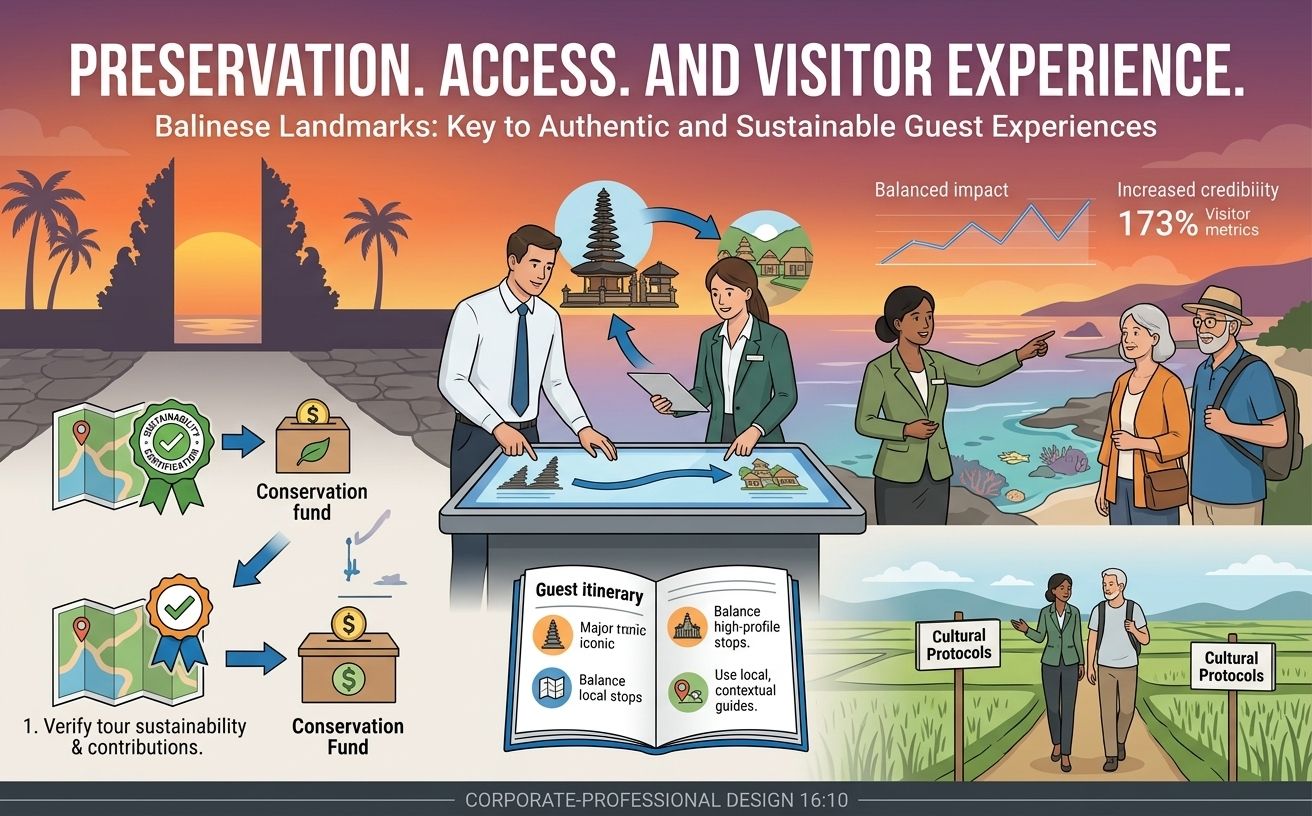
Bali’s temples, rice terraces, coastal reefs, and traditional villages form the backbone of what many consider the island’s authentic appeal. Preservation efforts vary widely: some landmarks benefit from active restoration and regulated access, while others suffer from overuse and fragmented management. The current landscape shows an emerging trend toward micro-management of high-traffic nodes—limited entry, timed visits, and guided access—paired with promotion of lesser-known sites to distribute visitor impact more evenly across regions.
This redistribution strategy improves the visitor experience by reducing crowding and protecting fragile sites, while also opening economic opportunities for communities outside the central hubs. Businesses that integrate conservation messaging into their marketing and contribute to stewardship programs tend to build stronger, longer-term credibility with culturally-minded travelers. From an operational standpoint, property managers who can craft and sell itineraries that include both landmark highlights and quieter local stops gain repeat business from guests seeking depth rather than checklist tourism.
Checklist for incorporating landmarks into guest experiences
- Verify the sustainability credentials of guided tours and confirm contributions to conservation or local funds.
- Design itineraries that alternate high-profile landmarks with community-based activities to reduce pressure on iconic sites.
- Use local guides and interpreters who can provide context and protect cultural protocols.
Modern Tourism’s Impact on Authenticity and Community Resilience
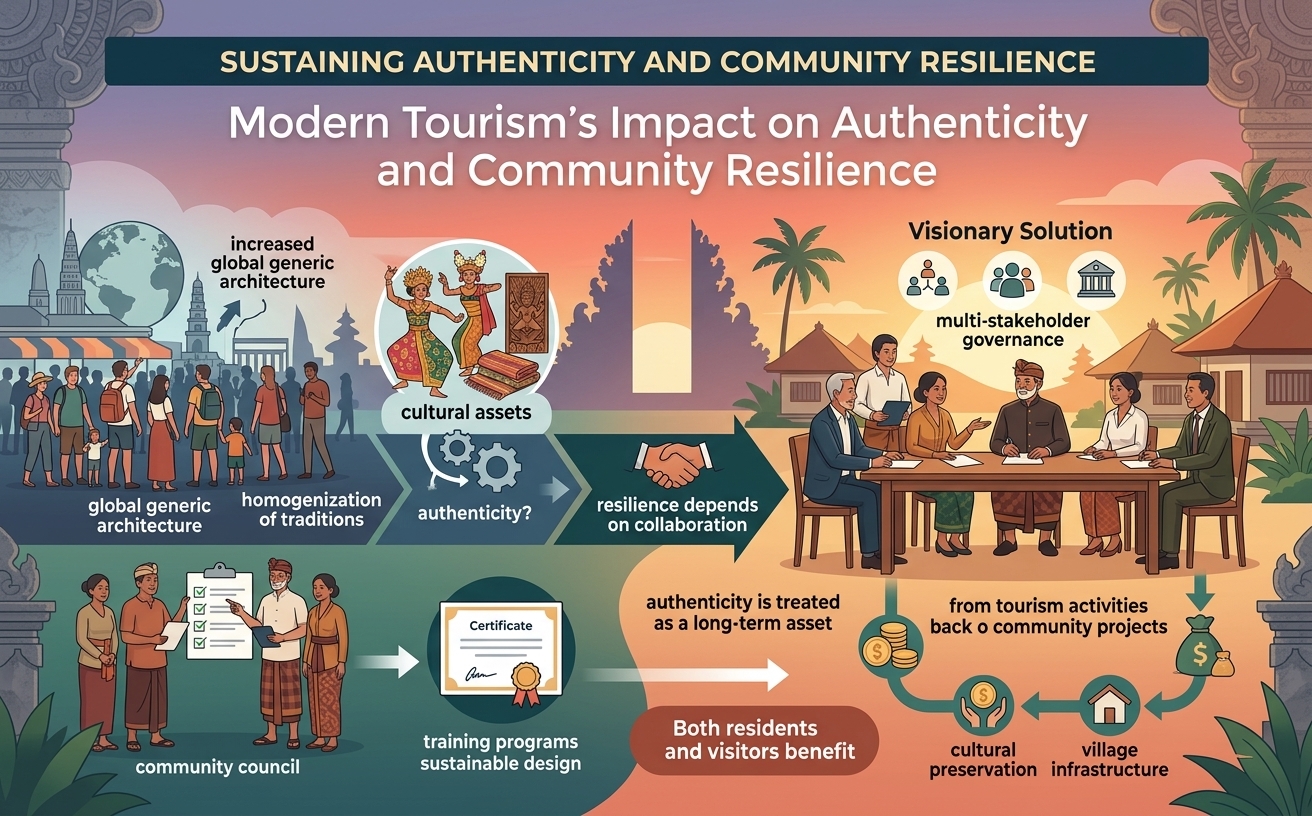
The commercialization of cultural assets and the rapid expansion of infrastructure have complex effects on authenticity. On one hand, increased visitation provides income and market access for artisans and service providers; on the other hand, it can encourage homogenization of traditions to suit visitor expectations. The communities that successfully maintain authenticity tend to be those that exercise agency—setting the terms of engagement, controlling visitor numbers, and ensuring fair remuneration for cultural labor.
For the tourism ecosystem, resilience depends on multi-stakeholder governance: community leaders, local government, tour operators, and property owners collaborating to protect intangible heritage while creating sustainable livelihoods. Adaptive strategies include community-led homestay networks, certification schemes for genuine cultural experiences, and revenue-sharing agreements tied to conservation outcomes. When authenticity is treated as an asset tied to long-term community well-being rather than an extractable resource, both residents and visitors benefit.
Actions communities and businesses can take to protect authenticity
- Create community councils to review tourist access and set cultural participation guidelines.
- Implement training programs for local hosts on sustainable tourism practices and experience design.
- Develop transparent financial mechanisms so tourism revenues fund cultural preservation and infrastructure.
Property Revenue, Performance Measurement, and the Role of Data
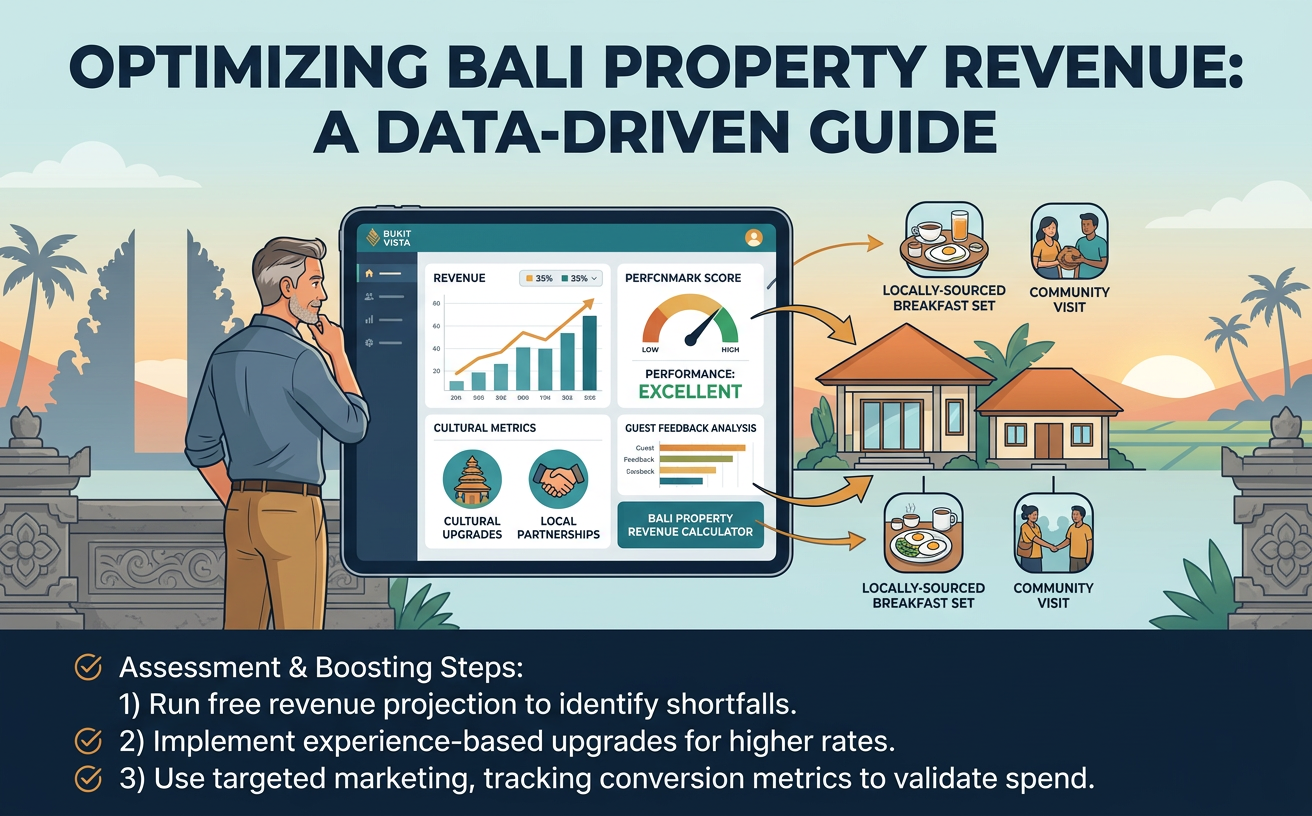
Property owners in Bali must reconcile cultural stewardship with commercial viability. Accurate revenue measurement and benchmarking are essential tools for understanding whether a villa or homestay is underperforming relative to market potential. The Bali Property Revenue Calculator offered by Bukit Vista provides an evidence-based starting point: it estimates revenue ranges based on property type, location, and bedroom count, helping owners identify gaps between current income and realistic potential. Using these insights, owners can prioritize investments—marketing, refurbishment, experience partnerships—that deliver the best returns.
Beyond a single estimate, owners should adopt a continuous performance framework: monthly occupancy and ADR tracking, guest feedback analytics focused on experience authenticity, and periodic comparison with similar properties that emphasize cultural immersion. Operational changes that align with the quest for Old Bali—such as offering locally-sourced breakfasts, hosting community visits, or partnering with certified guides—can elevate rates and occupancy among the discerning segments that pay premiums for genuineness. Property managers should test these offers and measure uplift, then scale what demonstrably improves revenue and guest satisfaction.
Steps to assess and boost property revenue
- Run a free revenue projection with the Bali Property Revenue Calculator to set a baseline and identify shortfalls.
- Implement experience-based upgrades tied to measurable guest feedback to command higher nightly rates.
- Use targeted marketing to reach culturally-minded travelers and track conversion metrics to validate spend.
Key Takeaways
- Authenticity sells when it is community-led and transparently beneficial; visitors increasingly seek depth over spectacle.
- Distributing visitor flows to lesser-known landmarks reduces pressure on hotspots and creates broader economic uplift.
- Communities and businesses must collaborate on governance, training, and revenue-sharing to protect cultural assets.
- Property owners should use the Bali Property Revenue Calculator to benchmark performance and identify value-adding investments.
Final word: The quest for the Old Bali experience is less about freezing the past and more about fostering living traditions that are respected and sustained. For property owners and tourism stakeholders, aligning business strategies with community-led authenticity and data-driven revenue management provides a pathway to resilient, meaningful tourism that benefits both hosts and guests.
Jason, Business Journalist at Bukit Vista
You’re a property owner? Wondering What Could Your Bali Villa Really Earn?
Get a data-driven revenue projection based on your property type, area, and bedroom count. Discover your villa’s true earning potential in Bali.