
How Children Transformed an Island’s Cleanliness: Lessons in Civic Education and Community Action
Unpacking content from Bali Business Review on YouTube, this report highlights how a group of children catalyzed island-wide behavior change. The account emphasizes practical steps, community buy-in, and measurable improvements in cleanliness that emerged from youth-led initiatives and simple educational tools.
Hi, I’m Jason, a Business Journalist at Bukit Vista, and I’ll be unpacking analysis from Bali Business Review. Today, we’ll dive into children-led island cleanliness and community change to offer clear, data-driven insights.
How the Initiative Began: Children’s Leadership and Local Mobilisation
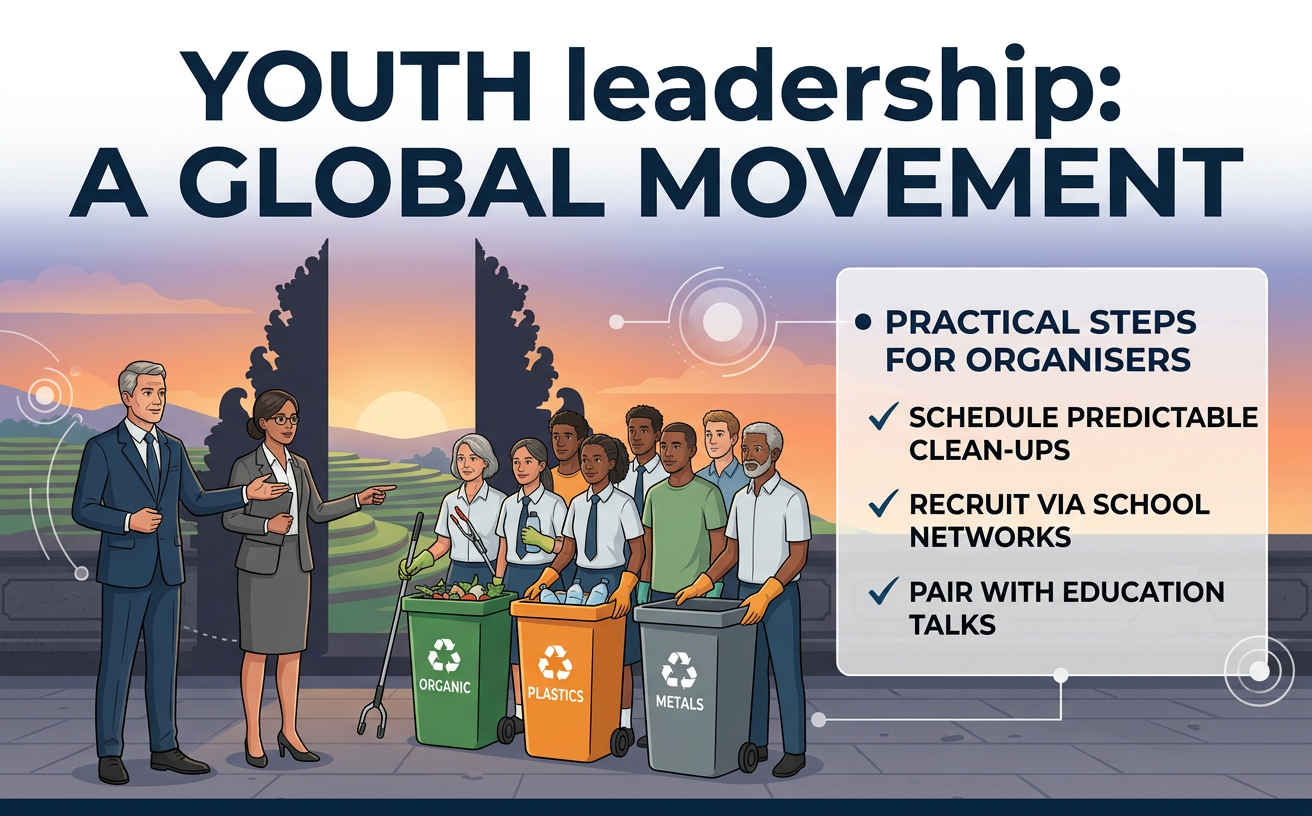
A small group of students and school teachers introduced organised clean-up activities that rapidly attracted attention across the island. Their approach relied on consistent, visible actions—regular street clean-ups, simple demonstrations about waste segregation, and respectful outreach to local households and businesses. Because the work was youth-led, the initiative gained moral authority and drew volunteers who might otherwise have been indifferent. The social momentum created by visible, repeated activities turned individual actions into a community norm.
Practical steps used by organisers
- Schedule predictable clean-up days to build routine.
- Use peers and school networks to recruit volunteers.
- Pair cleanup with short educational talks on waste management.
What Could Your Bali Villa Really Earn?
Shifting Social Norms: How Behavioural Change Spread
Children functioned as catalysts for new social norms by making cleanliness a collective expectation rather than an individual choice. Their activities reduced the social acceptability of littering and encouraged neighbours to participate in public space upkeep. The initiative also leveraged social proof: once a visible critical mass of participants was present, others adopted the behaviour to align with community standards. Over time, even small businesses and local vendors adjusted practices to match the emerging expectations.
Key components for spreading norms
- Visibility: public actions that everyone can see and replicate.
- Positive reinforcement: public recognition of participating households and groups.
- Local leaders: enlist respected figures to endorse and model behaviours.
Measuring Impact: Environmental and Social Outcomes
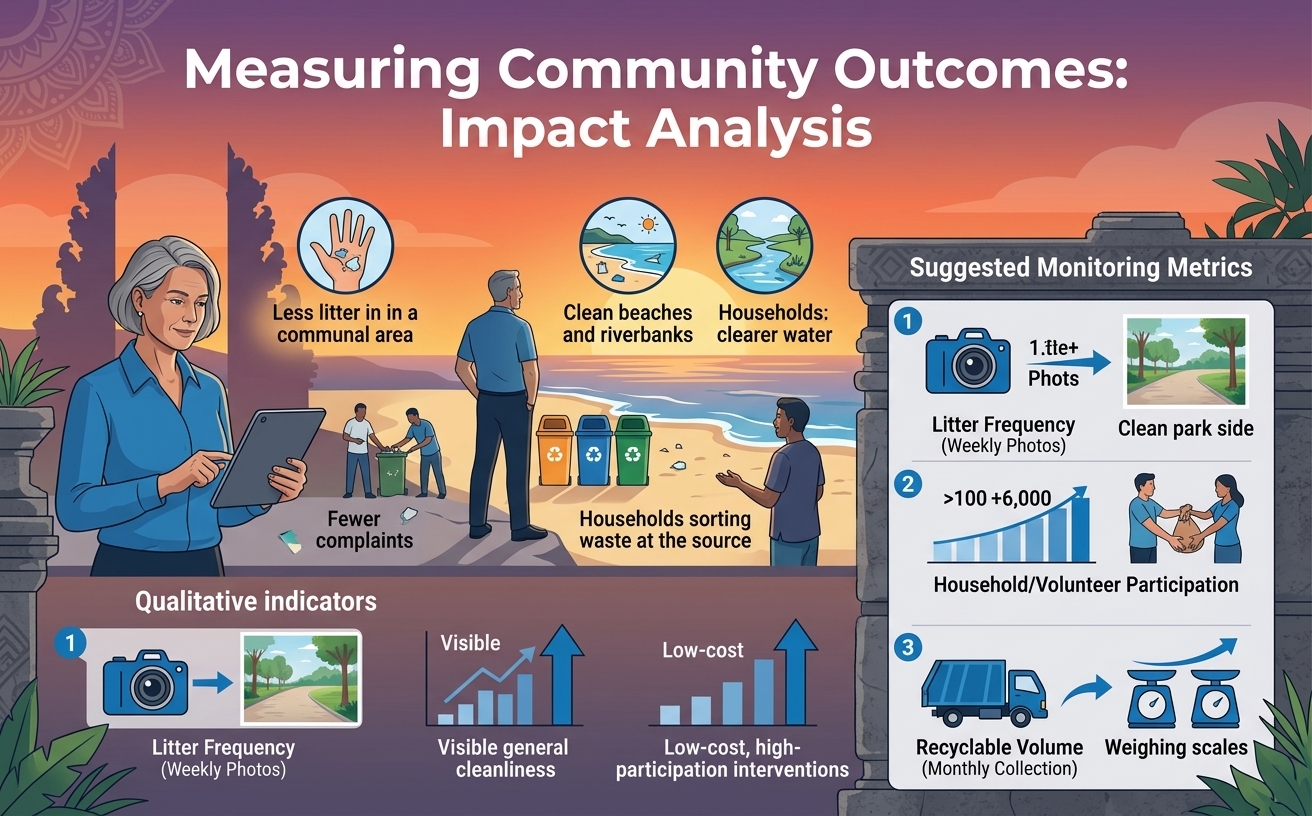
The island observed tangible improvements: reduced visible litter in communal areas, clearer beaches and riverbanks, and increased use of basic segregation at source in participating households. While full quantitative data may require follow-up studies, qualitative indicators—cleaner streets, fewer complaints, and more consistent waste collection—demonstrated credible progress. Importantly, the program showed that low-cost interventions can yield outsized benefits when community participation is high. Continued monitoring and simple metrics can convert anecdotal successes into documented results for replication.
Suggested monitoring metrics
- Frequency of litter in key public spaces (weekly photo logs).
- Number of participating households and repeat volunteers.
- Volume of separated recyclables collected monthly.
What Could Your Bali Villa Really Earn?
Education and Empowerment: Building Long-Term Habits
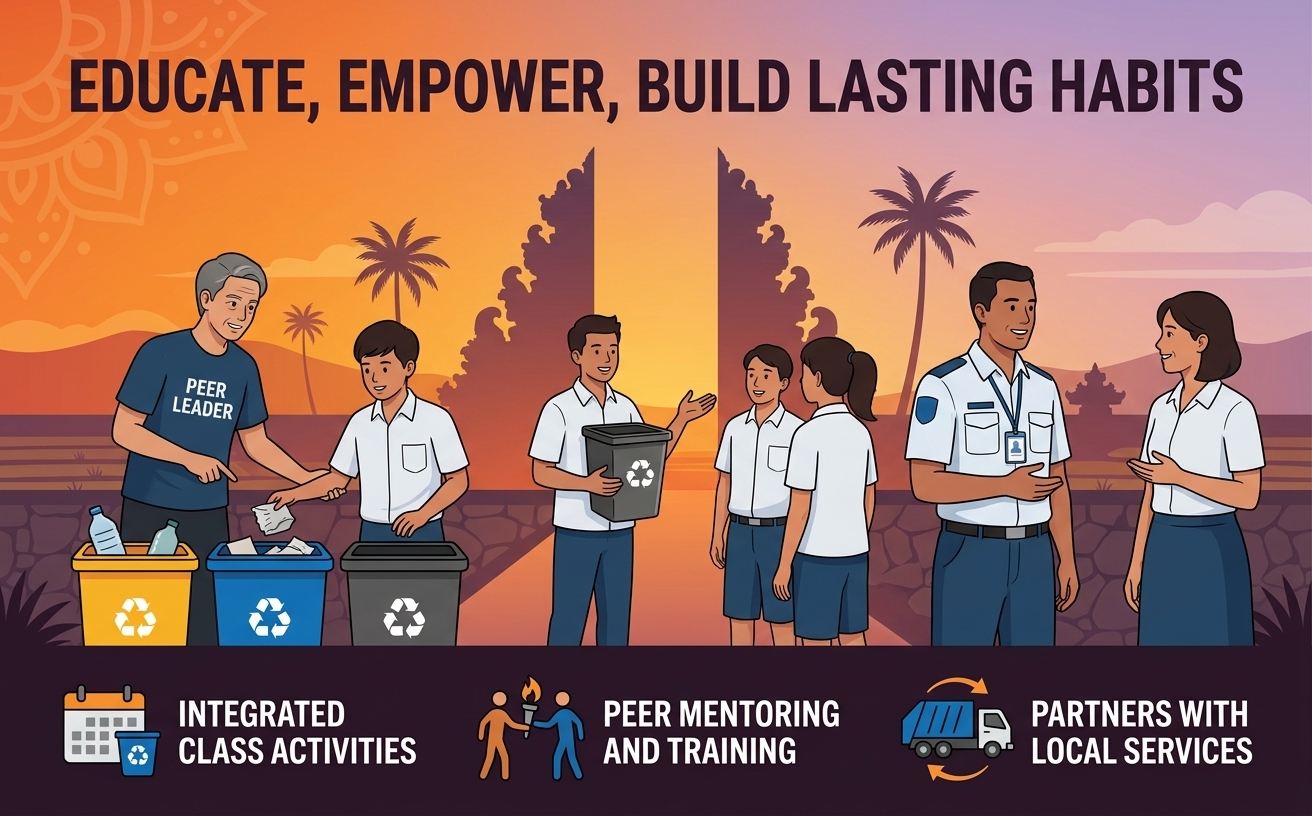
Embedding cleanliness into school activities and local culture turned one-off events into habits that younger cohorts inherit. Lessons focused on practical skills—how to sort waste, why plastics affect waterways, and how small daily actions aggregate into community outcomes. Empowerment came from responsibility: children who led initiatives gained agency and peer credibility, which reinforced behaviour across age groups. Replication depends on simple curricula, consistent adult support, and opportunities for youth to lead.
Elements of an effective educational approach
- Hands-on activities integrated into regular class schedules.
- Peer mentoring where older students train younger ones.
- Local partnerships with waste collectors and municipal services.
Scaling the Model and Implications for Policy and Property Owners
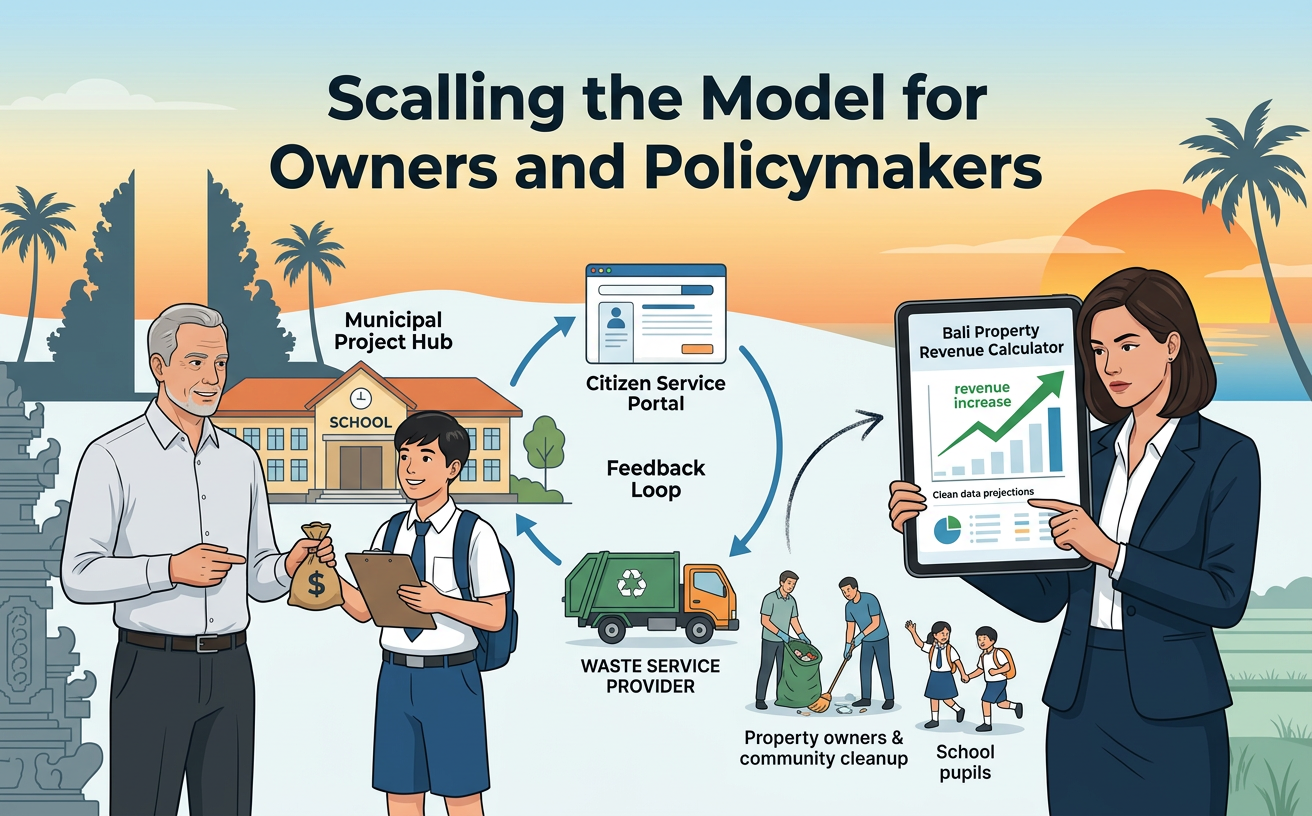
The island example offers a low-cost template municipalities can adapt: start in schools, prioritise visibility, and create feedback loops between citizens and service providers. For local policymakers, supporting youth-led campaigns with small grants or logistical help can catalyse broader behaviour change without large investments. Property owners and hospitality operators should note the reputational benefits of clean communities—both resident satisfaction and guest experience improve when public spaces are well maintained. Property stakeholders can use practical tools to estimate how improved local conditions influence earnings; for Bali owners, the Bali Property Revenue Calculator provides data-driven projections to assess opportunities.
How property owners can act
- Support community clean-up days as part of local CSR.
- Coordinate with schools to sponsor educational materials or waste bins.
- Use revenue projection tools like the Bali Property Revenue Calculator to quantify potential benefits from improved local infrastructure: Check My Villa’s Revenue Potential
Key Takeaways
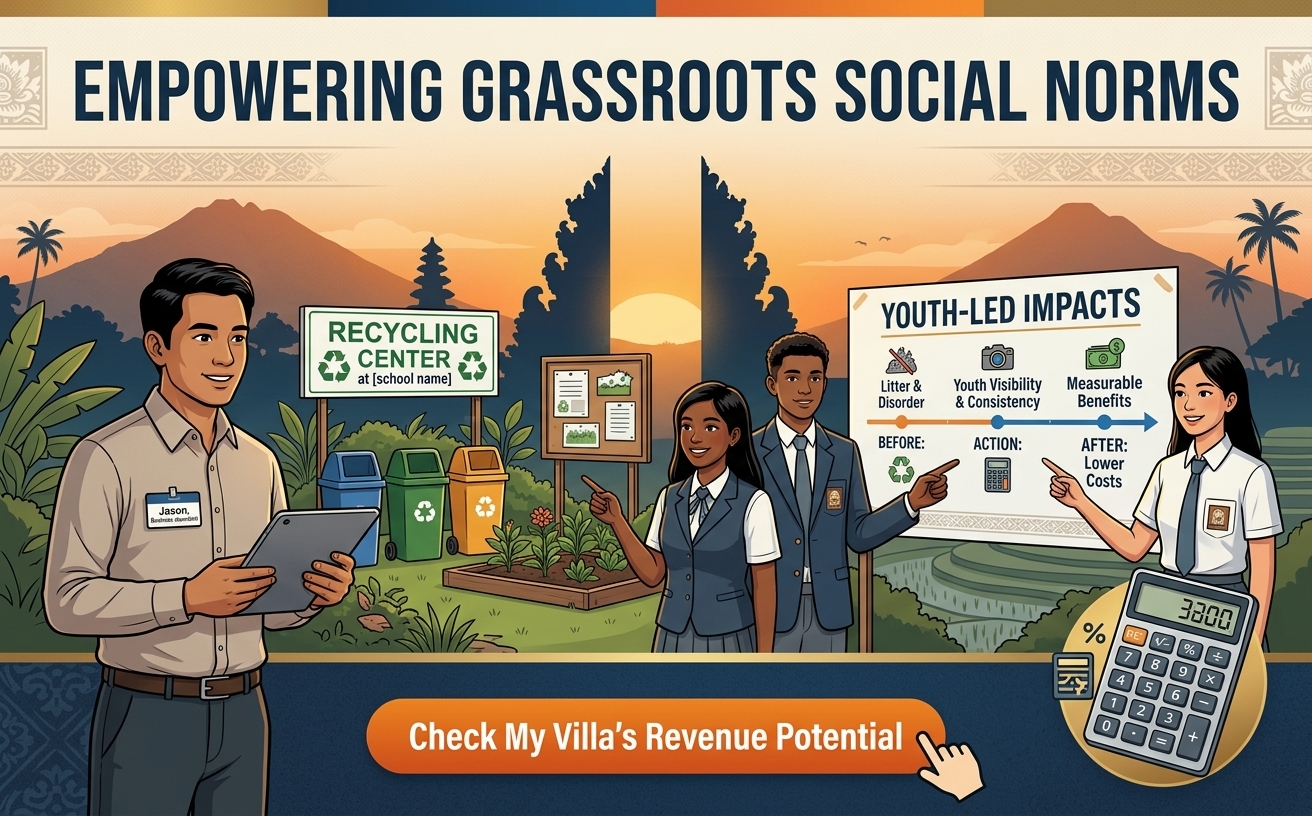
- Youth-led action can rapidly shift social norms when activities are visible and consistent.
- Low-cost, school-based interventions produce measurable environmental and social benefits.
- Simple monitoring—photo logs, participation counts, volume of recyclables—turns stories into scalable evidence.
- Policymakers and property owners both gain from supporting grassroots cleanliness programs.
- Property owners in Bali can estimate earning impacts using the Bali Property Revenue Calculator linked above.
Final word: the island’s experience demonstrates that empowering children with responsibility and simple tools creates durable public benefits. For businesses and local governments, the cost of supporting such grassroots programs is small compared with the social, environmental, and economic returns. View the original piece here: Watch the YouTube video for a firsthand look at the transformation and community dynamics.
Jason, Business Journalist at Bukit Vista
You’re a property owner? Wondering What Could Your Bali Villa Really Earn?
Get a data-driven revenue projection based on your property type, area, and bedroom count. Discover your villa’s true earning potential in Bali.