


Lombok vs. Bali: Are Lombok’s Beaches Actually Better?
Bali Business Review on YouTube released a focused comparison of Lombok and Bali shorelines. I’m unpacking content from Bali Business Review on YouTube, highlighting sand and water quality, crowd metrics, surf consistency, and the rental revenue implications for property owners based on observable data points.
Hi, I’m Jason, a Business Journalist at Bukit Vista, and I’ll be unpacking analysis from Bali Business Review. Today, we’ll dive into Lombok vs. Bali: Are Lombok’s Beaches Actually Better? to offer clear, data-driven insights.
Sand, Water Clarity and Beach Quality
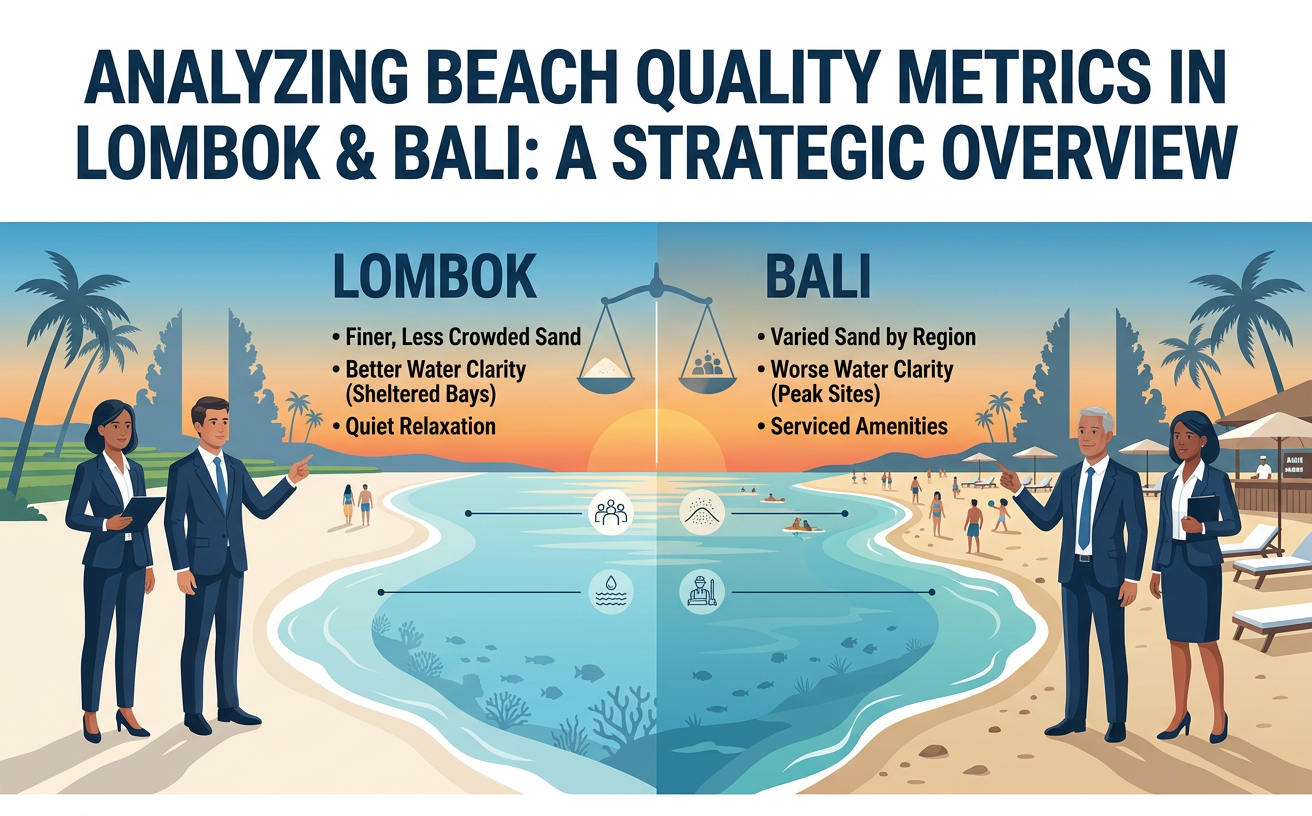
Comparing Lombok and Bali starts with the fundamentals: sand texture, water clarity and coastal maintenance. Lombok’s beaches—especially along the northwest and southern coasts—are regularly noted for wider stretches of finer, whiter sand and lower day-to-day crowding, which improves perceived water clarity and swimming conditions. Bali’s iconic beaches remain competitive in aesthetic terms, but many popular sites show higher visitor density, which can affect sand cleanliness and the overall leisure experience during peak seasons.
The analysis emphasizes that quality is context-driven: remote Lombok coves score higher for quiet relaxation and snorkeling visibility, while Bali offers more groomed stretches with amenities that attract families and mass tourism. For owners and operators, sand and water metrics translate into different guest expectations—quiet, premium stays in Lombok versus amenity-rich, higher-turnover bookings in Bali.
Beach Quality Checklist
- Sand: Lombok tends toward finer, less crowded stretches; Bali varies by region.
- Water clarity: Better in sheltered Lombok bays outside heavy tourist hubs.
- Maintenance: Bali offers more regularly serviced public beaches and facilities.
Accessibility, Infrastructure and Visitor Experience
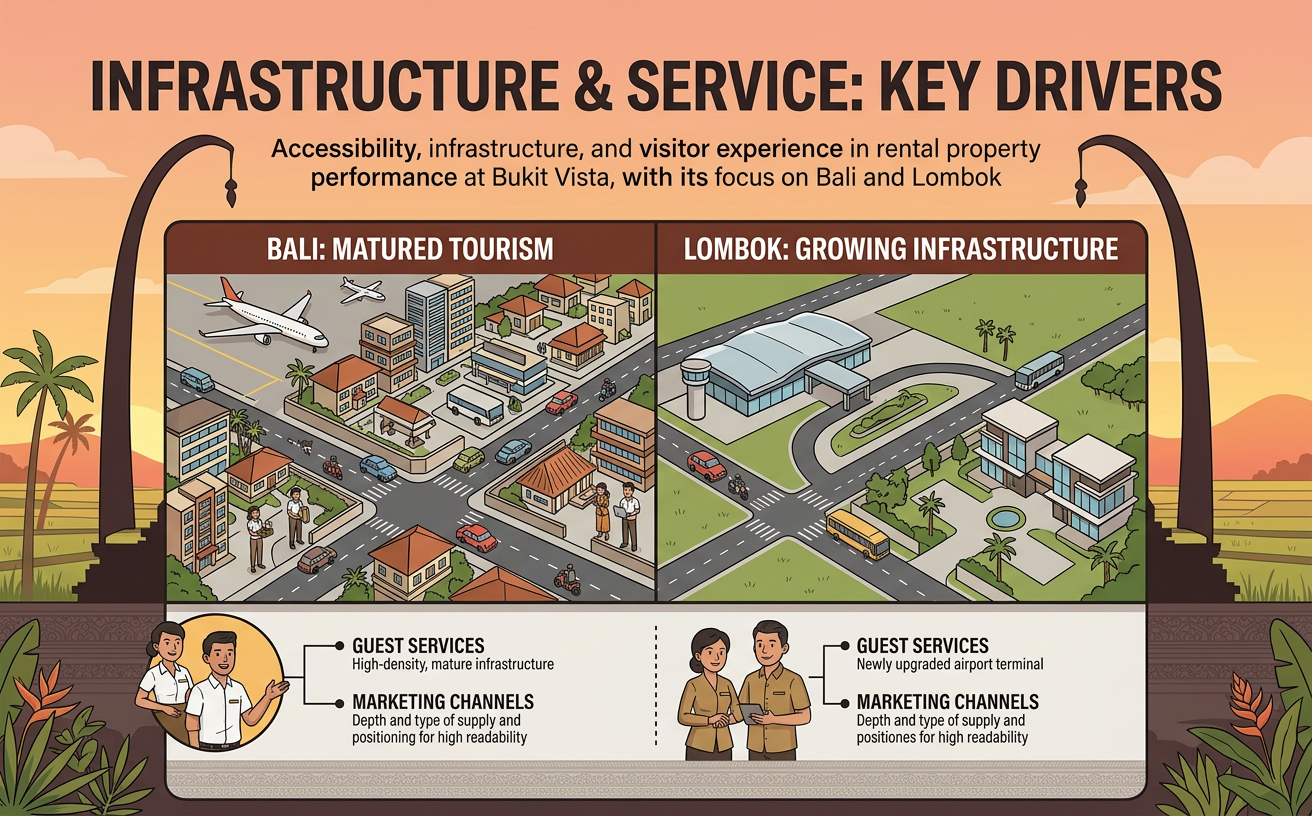
Accessibility is a decisive factor for many travelers and for short-stay revenue performance. Bali benefits from a matured tourism infrastructure—regular flights, dense road networks, and an extensive hospitality supply—making it easier for guests to arrive, move around, and book last-minute. Lombok has improved significantly after infrastructure investments like the new airport terminal and upgraded roads, but parts of the island remain less accessible and therefore attract a different traveler profile.
From a service perspective, Bali’s infrastructure supports a wider range of property management models, from high-turnover short-stay units to long-stay retreats. Lombok’s current edge is exclusivity and lower competition in certain beach corridors, which can command higher rates during targeted seasons but may see lower baseline occupancy without proactive marketing and transport solutions.
Infrastructure Considerations
- Transport: Bali — more frequent flights and transfers; Lombok — improving but variable.
- Guest services: Bali has deeper service supply; Lombok requires selective partnerships for premium guests.
- Marketing: Lombok properties benefit from niche positioning; Bali benefits from broader demand channels.
What Could Your Bali Villa Really Earn?
Surf, Activities and Seasonality
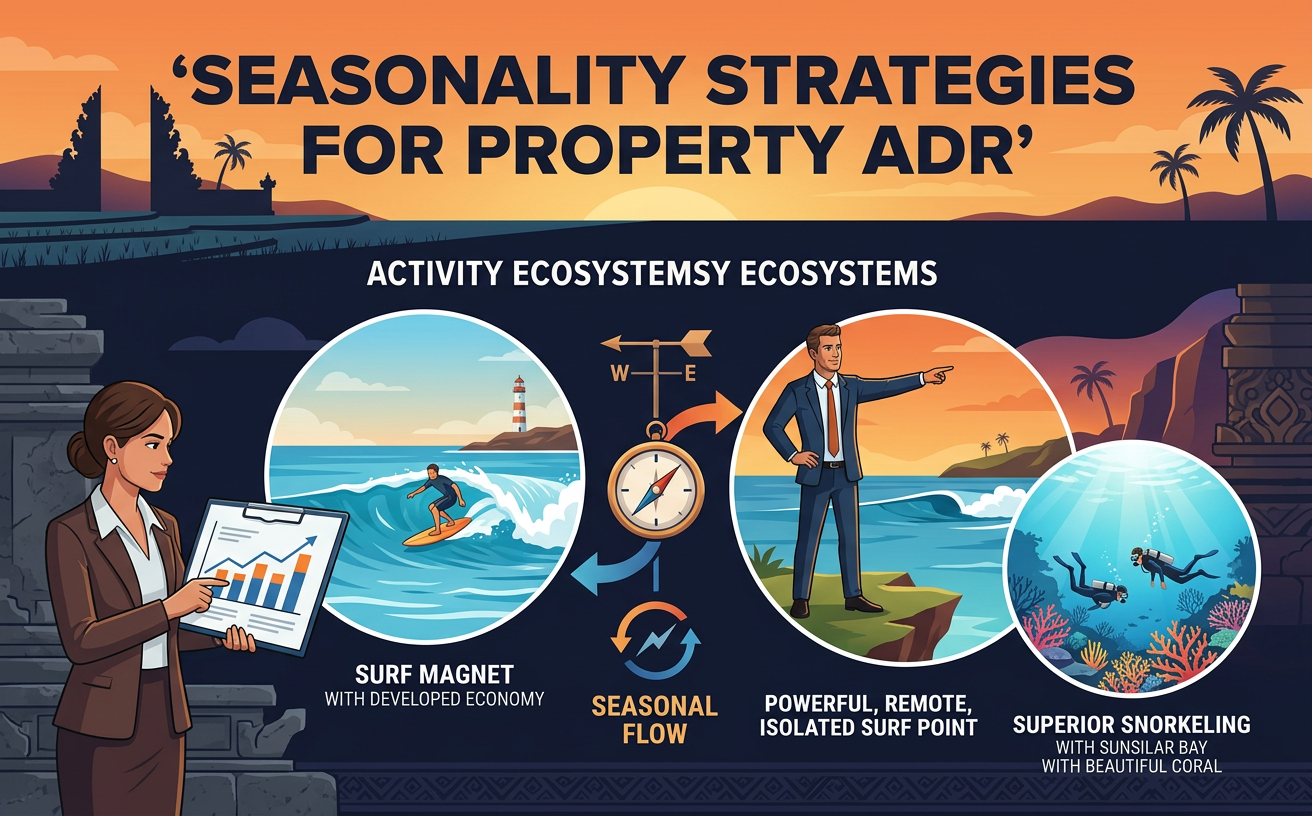
Surf and activity ecosystems shape beach desirability for niche travelers. Bali’s south coast remains a global surf magnet with consistent breaks and an established surf tourism economy. Lombok offers world-class surf in more isolated spots, with less crowding and a purer adventure appeal. Seasonal wind and swell patterns create predictable peaks: Bali attracts year-round visitors due to diversified activities, while Lombok’s peak windows are tighter but strong for specific markets like surfers and eco-travelers.
Activity mix impacts ancillary revenue: high-activity destinations produce more add-on bookings (guided tours, equipment rental, lessons). Owners should align property positioning—family-friendly, surf-centric, wellness retreat—with the dominant activity calendar and local seasonality to maximize ADR (average daily rate) and occupancy.
Activity Highlights
- Surf: Bali — reliable, crowded breaks; Lombok — high-quality, more remote spots.
- Snorkeling & diving: Lombok’s clearer bays can outperform many Balinese sites.
- Seasonality: Align pricing and promotions with peak swell and dry-season windows.
Property Revenue and Investment Implications

For property owners, the core question is not only which beach is objectively “better” but which location converts to higher, steadier revenue. Bali’s infrastructure and demand depth often produce more reliable occupancy and diversified revenue streams. Lombok can yield premium nightly rates in curated segments but may require more strategic marketing and longer booking lead times. The economic trade-offs are between volume-driven returns and niche premium positioning.
To evaluate potential earnings with real market data, use the Free Bali Property Revenue Calculator from Bukit Vista. The calculator models revenue by property type, area and bedroom count, giving immediate, data-driven estimates to help owners compare earning potential between Bali and Lombok-focused investments. For a detailed, side-by-side exploration and practical examples cited in the analysis, view the embedded exploration at the link above: https://www.youtube.com/embed/nqQe6O_Mw9s
Revenue Action Steps
- Run a location-specific revenue estimate via the Bali Property Revenue Calculator
- Match property positioning (family, surf, wellness) to peak season windows.
- Factor in marketing and transport costs when comparing Lombok and Bali returns.
Key Takeaways
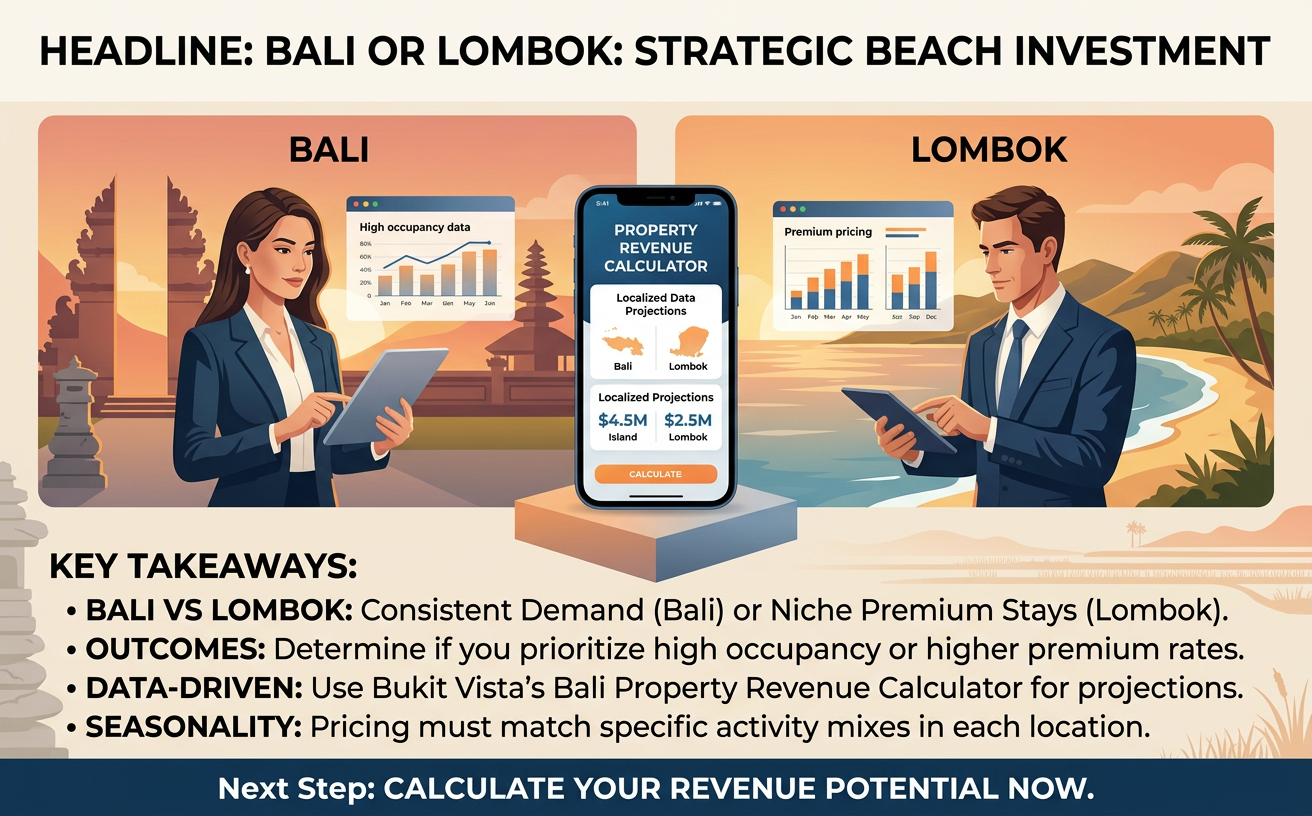
- Lombok often wins on sand quality and quieter bays; Bali wins on accessibility and consistent demand.
- Investment outcomes depend on whether owners prioritize occupancy volume (Bali) or premium niche rates (Lombok).
- Seasonality and activity mix must shape pricing strategies and guest targeting to maximize revenue.
- Use Bukit Vista’s Bali Property Revenue Calculator to generate immediate, localized revenue projections before deciding.
Final word: the “better” beach depends on strategic goals. For scalable, diversified short-stay income, Bali’s developed market is hard to beat. For premium, experience-driven stays with lower competition, Lombok offers a compelling alternative. Property owners should quantify potential with data — start with the Bali Property Revenue Calculator to translate beach qualities into forecasted revenue and informed investment choices.
Jason, Business Journalist at Bukit Vista
You’re a property owner? Wondering What Could Your Bali Villa Really Earn?
Get a data-driven revenue projection based on your property type, area, and bedroom count. Discover your villa’s true earning potential in Bali.