


Revealed: Is Ubud a Ghost Town by Day and Vibrantly Alive at Night?
Unpacking content from Bali Business Review on YouTube, this report contrasts Ubud’s tranquil daytime pace with its lively evening economy. The coverage highlights daytime low-footfall zones, evening spikes in dining and entertainment bookings, and shifting occupancy trends that affect hospitality revenue and local businesses.
Hi, I’m Jason, a Business Journalist at Bukit Vista, and I’ll be unpacking analysis from Bali Business Review. Today, we’ll dive into Ubud’s day-to-night transformation to offer clear, data-driven insights.
Daytime: Calm Streets and Cultural Rhythm
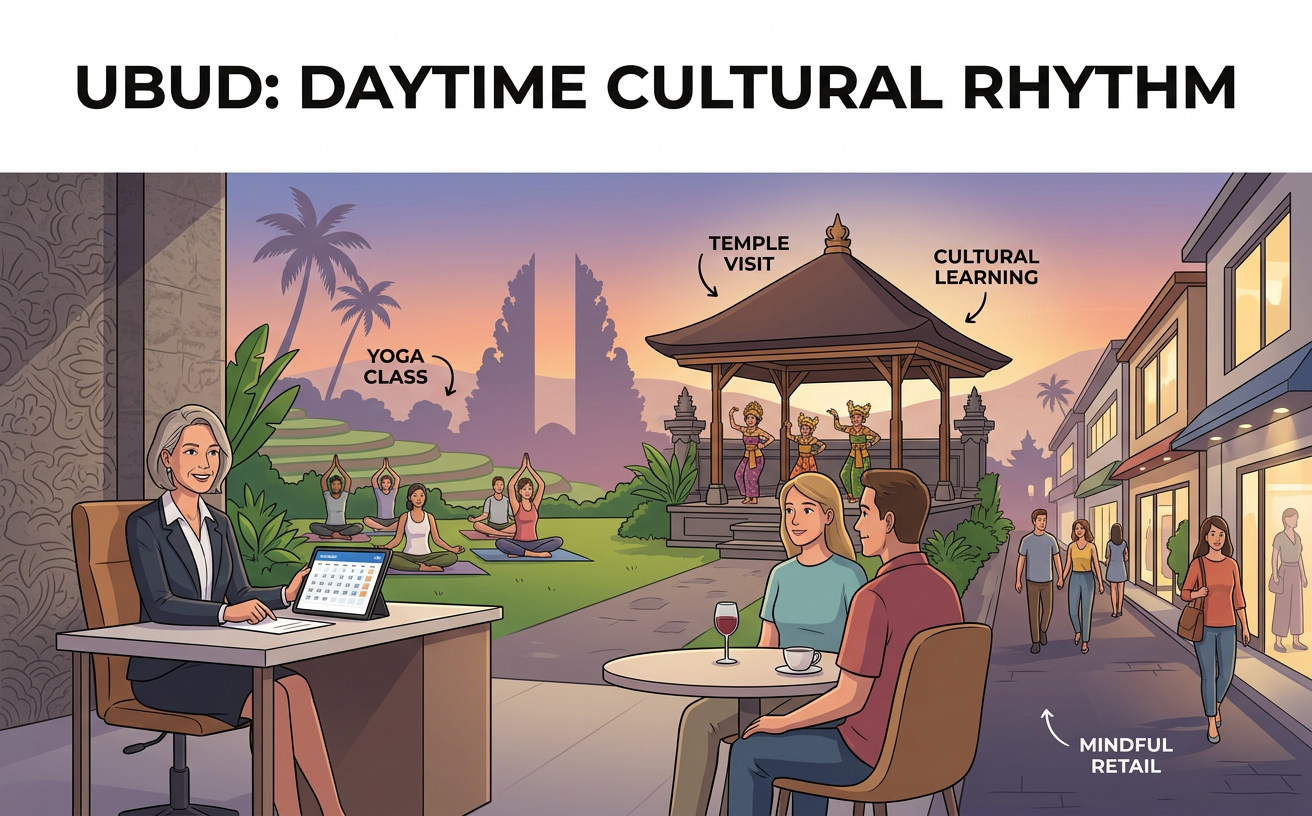
Ubud’s daytime personality centers on cultural attractions, wellness retreats, and a slower retail rhythm. Visitors often seek temple visits, rice-terrace walks, and yoga classes, which distributes activity across the town rather than concentrating it in one nightlife hub. This results in many streets and hospitality venues appearing quiet between late morning and mid-afternoon despite steady niche tourism activity.
The daytime calm is not necessarily negative for businesses; it reflects a different customer type—longer-stay guests who prioritize experiences over rapid turnover. For property owners, daytime occupancy patterns influence housekeeping schedules, marketing focus, and dynamic pricing windows.
What Could Your Bali Villa Really Earn?
Nighttime: Dining Economy and After-Dusk Energy
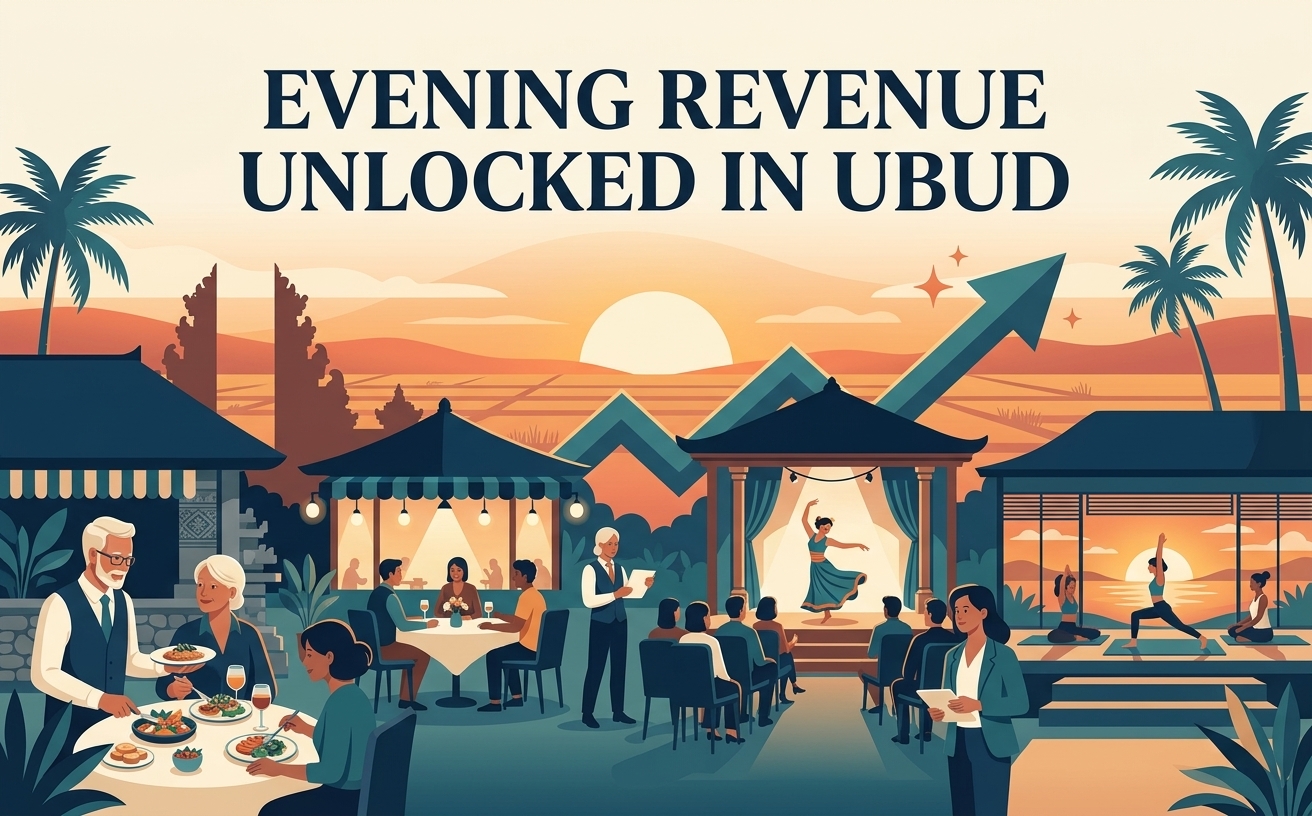
After sunset Ubud shifts into an energetic evening scene, driven by restaurants, cultural performances, live music, and small-scale nightlife. Evening footfall concentrates around dining corridors and event spaces, creating meaningful revenue windows for F&B operators and experience hosts. This temporal shift means daily revenue curves often peak at night even when daytime streets appear subdued.
Evening revenue drivers
- Locally curated dining experiences and boutique restaurants
- Evening cultural shows and intimate performance venues
- Wellness and retreat programs offering evening classes or dinners
Lifestyle & Culture: Why Ubud Feels Different Across the Day
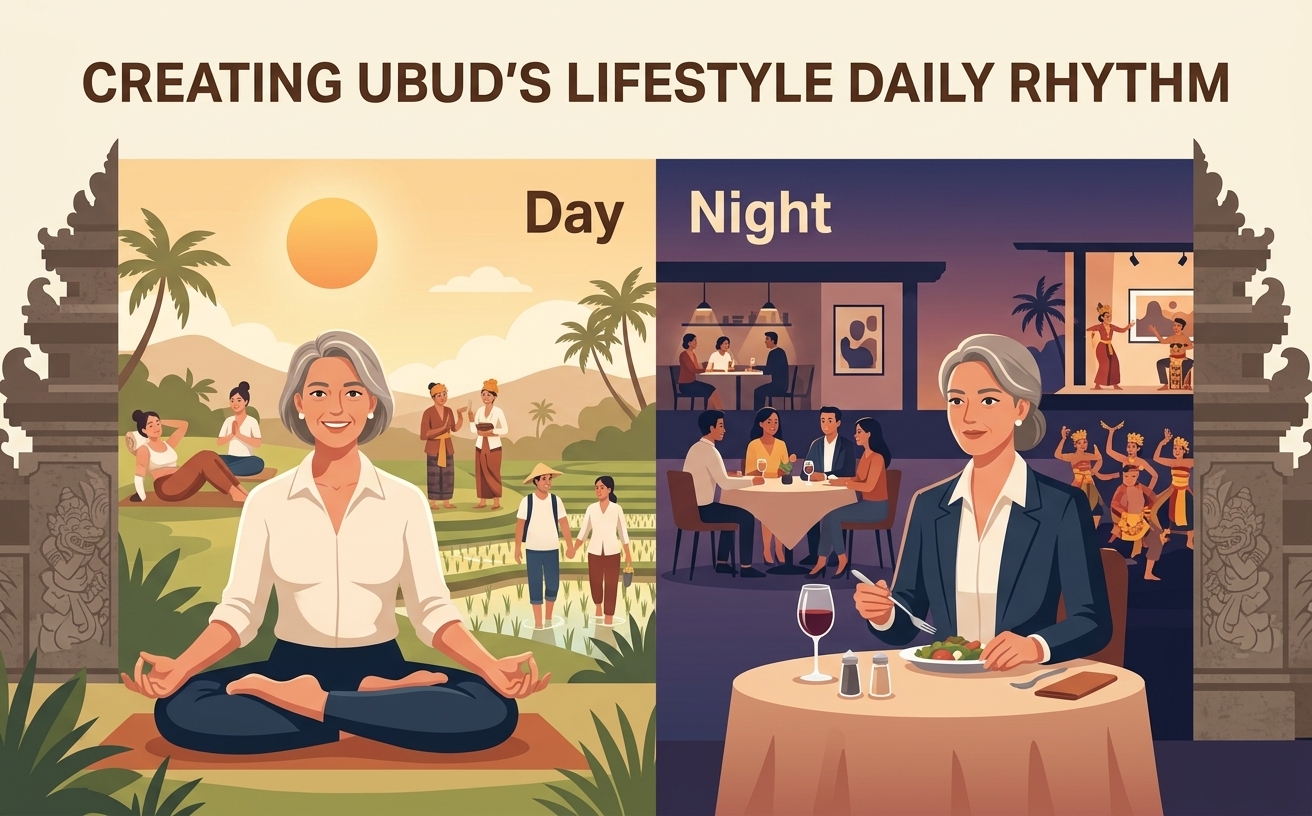
Ubud’s identity blends tradition, wellness, and creativity, which produces a layered daily rhythm rather than a single tourist tempo. Daytime activities emphasize relaxation and cultural immersion while evenings prioritize social dining and curated entertainment. Residents and longer-stay visitors often shape weekday daytime patterns, while weekends and holidays amplify both day and night activity.
This cultural cadence supports businesses that can cater to experience-driven demand—wellness providers, boutique eateries, galleries, and bespoke tour operators. Understanding the local lifestyle helps brands and property owners align services to guest expectations across both day and night.
Business Opportunities & Property Performance in Ubud
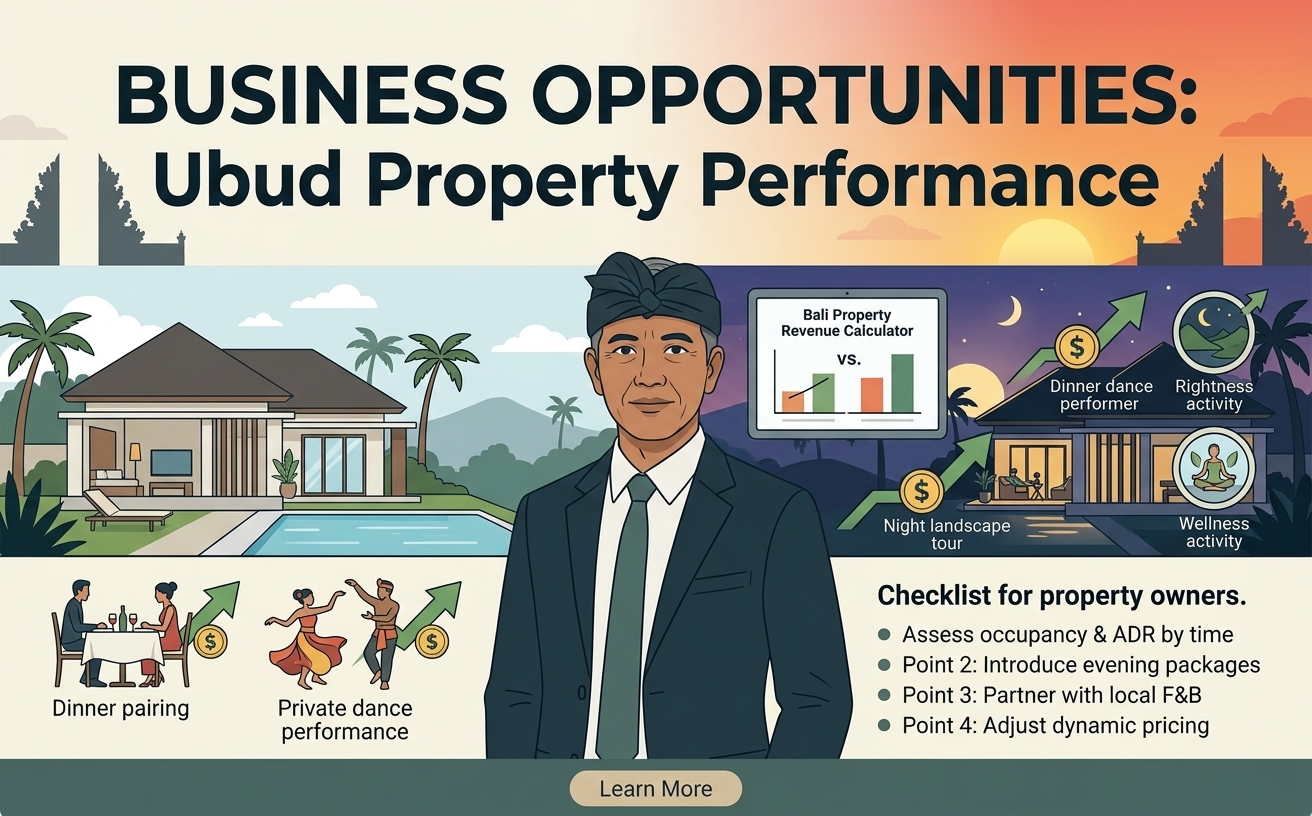
The day-to-night transformation creates targeted opportunities for owners to optimize revenue by aligning offerings with temporal demand. Properties that package evening experiences—dinner pairings, private performances, night tours—capture higher ADRs and lengthen revenue windows. Conversely, properties relying solely on daytime tourist footfall may underperform without a strategic repositioning.
Accurate revenue projections are vital for these decisions. View the full segment at https://www.youtube.com/embed/yI8fBbb38ss and compare on-the-ground insights with your property’s performance using the Bali Property Revenue Calculator to identify gaps and upside potential.
Checklist for property owners
- Assess occupancy and ADR by time of day to spot evening revenue potential
- Introduce evening-focused packages (dinner, cultural nights, wellness events)
- Partner with local F&B and experience providers to boost guest retention
- Adjust dynamic pricing to capture weekend and evening demand peaks
Optimizing Listings & Guest Experience
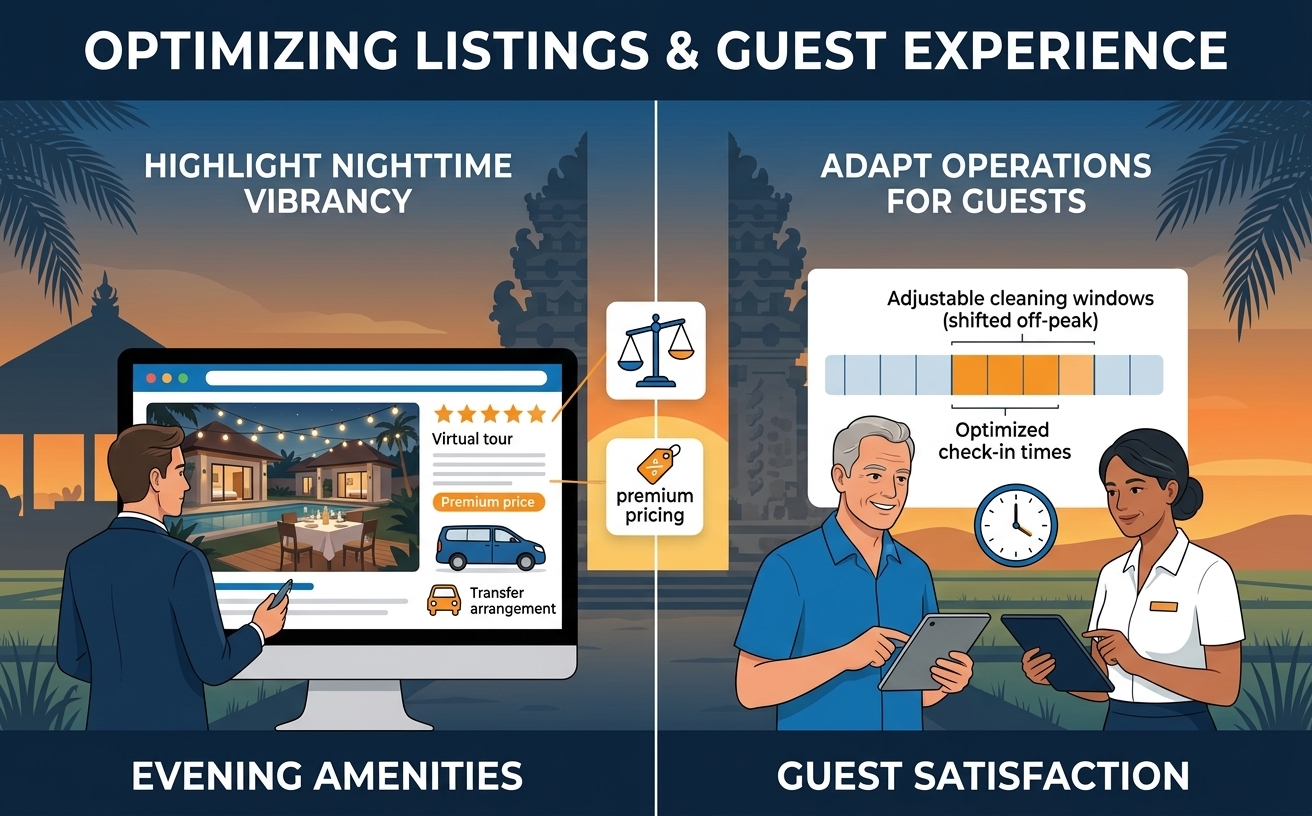
Small listing edits that reflect evening amenities—ambient lighting, private dining, transfer arrangements—can increase booking intent for guests seeking nighttime experiences. High-quality photography of evening settings and promoted event partnerships help signal value and justify premium pricing. Operationally, shifting cleaning and check-in windows to match guest schedules improves satisfaction and turnover efficiency.
Promotions that highlight both daytime serenity and evening vibrancy attract a broader audience: wellness seekers by day and social diners by night. This dual narrative increases perceived value and expands market reach.
Key Takeaways
- Ubud’s daytime calm coexists with strong evening demand—both are valuable market conditions.
- Evening-focused experiences and dynamic pricing unlock measurable revenue upside for villas and hotels.
- Use the Bali Property Revenue Calculator to benchmark your property’s performance and reveal hidden opportunities: https://www.bukitvista.com/bali-villa-management?utm_source=BBR&utm_medium=video&utm_campaign=revcalc
- Small operational and listing changes can convert daytime lulls into evening bookings and higher ADRs.
Final word: Ubud is not strictly a ghost town by day but a destination with complementary day and night economies. For property owners and local businesses, the opportunity lies in aligning offerings to this rhythm and using data-driven tools to quantify potential gains. Start with a revenue projection, test evening-focused packages, and adapt pricing to capture the town’s after-dark vitality.
Jason, Business Journalist at Bukit Vista
You’re a property owner? Wondering What Could Your Bali Villa Really Earn?
Get a data-driven revenue projection based on your property type, area, and bedroom count. Discover your villa’s true earning potential in Bali.