

The Big Secret: You’re Not Buying Land, You’re Buying Time
We are unpacking content from Bali Business Review on YouTube, highlighting a central insight: property acquisition should be viewed as buying time and future revenue, not just land. The analysis focuses on market-driven KPIs, underperformance indicators, and the practical use of real data to estimate Bali property earnings.
Hi, I’m Jason, a Business Journalist at Bukit Vista, and I’ll be unpacking analysis from Bali Business Review. Today, we’ll dive into why property purchases are investments in time and revenue to offer clear, data-driven insights.
Buying Time vs. Buying Land: Reframing Property Investment

Investors often treat plots and titles as static assets, but the true economic value sits in the time advantage a property delivers — the years of cash flow and market positioning it unlocks. When you buy a property, you are effectively buying future operational windows, occupancy cycles, and the ability to capture rising demand. In fast-growing markets like Bali, where tourism dynamics and seasonal demand shift quickly, acquiring property early can convert into multiyear revenue streams that outpace the land’s nominal appreciation.
Viewing a purchase through the lens of time changes investment priorities: you prioritize location timing, renovation lead times, permit speed, and operational readiness. These time-related levers directly influence how soon a property becomes revenue-generating and how much it earns annually. The mindset shift from asset accumulation to time capture helps owners focus on accelerating revenue realization rather than just holding for capital growth.
Practical considerations
- Time-to-market: speed of getting the property operational affects first-year earnings.
- Occupancy cycles: understanding seasonal peaks helps monetize time windows effectively.
- Regulatory lead times: permits and compliance determine how quickly revenue can start.
What Could Your Bali Villa Really Earn?
How to Measure If a Property Is Underperforming
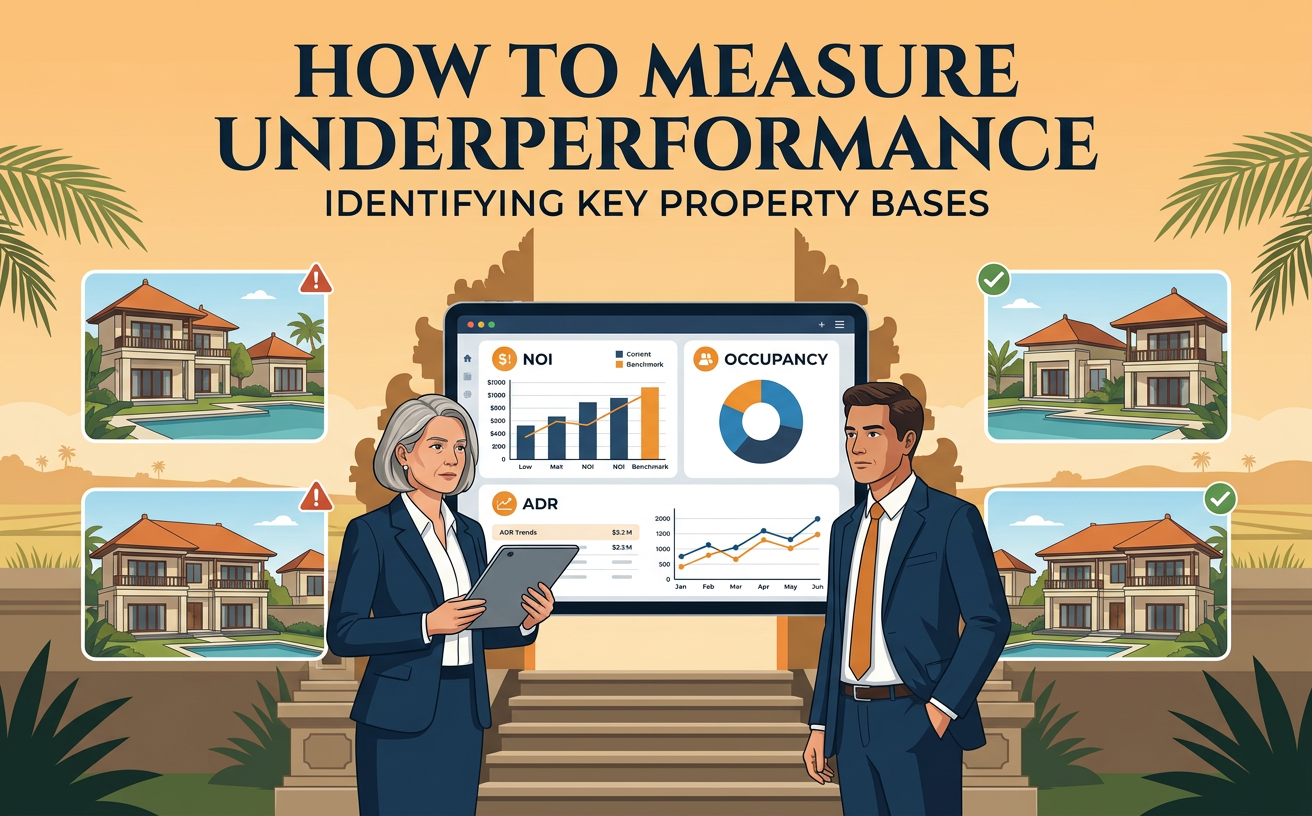
Identifying underperformance requires baseline metrics: net operating income, occupancy rate, ADR (average daily rate), and RevPAR (revenue per available room). Compare these KPIs against localized market benchmarks to see whether a property is capturing its fair share of demand. Often, underperformance stems from mismatches in pricing strategy, suboptimal marketing, or slow operational ramp-up rather than structural location problems.
Quantitative diagnosis should be paired with qualitative checks: guest experience, distribution channel mix, and operational efficiency. Small operational improvements — faster check-in, better channel management, or targeted promotions during shoulder seasons — can substantially close the gap between current earnings and market potential. The focus keyword for optimization here is Bali Property Revenue Calculator, a tool that speeds up this benchmarking by translating local data into instant revenue projections.
Checklist to diagnose underperformance
- Compare occupancy and ADR to nearby comparable villas or hotels.
- Audit channel performance: OTAs, direct bookings, and local partnerships.
- Review operational costs for opportunities to improve margins.
Using the Bali Property Revenue Calculator: Data-Driven Revenue Estimates

The Bali Property Revenue Calculator provides an immediate, data-backed projection of a property’s earning power by combining local demand indicators, seasonal patterns, and comparable rates. Rather than relying on anecdote or rough estimates, owners can input property type, area, and bedroom count to receive a realistic forecast of projected revenue and occupancy. This fast assessment helps identify whether a property is underperforming and quantifies the upside from targeted improvements.
For owners seeking the exact reference used in this analysis, the embedded resource and related materials are accessible at the provided link: https://www.youtube.com/embed/kXWyFZsi4xw. Pairing calculator outputs with an operational action plan allows investors to prioritize initiatives that deliver the highest incremental return within the shortest timeframe. The tool’s strength lies in converting market signals into executable revenue targets.
How to use the tool effectively
- Input accurate property specifications: area, bedroom count, and amenities.
- Cross-check projected ADR and occupancy with local comparable listings.
- Translate projected revenue into monthly targets to guide marketing and operations.
What Could Your Bali Villa Really Earn?
Strategies to Capture Time Value and Maximize Revenue
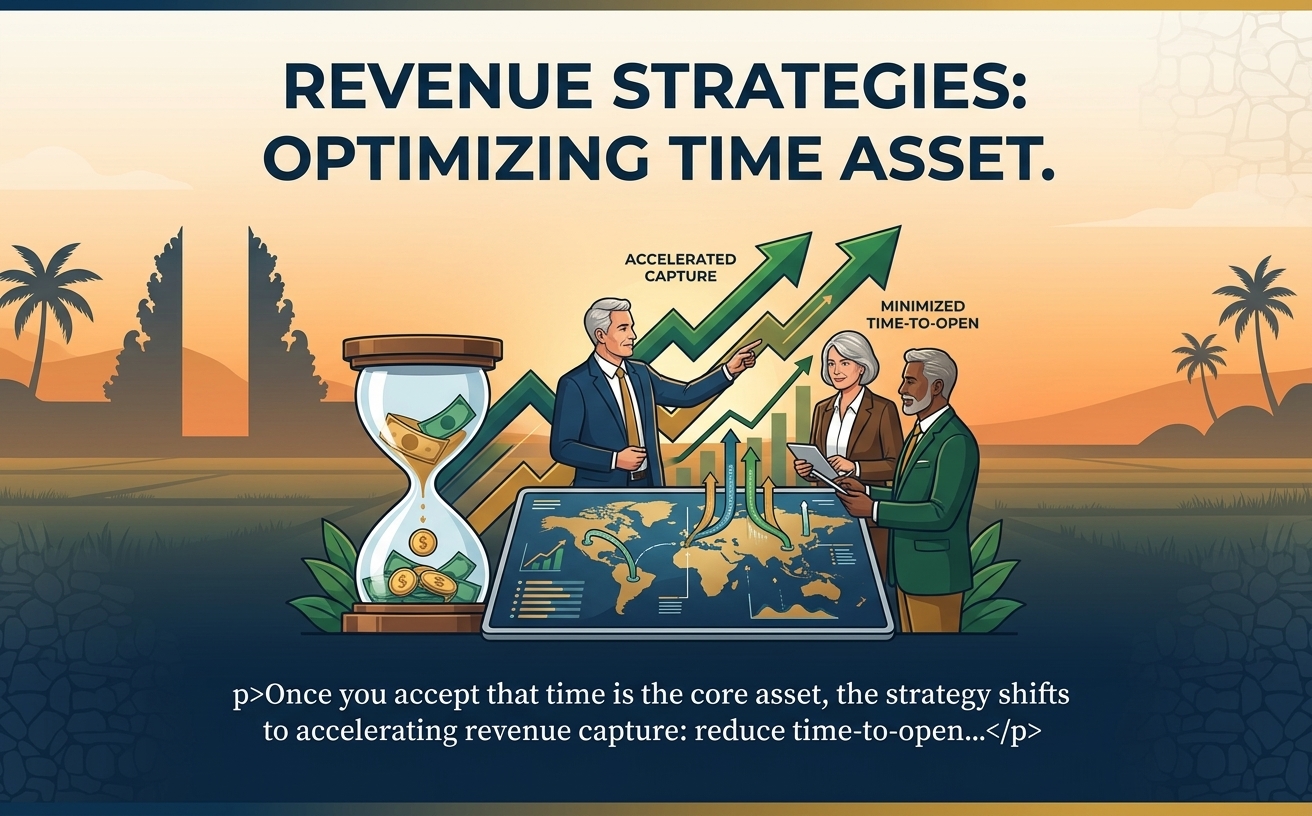
Once you accept that time is the core asset, the strategy shifts to accelerating revenue capture: reduce time-to-open, optimize pricing for immediate demand, and prioritize upgrades that increase nightly rates quickly. Short-term wins such as professional photography, listing optimization, and dynamic pricing integration can unlock swift improvements. Medium-term moves, like targeted renovations and experience packages, compound revenue over multiple seasons.
Operational efficiency is equally critical. Streamline guest communication, automate pricing updates, and build direct-booking channels to reduce distribution costs and improve margins. The compounded effect of time-focused strategies is measurable: faster path to stabilized occupancy and higher lifetime revenue per property. Prioritizing actions by payback period ensures you invest in the changes that capture the most time value first.
Priority action list
- Immediate: optimize listings, photography, and initial pricing.
- Short-term: implement dynamic pricing and channel management tools.
- Medium-term: renovate high-ROI features and develop guest experience packages.
Key Takeaways

- Reframe property purchases as investments in time and future revenue, not just land ownership.
- Use KPIs like ADR, occupancy, and RevPAR against local benchmarks to spot underperformance.
- The Bali Property Revenue Calculator translates market data into immediate revenue projections to guide decisions.
- Prioritize time-focused strategies: speed-to-market, listing optimization, and dynamic pricing for fastest impact.
Final word: treating property acquisition as buying time shifts strategy toward actions that accelerate revenue realization and unlock compounded lifetime earnings. Investors who combine data-driven benchmarking with rapid operational improvements capture the most value in Bali’s dynamic market. Use market tools, prioritize high-payback initiatives, and measure against local benchmarks to convert time advantage into sustained revenue growth.
Jason, Business Journalist at Bukit Vista