


The Brutal Reality of Seminyak Villa ROI 📉?
Unpacking analysis from Bali Business Review on YouTube, this report distills hard figures behind Seminyak 2-bedroom leasehold villas. Key datapoints include an average listing price of 3.8B IDR, gross annual revenue of roughly 302M IDR (7.9% gross), near-50% expense ratios, a compressed 3.9% net ROI, and a 25.3-year payback estimate.
Hi, I’m Jason, a Business Journalist at Bukit Vista, and I’ll be unpacking analysis from Bali Business Review. Today, we’ll dive into Seminyak villa ROI to offer clear, data-driven insights.
Market Snapshot: Pricing and Revenue Benchmarks
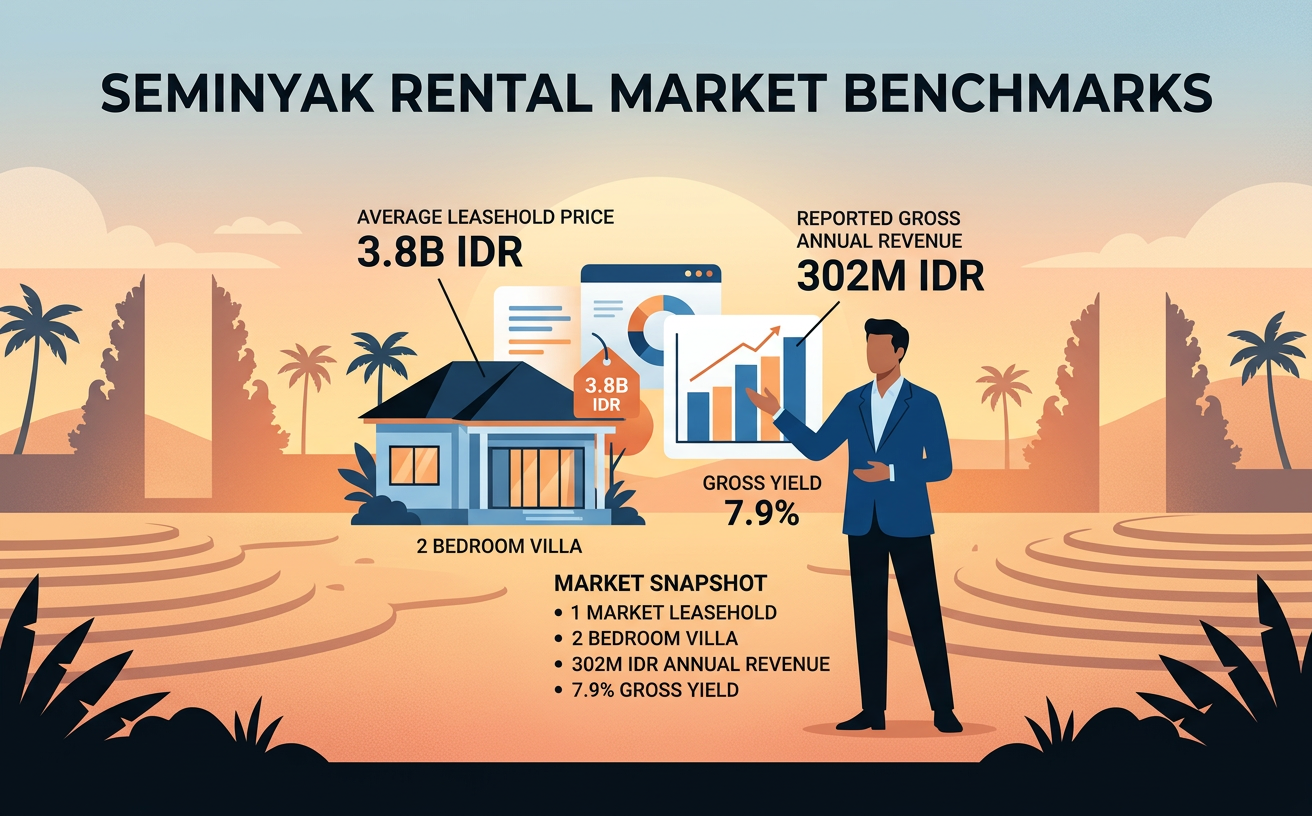
Seminyak remains a premium short-term rental market, and the dataset reviewed shows leasehold 2-bedroom listings averaging 3.8B IDR. Those assets report gross revenue around 302M IDR per year, equating to a 7.9% gross yield against asking price — a headline number that initially appears attractive versus many regional asset classes.
However, headline yields tell only part of the story: high acquisition prices, concentrated demand windows, and variable seasonality mean investors must stress-test occupancy and rate assumptions. Reference: original data source.
Snapshot details
- Average listing price: 3.8B IDR (leasehold)
- Reported gross annual revenue: ~302M IDR
- Gross yield: ~7.9% (gross revenue / listing price)
What Could Your Bali Villa Really Earn?
ROI Breakdown: From Gross Yield to Net Return

Gross yield of 7.9% collapses quickly once operating costs are applied. The analysis shows operational expenses, management fees, local taxes, and OTA commissions together consume nearly half of gross revenue, lowering net return to about 3.9%.
This compressed net ROI reflects real cash flow after recurring costs and provides a more accurate measure for investors than gross yield. Investors should model net cash-on-cash returns and sensitivity to occupancy drops rather than relying on headline percentages alone.
Components driving ROI compression
- Property management and housekeeping fees
- OTA commissions and marketing costs
- Local taxes, utilities, and maintenance reserves
Expense Structure and Operational Drag
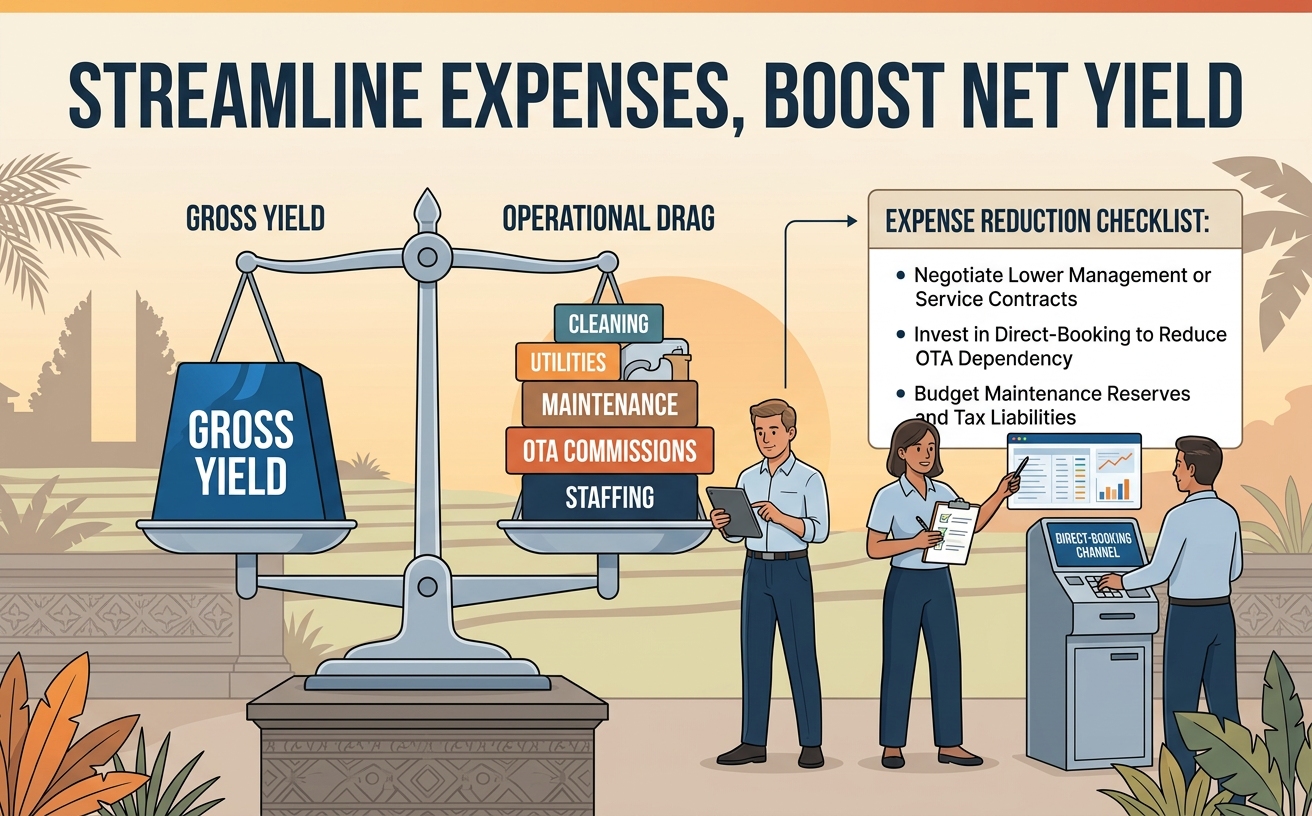
Operational expenses are the single largest factor turning an acceptable gross yield into a marginal net outcome. Fixed costs (taxes, lease payments where applicable) plus variable costs (cleaning, utilities, guest services) cumulatively approach 50% of gross revenue in the samples reviewed.
High reliance on OTAs increases commission exposure; effective direct-booking strategies and cost discipline in maintenance and staffing can materially improve net margins, but require professional management and local market expertise.
Expense reduction checklist
- Negotiate lower management or long-term service contracts
- Invest in direct-booking channels to reduce OTA dependency
- Budget realistic maintenance reserves and tax liabilities
Payback Period and Investment Risk
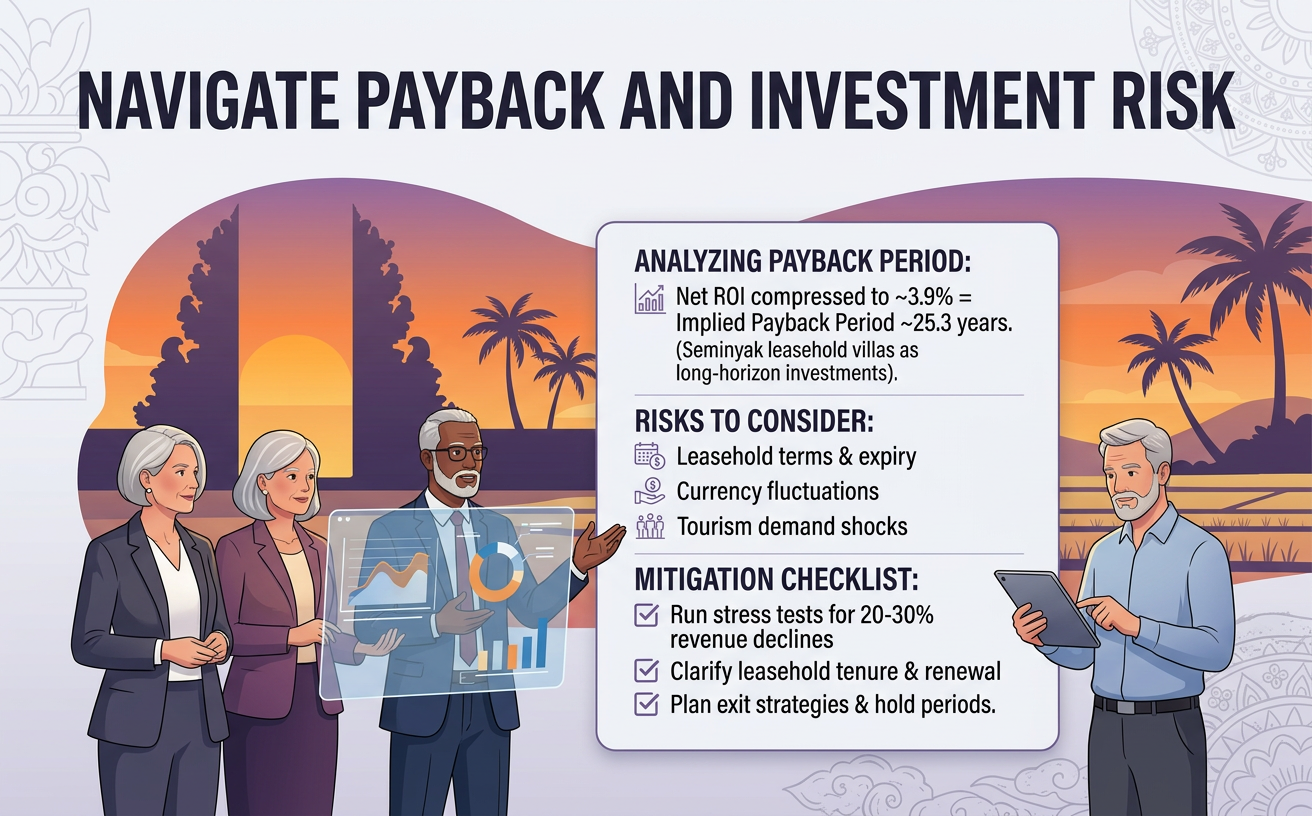
With net ROI compressed to roughly 3.9%, the implied payback period extends to about 25.3 years, assuming stable revenue and no capital appreciation. That timeline positions Seminyak leasehold villas as long-horizon investments, sensitive to regulatory shifts and market cycles.
Key risks include leasehold expiry terms, currency fluctuations, and tourism demand shocks. Conservative investors should test downside scenarios (reduced occupancy, rate declines) to understand how quickly cash flows could deteriorate and affect payback timelines.
Risk mitigation checklist
- Run stress tests for 20-30% revenue declines
- Clarify leasehold tenure and renewal mechanics
- Plan exit strategies and hold period expectations
Practical Recommendations for Prospective Buyers

Buyers should prioritize net yield modeling, not just gross percentages. Request audited operating statements, verify expense line items, and compare professionally managed versus owner-operated scenarios to quantify management drag.
Where possible, structure purchases with conservative financing, secure local management partners with track records in Seminyak, and factor in contingency reserves that extend beyond initial forecast horizons.
Due diligence checklist
- Obtain detailed P&L and occupancy curves for multiple years
- Validate local tax obligations and lease terms
- Compare offers across similar properties to benchmark expenses
Key Takeaways

- Headline gross yield (7.9%) masks a significant expense burden that cuts net returns roughly in half to ~3.9%.
- High expense ratios and OTA dependence extend the payback period to ~25.3 years, making Seminyak leasehold villas long-term, lower-liquidity investments.
- Effective cost management, direct-booking strategies, and rigorous due diligence can improve net returns but require professional execution.
Final word: Seminyak villas can still generate income, but the realistic investor view must focus on net ROI, expense control, and multi-decade payback expectations. Buyers seeking shorter payback or higher liquidity should compare alternative asset classes or negotiate purchase terms that improve cash-on-cash returns.
Jason, Business Journalist at Bukit Vista
You’re a property owner? Wondering What Could Your Bali Villa Really Earn?
Get a data-driven revenue projection based on your property type, area, and bedroom count. Discover your villa’s true earning potential in Bali.