


The Truth About Bali’s Overpriced Indian Food
We are unpacking content from Bali Business Review on YouTube to expose how marked-up Indian cuisine in Bali reflects wider market inefficiencies. The report highlights concrete price gaps, guest satisfaction signals, and actionable steps for hospitality owners to protect margins using local market data and revenue forecasting tools.
Hi, I’m Jason, a Business Journalist at Bukit Vista, and I’ll be unpacking analysis from Bali Business Review. Today, we’ll dive into The Truth About Bali’s Overpriced Indian Food to offer clear, data-driven insights.
Price Discrepancies and What the Numbers Reveal
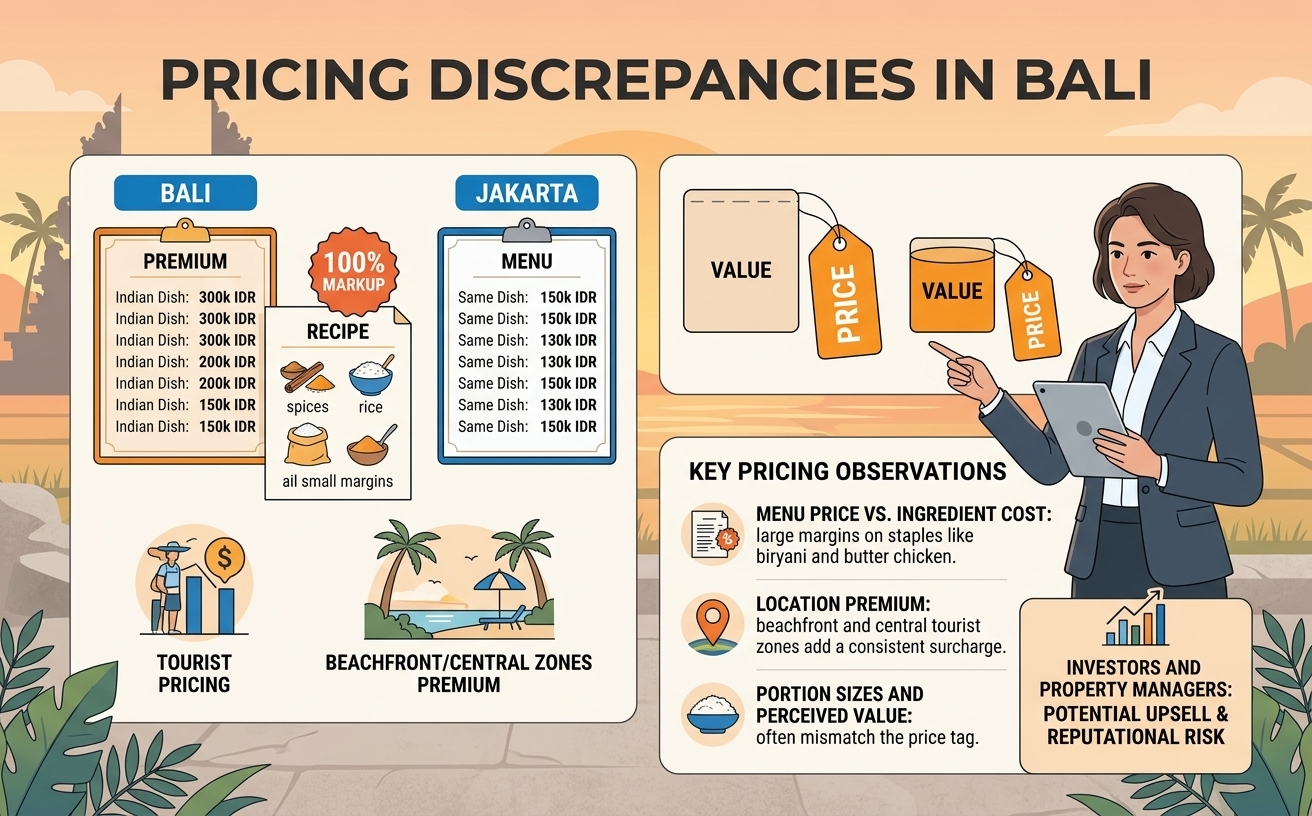
Local price checks and menu comparisons show Indian dishes in Bali often carry a 30–100% premium over similar offerings in Jakarta or local Balinese eateries. This markup is not always tied to ingredient costs; rather, it frequently reflects tourist pricing, perceived authenticity, and vendor positioning in high-footfall areas. For investors and property managers, these discrepancies represent both a potential upsell and a reputational risk if guest expectations are not met.
Key pricing observations
- Menu price vs. ingredient cost: large margins on staples like biryani and butter chicken.
- Location premium: beachfront and central tourist zones add a consistent surcharge.
- Portion sizes and perceived value often mismatch the price tag.
Operational Drivers Behind Overpricing
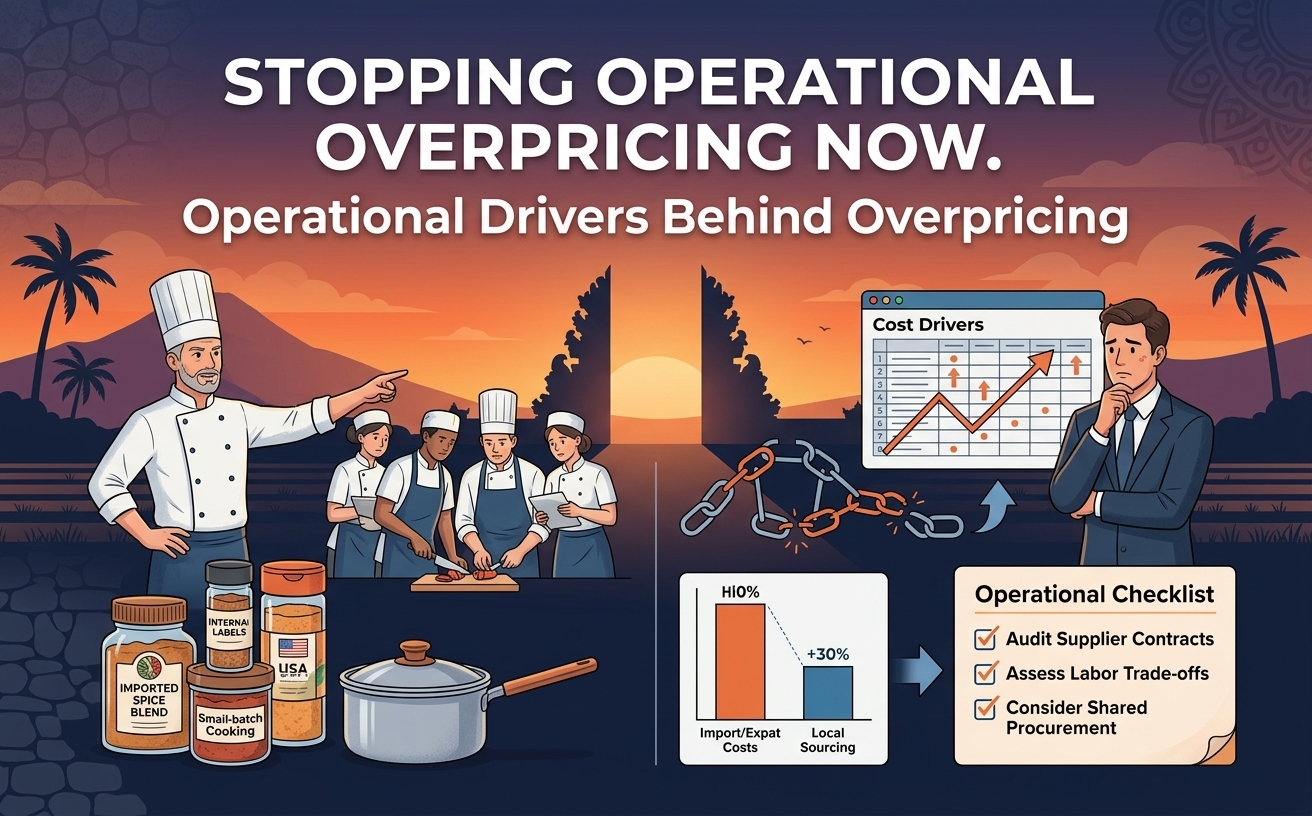
Several operational factors drive inflated prices: imported spice blends, reliance on expatriate chefs, small-batch production, and inconsistent supply chains that elevate costs unpredictably. Staffing and kitchen overheads—especially when training cooks to deliver ‘authentic’ flavors—also push owners to price higher to maintain profit thresholds. These structural cost drivers vary by scale, meaning small independent restaurants face sharper pressure than group operators.
Operational checklist for owners
- Audit supplier contracts to identify import premiums and replaceable items.
- Assess labor training vs. recipe standardization trade-offs.
- Consider economies of scale via shared procurement or local spice sourcing.
What Could Your Bali Villa Really Earn?
Impact on Hospitality, Guest Experience, and Property Revenue
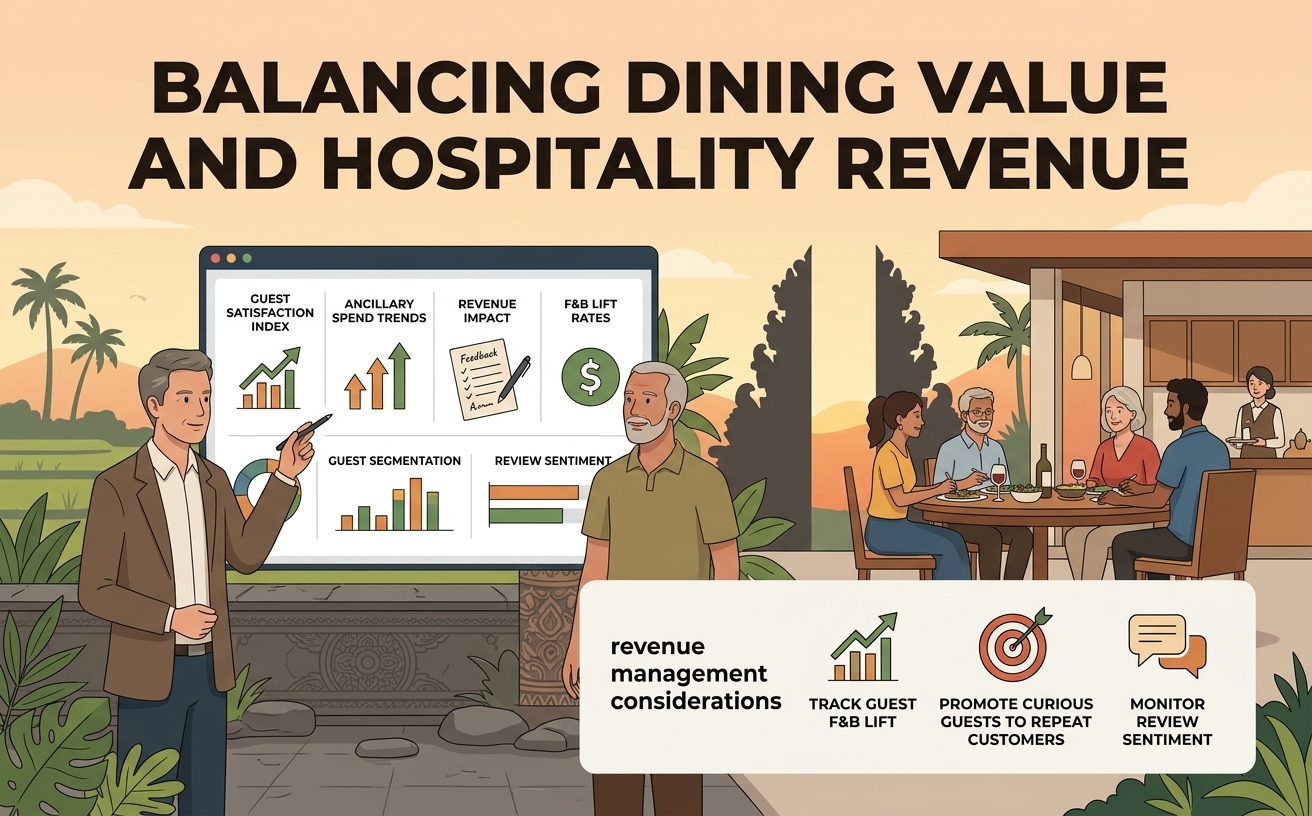
Overpriced dining can dent guest satisfaction and lead to lower ancillary spend if guests perceive poor value. For villa and hotel owners, this behavior translates into measurable effects on average daily revenue and guest reviews—which in turn influence future bookings. Understanding F&B pricing elasticity and guest segmentation is critical: some guests will pay a premium for convenience and perceived authenticity, while budget-conscious visitors will seek alternatives, affecting on-site revenue capture.
Revenue management considerations
- Track guest F&B lift rates and correlation with booking origin and length of stay.
- Use targeted promotions to convert curious guests into repeat customers.
- Monitor review sentiment related to meal value to inform menu adjustments.
How Market Data Should Inform Investment Decisions
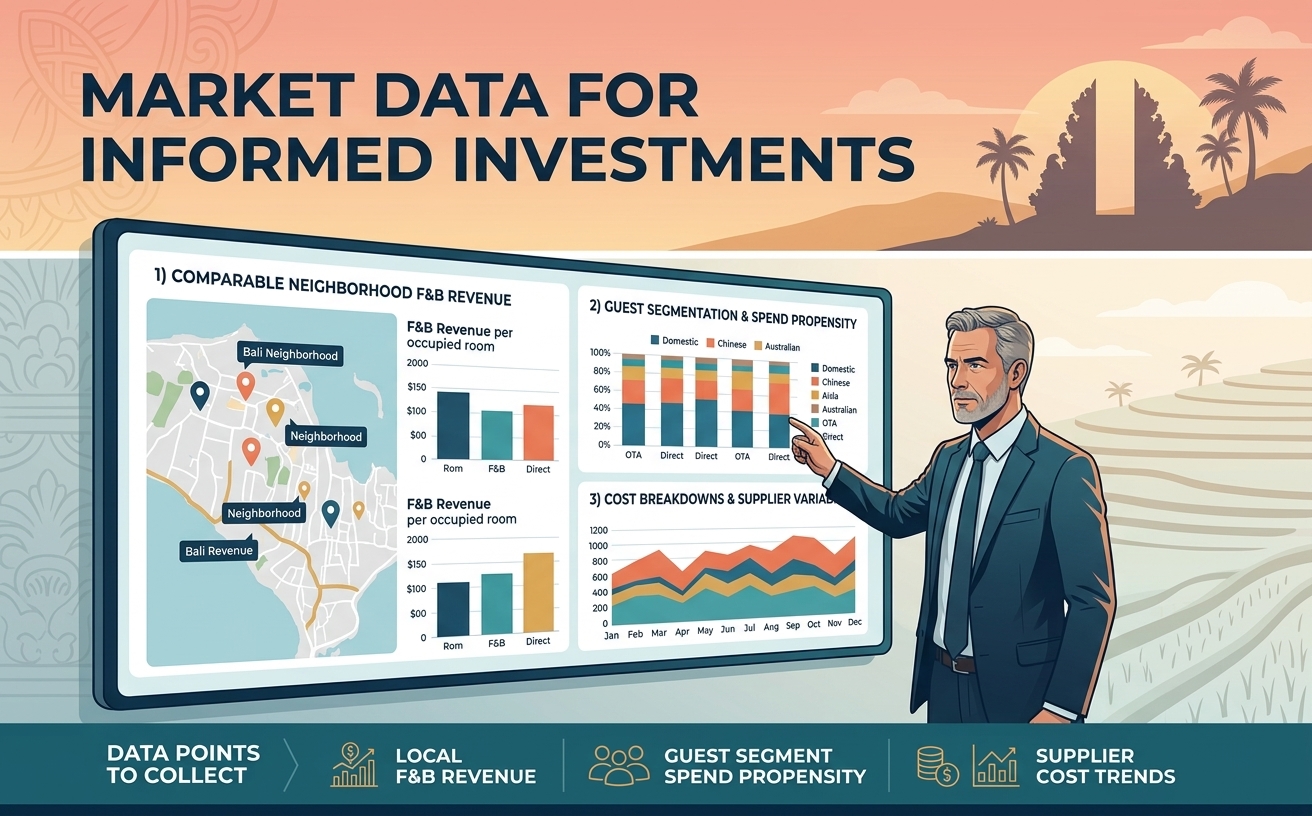
Raw anecdotes about overpriced menus are useful, but actionable decisions require structured market data—average prices, occupancy-linked F&B spend, and seasonal demand patterns. Investors assessing hospitality or food-service attached to properties must incorporate these datasets into revenue projections to avoid overestimating returns. That is where calibrated tools and local benchmarks become indispensable for risk-adjusted decision-making.
Data points to collect before investing
- Comparable F&B revenue per occupied room across the neighborhood.
- Guest segmentation and spend propensity by nationality and booking channel.
- Cost breakdowns for typical menus and supplier variability over 12 months.
Practical Steps: From Menu Fixes to Strategic Positioning
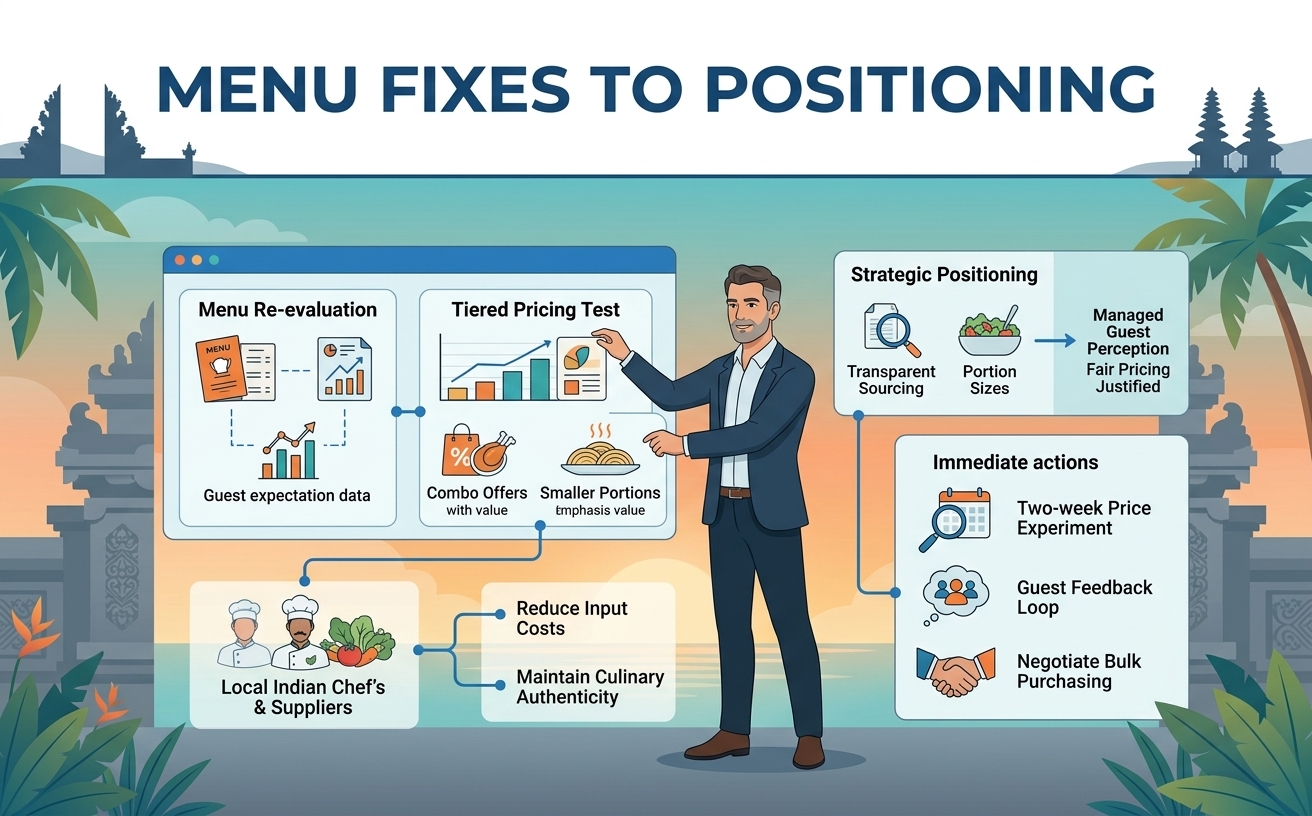
Owners can mitigate negative effects by re-evaluating menus to match guest expectations, testing tiered pricing, and emphasizing value through combo offers or smaller portion options. Partnering with local Indian chefs or community suppliers can reduce input costs while preserving culinary authenticity. Strategic positioning—promoting transparency about sourcing and portion sizes—also helps manage guest perception and justify fair pricing.
Immediate actions to implement
- Run a two-week price experiment on high-margin items and track lift.
- Introduce a guest feedback loop specific to F&B value perception.
- Negotiate bulk or cooperative purchasing with nearby properties.
Key Takeaways
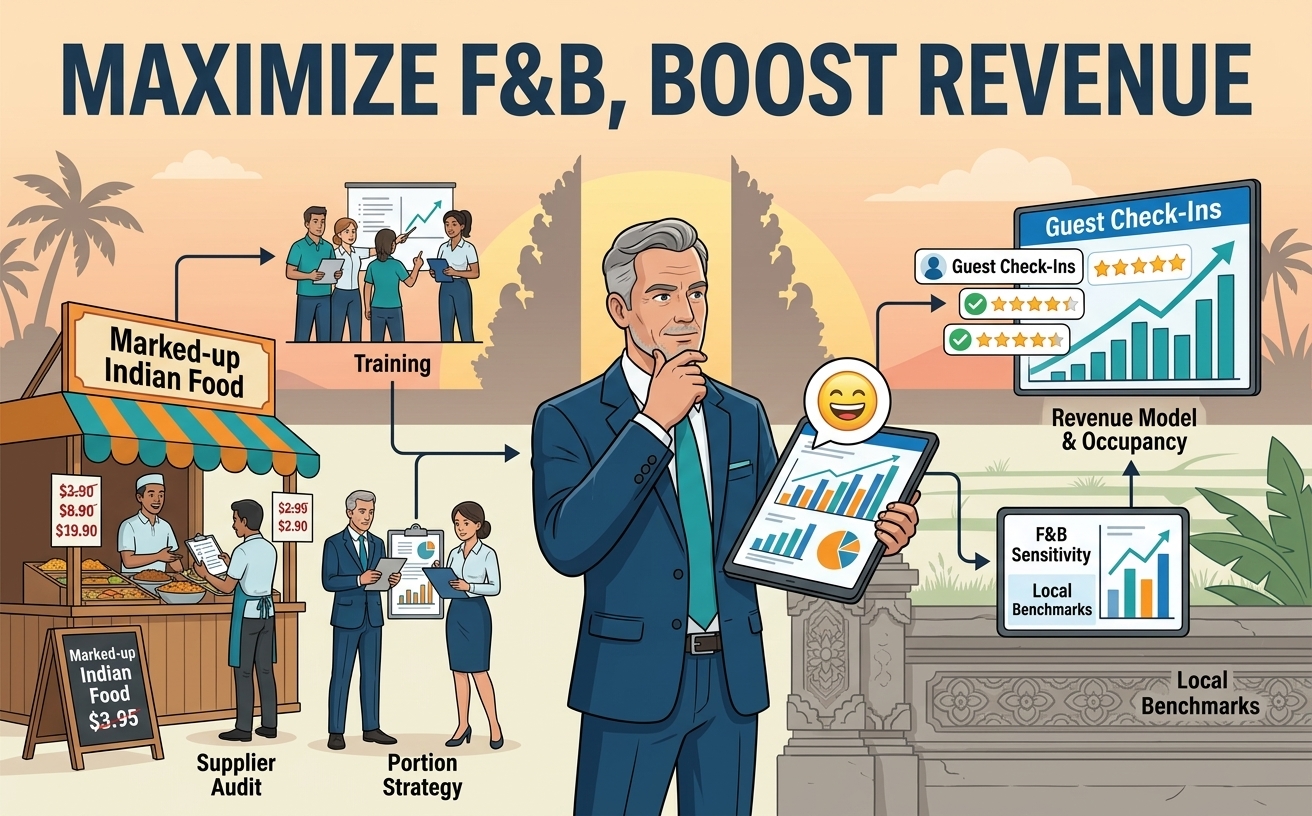
- Marked-up Indian food in tourist zones is often driven more by perception and location than by actual ingredient costs, creating both opportunity and risk for owners.
- Operational fixes—supplier audits, staff training balance, and portion strategy—can materially reduce unnecessary markups while protecting margins.
- Guest satisfaction and online sentiment directly influence future bookings; overpriced F&B risks compounding into lower occupancy and ADR over time.
- Data-driven tools and local benchmarks are essential; use revenue models that include F&B sensitivity to avoid over-optimistic investment projections.
Final word: overpriced menu items are a symptom of larger market inefficiencies that can erode property returns if left unchecked. By combining on-the-ground operational changes with rigorous market data—such as the Bali Property Revenue Calculator—owners and investors can more accurately model revenue, reduce downside risk, and build sustainable F&B strategies. Reference source link: YouTube video.
Jason, Business Journalist at Bukit Vista
You’re a property owner? Wondering What Could Your Bali Villa Really Earn?
Get a data-driven revenue projection based on your property type, area, and bedroom count. Discover your villa’s true earning potential in Bali.