


We are unpacking content from Bali Business Review on YouTube to report a striking paradox in Ubud: near-capacity parking lots and crowded attractions coincide with noticeably empty retail streets. Analysts and business owners cite shifting consumer habits, lingering pandemic effects, and structural economic pressures as core data points behind this retail crisis.
Hi, I’m Jason, a Business Journalist at Bukit Vista, and I’ll be unpacking analysis from Bali Business Review. Today, we’ll dive into Ubud retail crisis and tourism paradox to offer clear, data-driven insights.
Full Parking Lots Reflect High Tourist Footfall
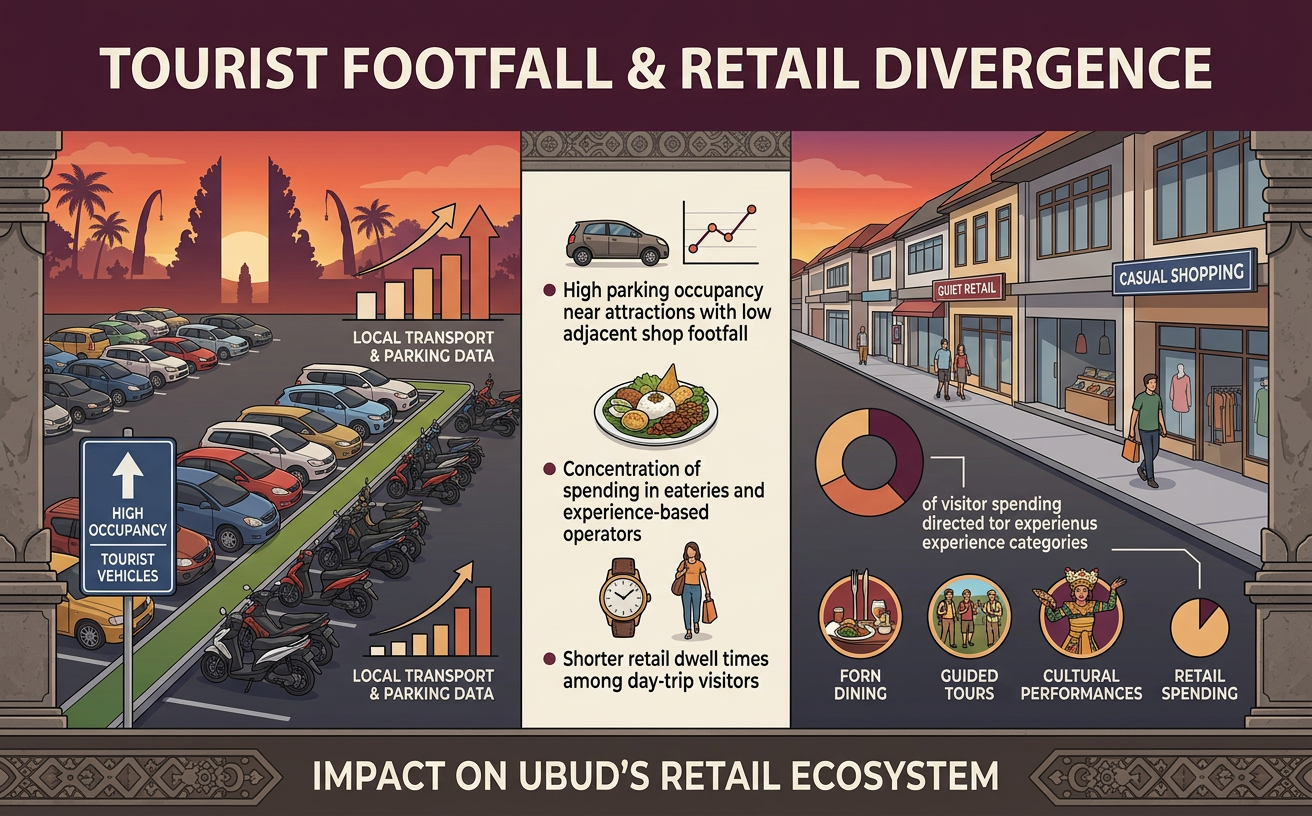
Observed parking occupancy around Ubud’s major attractions regularly reaches high levels, indicating strong visitor arrivals and active tourism flows. The contrast between vehicles queuing for parking and quiet shopfronts suggests that tourists are present but their spending patterns are not following the traditional retail path. Local transport and parking data point to sustained arrival numbers, reinforcing that the issue is not visitor scarcity but allocation of visitor time and spending.
This divergence highlights a structural change where tourism volume no longer guarantees street-level retail sales. Many visitors appear to prioritize curated experiences—dining, guided tours, cultural performances—over casual shopping, which reduces incidental purchases on retail streets. For Ubud’s retail ecosystem, high footfall in parking zones without commensurate retail conversion is an early indicator of a deeper mismatch between tourism demand and retail supply.
Observational indicators
- High parking occupancy near attractions with low adjacent shop footfall
- Concentration of spending in eateries and experience-based operators
- Shorter retail dwell times among day-trip visitors
Empty Retail Streets Despite Strong Tourist Numbers
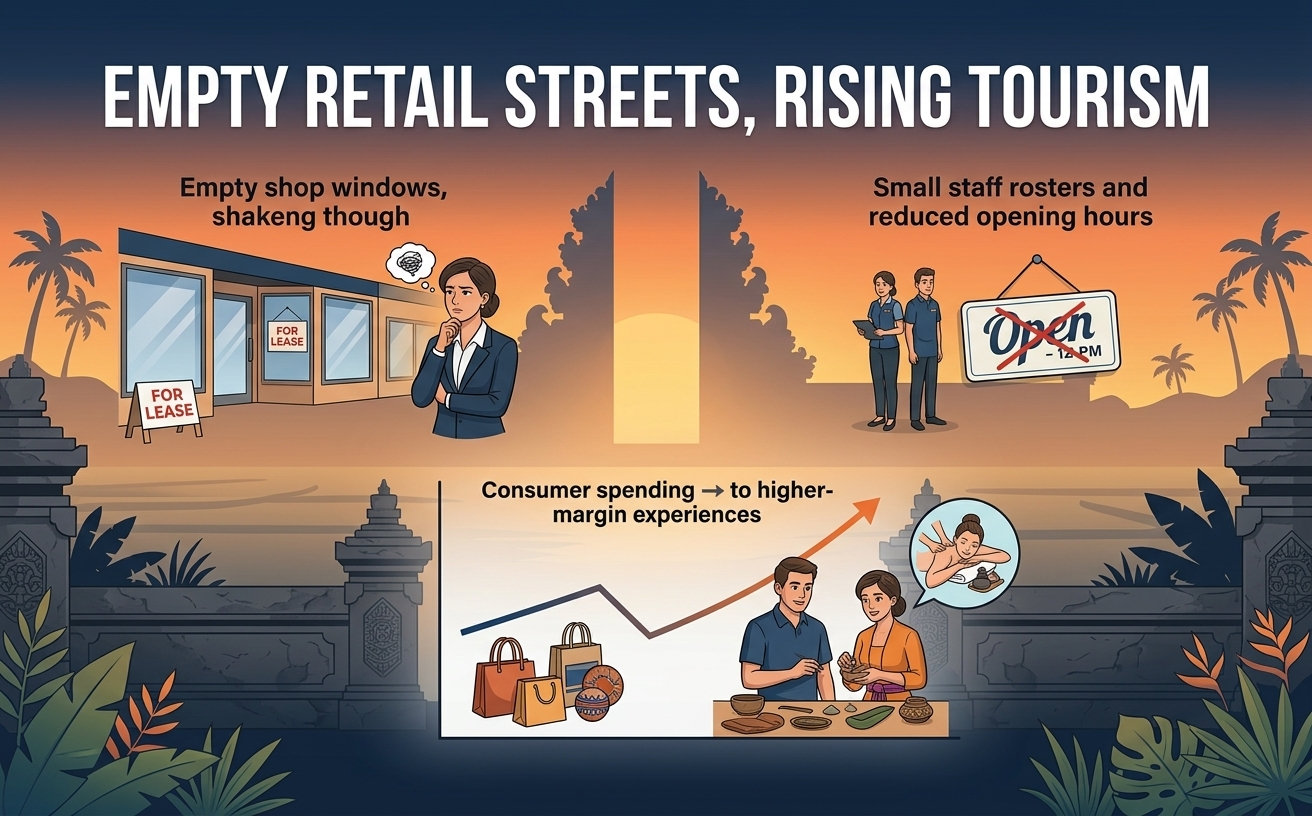
Shopfront vacancy and reduced pedestrian traffic on Ubud’s main retail strips are visible signs of an ongoing retail crisis. Business owners report longer vacancies, smaller transaction values, and reduced repeat purchases, even during peak tourist periods. The empty streets contrast sharply with expectation: a vibrant tourist town should normally see bustling markets and gift shops, but Ubud’s streets now reflect a deeper decline in traditional retail activity.
Several practical dynamics contribute to the empty streets: elevated rents and operating costs push small retailers into unsustainable margins, while the profile of arrivals—short-stay day trippers or experience-focused visitors—reduces the propensity to shop. This creates a geography of tourism where parking and primary attractions capture visitors, while secondary retail corridors suffer from underutilization and business attrition.
Signs of retail stress
- Longer empty shop windows and increased “for lease” signs
- Smaller staff rosters and reduced opening hours
- Shift of consumer spending to higher-margin experiences rather than physical retail
What Could Your Bali Villa Really Earn?
Why Tourism Isn’t Translating into Retail Sales
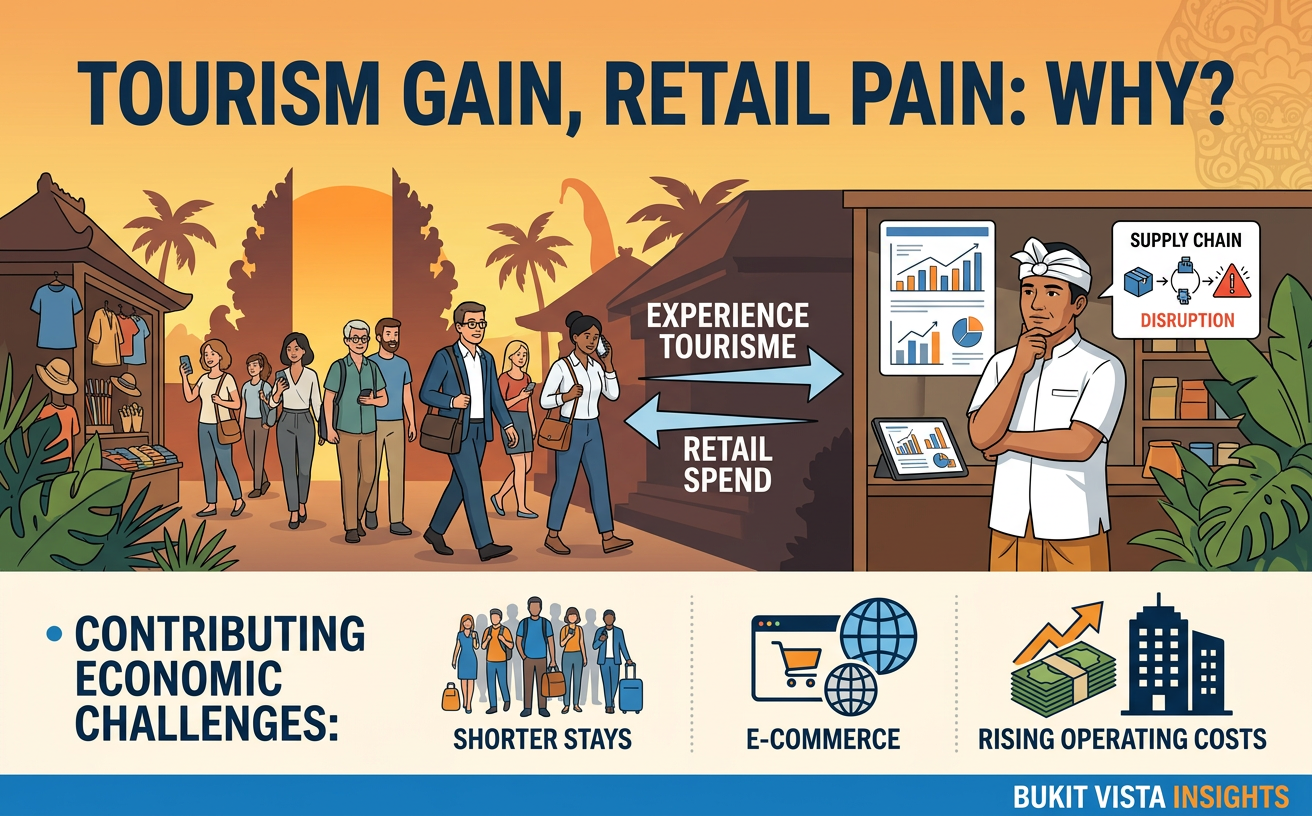
Multiple demand-side and supply-side factors explain why high tourism rates have not translated into robust retail performance. On the demand side, visitor preferences have evolved: experience-led tourism, mobile-first booking behavior, and a preference for dining and wellness over shopping reduce retail spend. On the supply side, rising rents, costly local compliance, and supply chain disruptions increase operating costs for retailers, squeezing margins and limiting promotional capacity.
Lingering pandemic effects continue to reshape consumer confidence and spending patterns; travelers may attend attractions but limit discretionary retail purchases to manage budgets. Additionally, digital marketplaces and international e-commerce capture souvenir and specialty-buying behaviors that previously benefited local shops. Together, these trends form a compound effect that undermines street-level retail even as tourism metrics such as arrivals and parking occupancy appear healthy.
Contributing economic challenges
- Changing visitor demographics and shorter stays
- Competition from online sellers and international platforms
- Rising fixed costs for local retailers, including rent and utilities
Implications for Local Businesses and Policy Responses
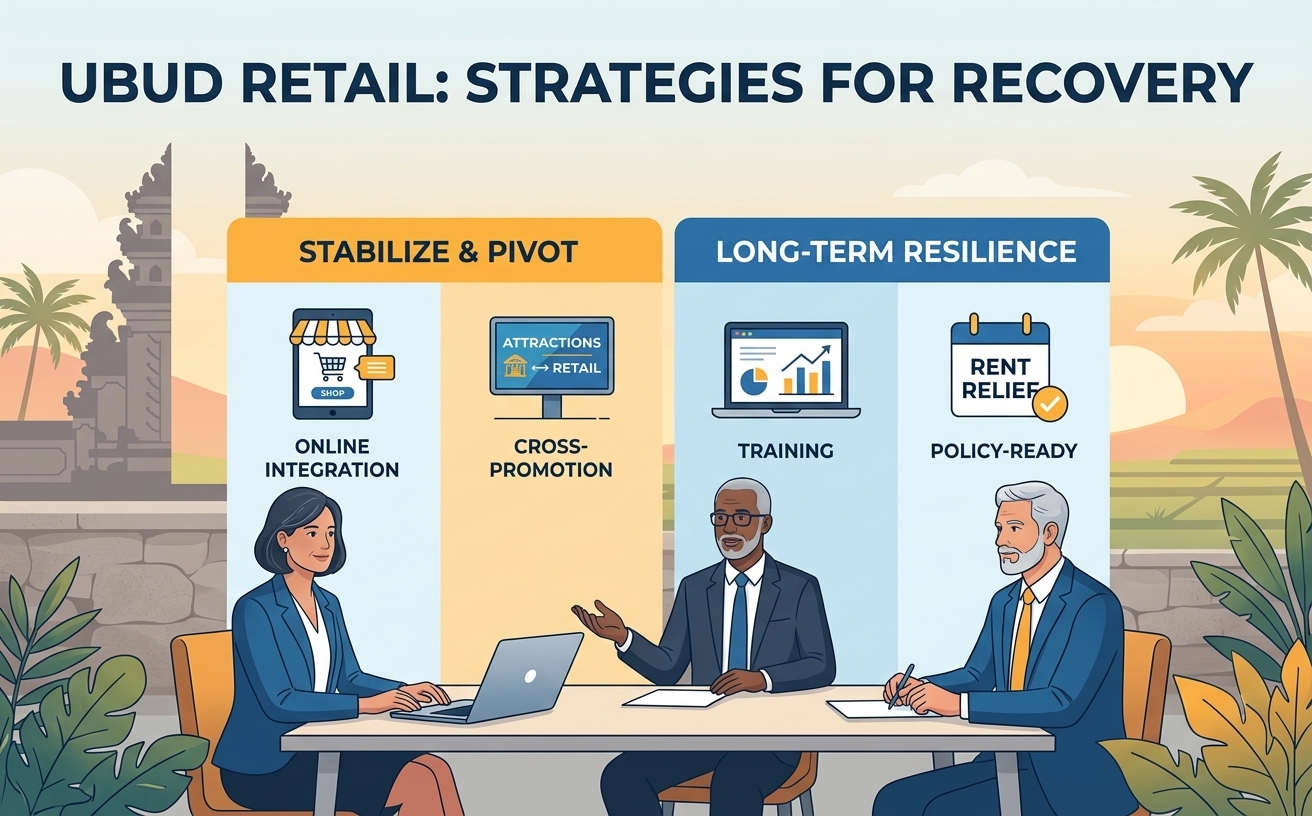
The retail crisis in Ubud demands adaptive strategies from businesses and targeted interventions from policymakers. For retailers, pivoting toward experience-driven offers, integrating online sales channels, and collaborating on cross-promotion with attractions can help capture a share of tourist spending. For local authorities and landlord groups, temporary rent relief, business support programs, and incentives for diversified retail concepts could stabilize the retail landscape while visitor patterns evolve.
Longer-term solutions require aligning tourism development with retail activation—creating incentives for mixed-use spaces, supporting training for retailers on digital marketing, and coordinating event programming that channels visitor flows into retail corridors. Addressing structural economic challenges will be essential to reverse vacancy trends and restore vibrant street-level commerce in Ubud despite ongoing tourism pressures.
Action checklist for recovery
- Develop experience-led retail offerings to match tourist preferences
- Support digital adoption and cross-promotion for small retailers
- Explore temporary fiscal measures to ease fixed-cost burdens
Key Takeaways
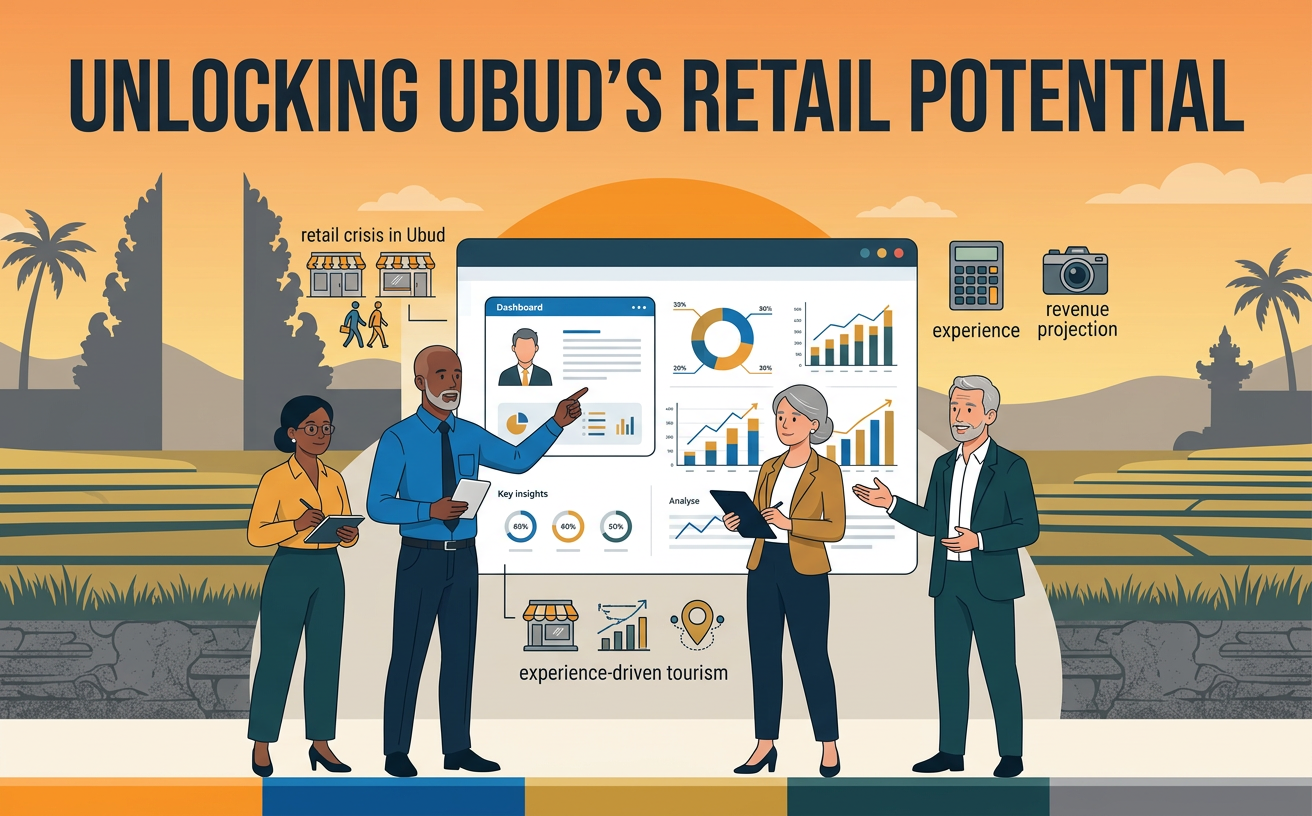
- Ubud is experiencing a paradox: high tourism indicators like full parking lots coexist with a retail crisis marked by empty streets.
- Shifts toward experience-driven tourism, online competition, and rising local costs are key reasons retail is not benefiting from visitor arrivals.
- Local businesses should pivot to experience-led and digital strategies while policymakers consider targeted relief and activation measures.
- Recovery requires coordinated action that aligns tourism flows with retail activation and supports small business resilience.
The Ubud case underscores a broader lesson for destination economies: tourism volumes alone do not guarantee retail vitality. Converting arrivals into sustained local spending requires adapting retail offerings, easing structural economic pressures, and aligning urban design with visitor behavior. Addressing the retail crisis in Ubud will determine whether the town can translate its tourism recovery into inclusive economic gains for local businesses.
Jason, Business Journalist at Bukit Vista
You’re a property owner? Wondering What Could Your Bali Villa Really Earn?
Get a data-driven revenue projection based on your property type, area, and bedroom count. Discover your villa’s true earning potential in Bali.