

Lombok’s 3 Layer Real Estate Goldmine: How to Assess Value, Demand & Revenue Potential

Unpacking core data and practical guidance from Bali Business Review on YouTube, this report distills Lombok’s three-layer investment thesis into actionable metrics. It highlights occupancy drivers, price-per-night trends, and infrastructure catalysts that collectively define short- and long-term revenue upside for investors.
Hi, I’m Jason, a Business Journalist at Bukit Vista, and I’ll be unpacking analysis from Bali Business Review. Today, we’ll dive into Lombok’s 3 Layer Real Estate Goldmine to offer clear, data-driven insights.
What Could Your Bali Villa Really Earn?
The 3-Layer Model Explained
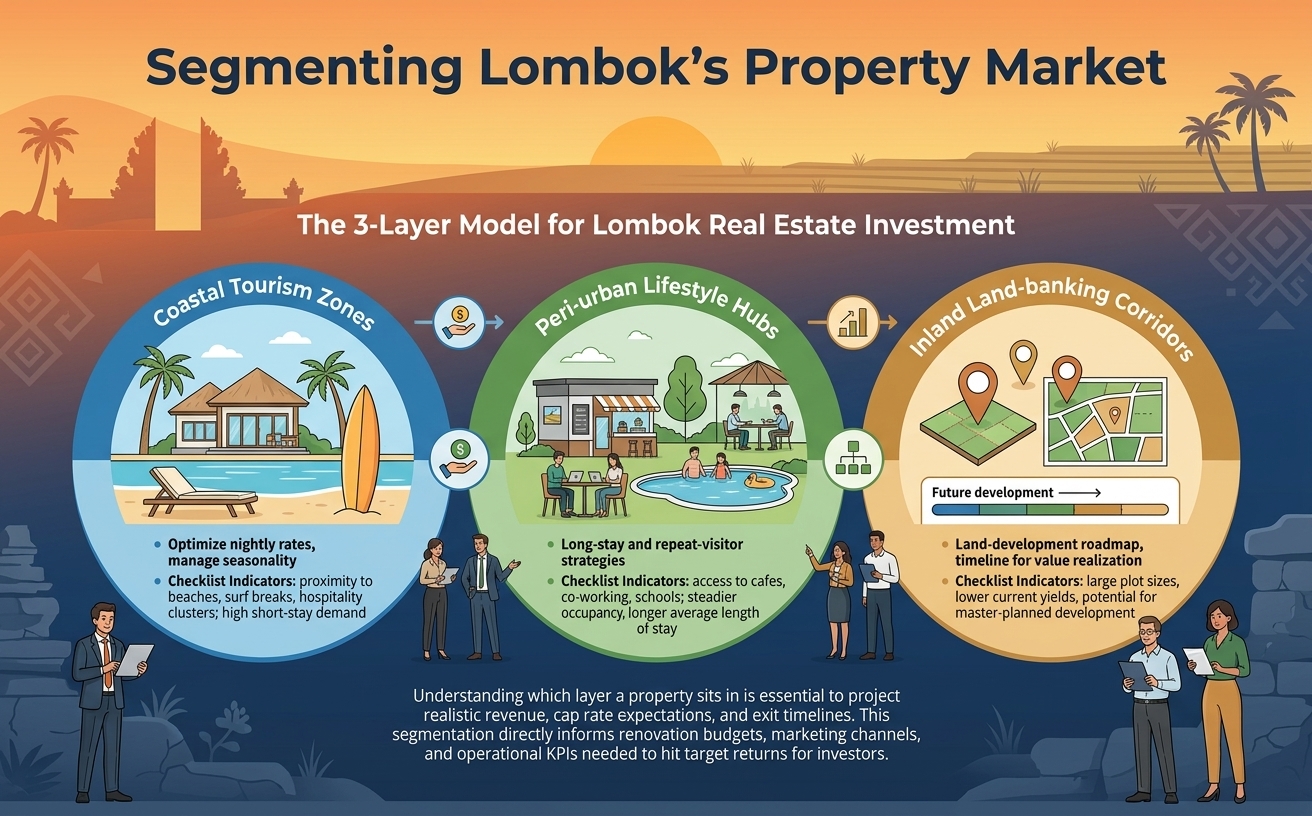
The creator frames Lombok’s opportunity as a concentric three-layer model: coastal tourism zones, peri-urban lifestyle hubs, and inland land-banking corridors. Each layer drives different demand segments—short-stay leisure visitors on the coast, longer-stay digital nomads and families in lifestyle hubs, and speculative appreciation inland. Understanding which layer a property sits in is essential to project realistic revenue, cap rate expectations, and exit timelines.
For investors, the model functions as a segmentation tool to match product type with market demand. Coastal villas should prioritize nightly rate optimization and seasonality management, peri-urban properties need long-stay and repeat-visitor strategies, while inland assets require a land-development roadmap and timeline for value realization. This segmentation directly informs renovation budgets, marketing channels, and operational KPIs needed to hit target returns.
Checklist: Layer Indicators
- Coastal: proximity to beaches, surf breaks, and hospitality clusters; high short-stay demand.
- Peri-urban: access to cafes, co-working, schools; steadier occupancy and longer average length of stay.
- Inland: large plot sizes, lower current yields, potential for master-planned development.
Tourism and Demand Dynamics

Lombok’s tourism trajectory underpins the three-layer thesis. International arrivals and domestic weekend traffic to Lombok have shown consistent growth patterns driven by surf tourism, eco-tourism, and overflow from Bali. This rising tide lifts short-stay demand in coastal zones and increases the pool of mid-term renters for lifestyle hubs, supporting higher achievable occupancy and ADR (average daily rate) over time.
Key demand drivers include improved flight connectivity, diversified tourism offerings (beaches, trekking, cultural routes), and shifting traveler behavior seeking less-crowded alternatives to Bali. Owners should track arrival volumes, source-market composition, and length-of-stay trends to calibrate pricing cadence and inventory strategy. These metrics determine seasonal forecasting and whether to prioritize nightly revenue or long-stay discounts in marketing plans.
Demand Metrics to Monitor
- Monthly passenger arrivals and route frequency
- Average length of stay and repeat visitation rates
- ADR and occupancy by micro-area (beach vs. hub vs. inland)
Infrastructure, Accessibility & Strategic Location

Lombok’s infrastructure upgrades—airport expansions, improved road links, and gradual utility upgrades—are pivotal to converting latent land value into realized income. Proximity to a modern airport or a sealed highway can turn a submarket from low-demand to highly investible within a few years. Investors must map current and planned infrastructure against property location to estimate appreciation timing and operational cost shifts.
Strategic location analysis should include micro-level accessibility (last-mile roads, parking, service access), utility reliability, and local planning regulations. Properties near planned hospitality clusters or integrated resorts typically benefit from spillover demand; however, these also require higher capital intensity during development. Incorporate infrastructure timelines into financial models to avoid valuation mismatches and to plan capital calls or phased development accordingly.
Infrastructure Red Flags
- Unconfirmed or delayed public works that the business case relies on
- Poor utility access leading to higher operational CAPEX
- Zoning restrictions that limit intended use or unit mix
What Could Your Bali Villa Really Earn?
Financial Performance & the Free Revenue Calculator
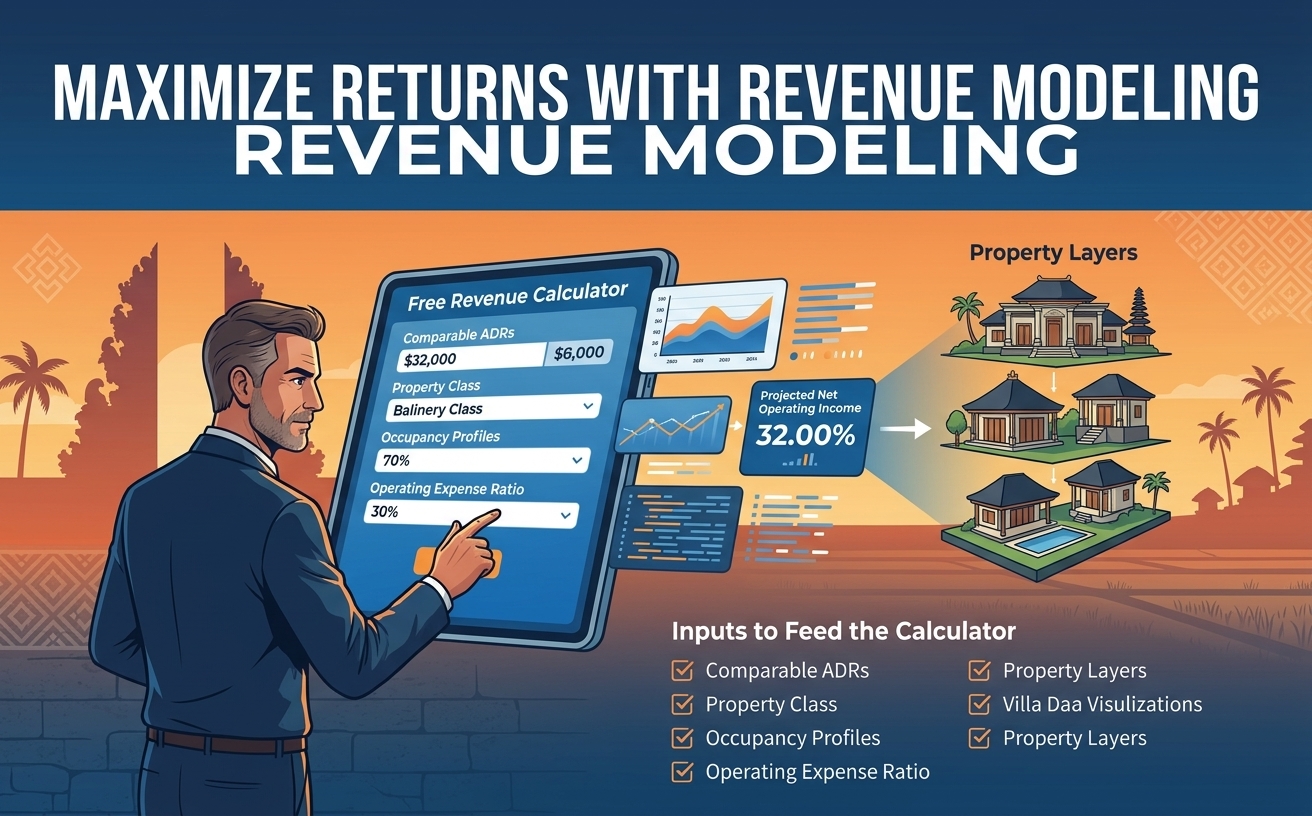
Translating Lombok’s market signals into investor returns requires disciplined revenue modeling. Key inputs include realistic occupancy profiles per layer, achievable ADR by property class, operating expense ratios, and cap rates that reflect local liquidity. The piece points to a free revenue calculator that uses market-level inputs to generate instant revenue projections—useful for sanity-checking headline yields before committing capital.
Practical modeling steps are: benchmark ADRs from comparable listings, set conservative occupancy ramps, apply local tax and management fee assumptions, and run sensitivity on seasonality. This yields a range of net operating incomes and implied cap rates, enabling side-by-side comparisons across the three layers. Investors should stress-test scenarios including lower ADRs and higher vacancy to assess downside resilience.
Inputs to Feed the Calculator
- Comparable ADRs and occupancy by micro-location
- Renovation and furnishing costs amortized over useful life
- Operating costs: management, utilities, maintenance, local taxes
Risks, Valuation, and Due Diligence

No goldmine is without risk; Lombok’s upside comes with governance, liquidity, and execution hazards. Regulatory uncertainty, title clarity, and variable local enforcement can materially impact timelines and cost. Thorough due diligence—title searches, zoning verification, environmental constraints, and community engagement—reduces execution risk and protects valuation assumptions.
Valuation should reflect market depth: coastal short-stay properties often trade at premium multiples given revenue visibility, while inland plots demand patience and a development plan. Investor strategies should match risk appetite: income-focused buyers prioritize proven demand pockets and operational partners; value-seekers pursue inland plays with clear masterplan potential. Always build exit scenarios and contingency capital into the plan.
Due Diligence Essentials
- Independent land/title verification and encumbrance checks
- Local regulation, building permit timelines, and tax implications
- Operational partner track record and management fee structures
What Could Your Bali Villa Really Earn?
Key Takeaways
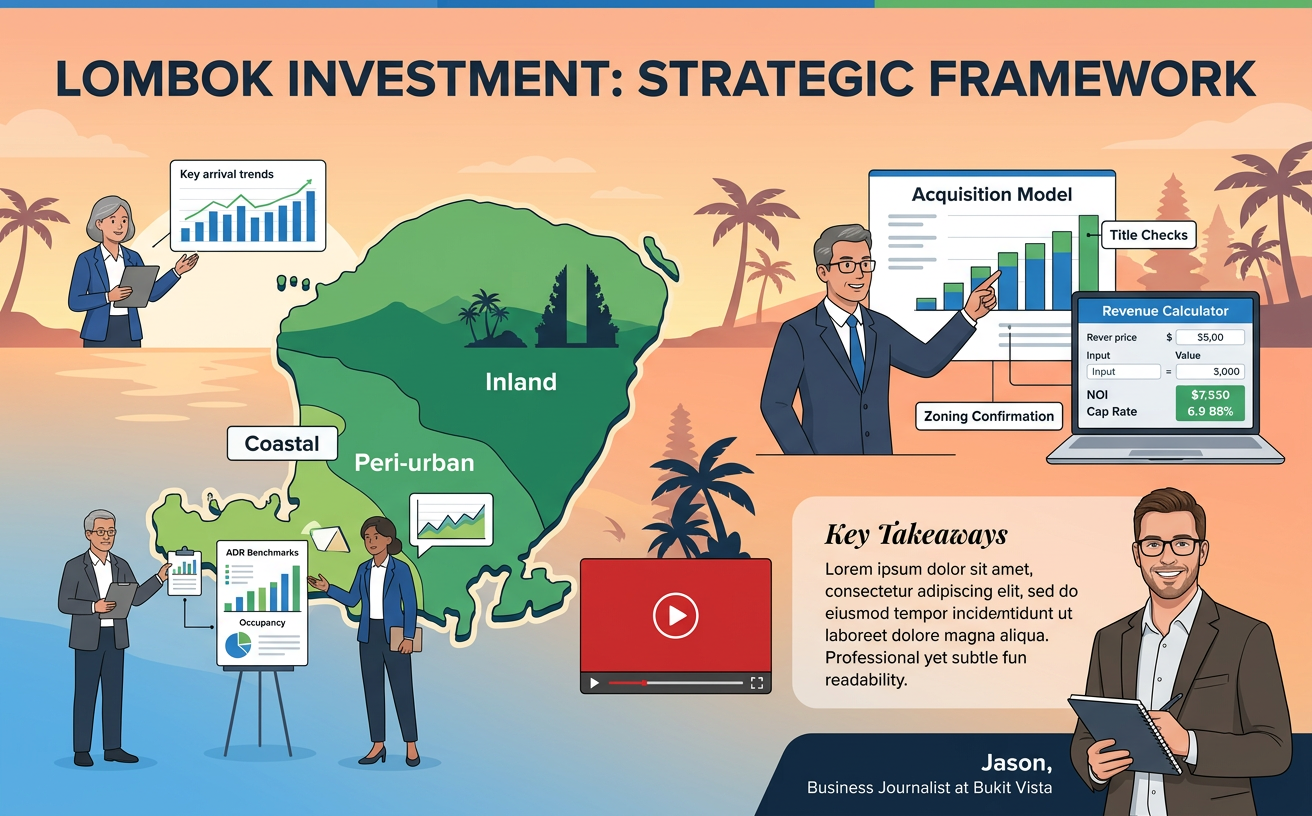
- Segment Lombok into three actionable layers—coastal, peri-urban, inland—to match product with demand and set realistic revenue targets.
- Base forecasts on arrival trends, ADR benchmarks, and occupancy seasonality; use conservative ramps when modeling returns.
- Infrastructure timelines and proximity to connectivity hubs materially influence appreciation and operational viability.
- Leverage the free revenue calculator to convert market inputs into comparable NOI and implied cap rates before acquisition.
- Mitigate execution risk through exhaustive title checks, zoning confirmation, and a clear operational partner strategy.
Final word: Lombok’s three-layer framework provides a structured way to evaluate opportunity, but returns are earned through rigorous data-driven underwriting and disciplined execution. Matching asset type to the correct demand layer, stress-testing financials, and verifying infrastructure timelines will separate speculative bets from scalable investments.
Jason, Business Journalist at Bukit Vista
You’re a property owner? Wondering What Could Your Bali Villa Really Earn?
Get a data-driven revenue projection based on your property type, area, and bedroom count. Discover your villa’s true earning potential in Bali.