


Why Businesses in Bali Are Failing: The Top Cause, Data-Driven Fixes & Revenue Tools
Unpacking content from Bali Business Review on YouTube, this report synthesizes primary facts and operational data pointing to cashflow and forecasting failures as the leading cause of business exits in Bali. The analysis highlights recurring revenue shortfalls, occupancy volatility, and missed pricing signals that undermine sustainability.
Hi, I’m Jason, a Business Journalist at Bukit Vista, and I’ll be unpacking analysis from Bali Business Review. Today, we’ll dive into Why Businesses in Bali Are Failing to offer clear, data-driven insights.
Primary Cause: Cashflow and Forecasting Failures
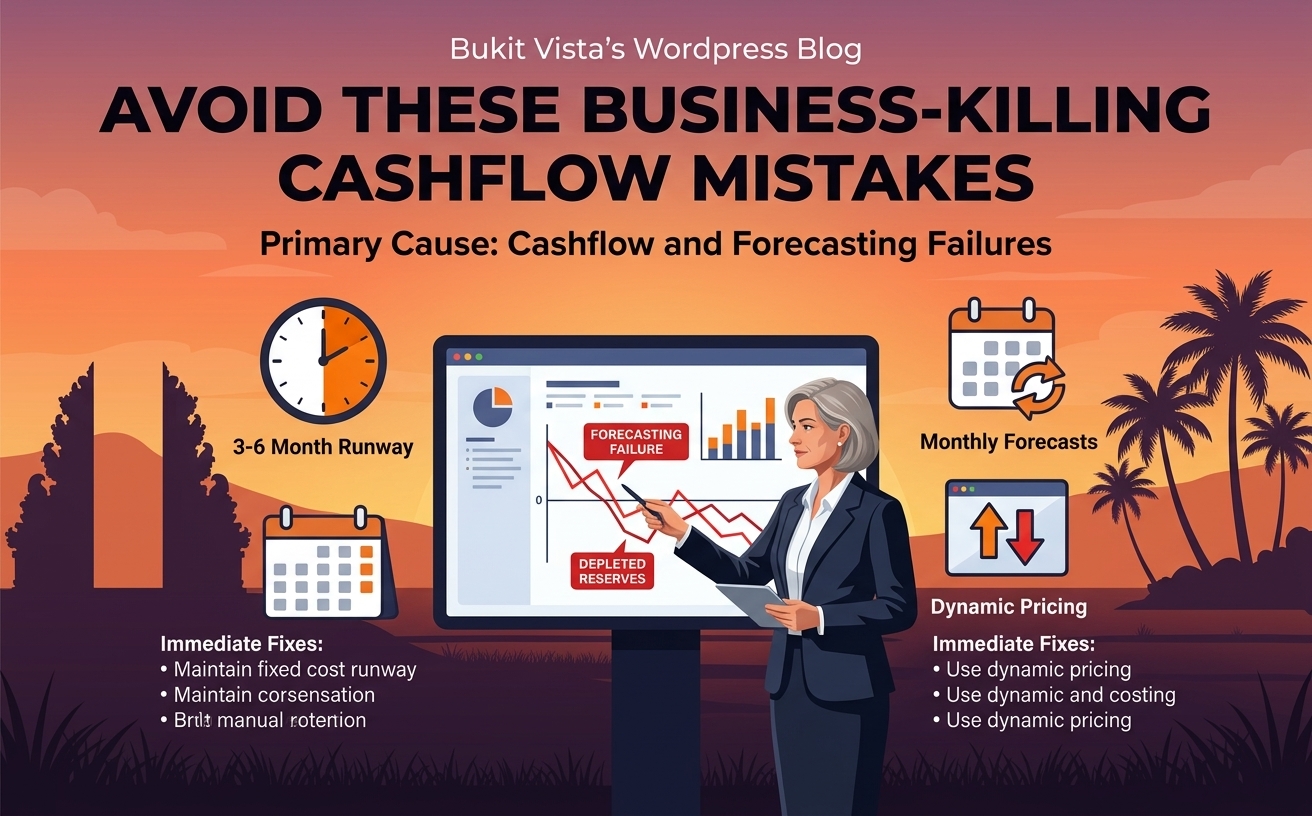
Across sectors, the dominant failure mode is insufficient cashflow planning and poor demand forecasting. Operators often rely on optimistic occupancy assumptions without scenario modeling for low seasons, unexpected cost spikes, or booking cancellations. That gap leaves businesses unable to bridge shortfalls, rapidly depleting operating reserves and forcing premature closures.
Signs and immediate fixes
- Maintain a minimum operating runway covering 3-6 months of fixed costs.
- Implement monthly cashflow forecasts and stress-test them for low occupancy scenarios.
- Use dynamic pricing and channel mix strategies to protect revenue during off-peak periods.
What Could Your Bali Villa Really Earn?
Market Misalignment: Pricing, Positioning and Offer Mismatch

Many Bali businesses underprice or misposition their offering relative to demand and guest expectations. Without clear segmentation and pricing rules, properties bleed revenue on commoditized bookings and miss premium guests willing to pay more for differentiated experiences. Properly aligned pricing and product-market fit directly improve RevPAR and long-term viability.
Checklist to realign market fit
- Audit customer reviews and adjust amenities to match target guest segments.
- Create tiered pricing and value-add packages for high-value periods.
- Benchmark competitor rates and occupancy on a weekly cadence.
Operational Gaps: Staffing, Cost Control and Seasonality

Operational inefficiencies—from inconsistent staffing models to uncontrolled supply costs—compound financial stress. Seasonal swings in occupancy demand flexible staffing and cost structures; failing to adapt leads to bloated fixed costs in slower months. Streamlined operations tied to occupancy forecasts preserve margins and increase resilience.
Operational interventions
- Adopt flexible contracts and cross-training to scale staff with demand.
- Negotiate supplier terms and monitor utility usage with monthly KPIs.
- Introduce a seasonal budget with contingency reserves for off-peak months.
Distribution and Digital Visibility Failures
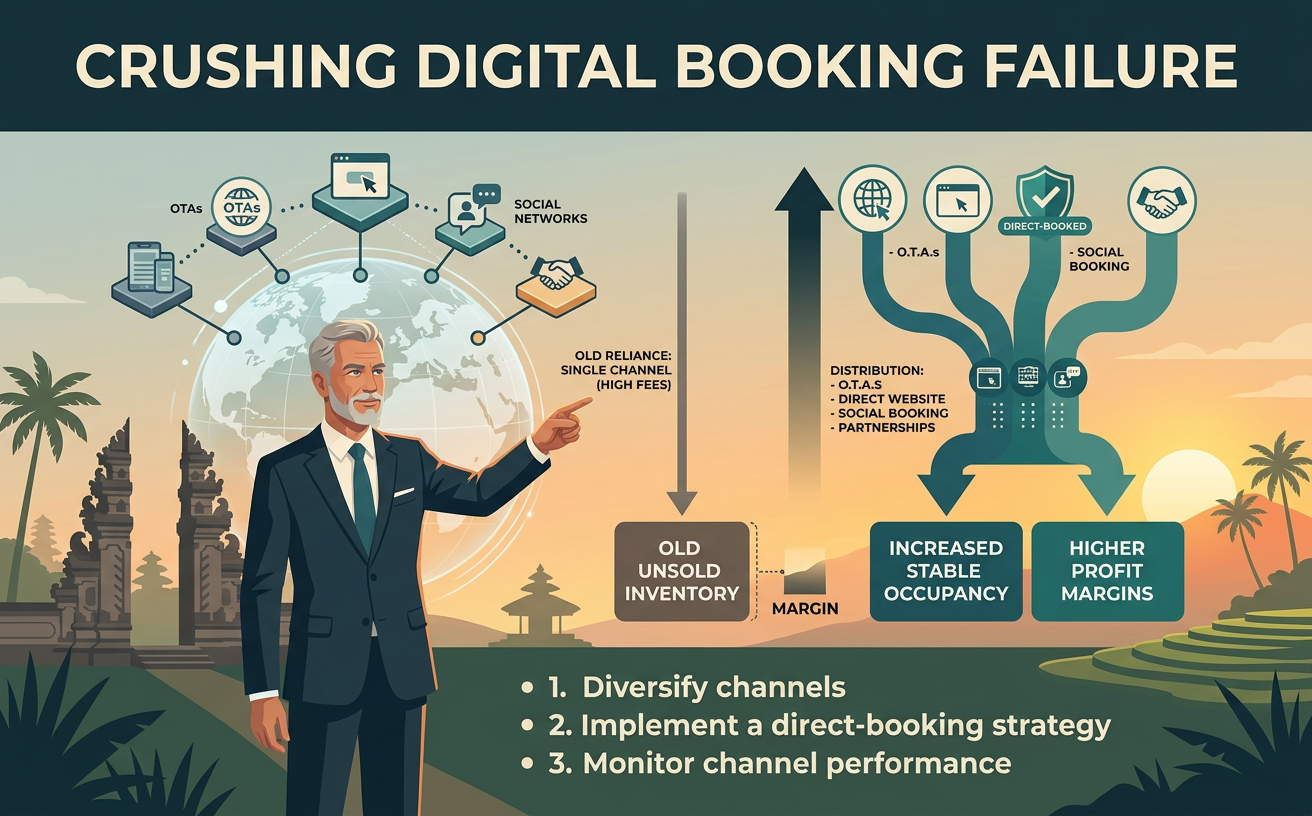
Poor channel management and weak digital marketing leave inventory unsold or sold at low margins. Reliance on a single booking channel increases vulnerability to algorithm changes and commission rate shifts. A balanced distribution mix combined with direct-booking incentives reduces fees and stabilizes occupancy.
Distribution best practices
- Diversify channels: OTAs, direct website, social booking, and partnerships.
- Implement a direct-booking strategy with clear incentives to reduce dependency on high-fee platforms.
- Monitor channel performance with weekly attribution to optimize spend.
Data-Driven Fixes and How Bukit Vista Supports Recovery

The path to stability is evidence-based: regular forecasting, dynamic pricing, and outsourced operational excellence. Bukit Vista’s property management services centralize distribution, pricing, and housekeeping management to remove execution risk and improve margins. Complementary tools like the Bali Property Revenue Calculator help owners benchmark potential revenue and run realistic scenarios.
Immediate, actionable steps
- Run a revenue projection using the Bali Property Revenue Calculator to set realistic expectations and budgets.
- Adopt dynamic pricing and integrated channel management to maximize occupancy and ADR.
- Consider professional management to reduce operating variability and free owner bandwidth for strategic decisions.
Key Takeaways
- Cashflow forecasting is the single largest preventable cause of business failure in Bali; maintain a 3-6 month runway and monthly stress-tested forecasts.
- Market fit and pricing alignment increase RevPAR; audit positioning and implement tiered pricing strategies.
- Operational flexibility and cost control across staffing and suppliers preserve margins during seasonal dips.
- Diversify distribution and incentivize direct bookings to lower commission expense and increase yield.
- Use data tools like the Bali Property Revenue Calculator and consider Bukit Vista’s management services to translate strategy into consistent performance.
Final word: failure in Bali is rarely sudden—it’s the result of recurring planning and execution gaps. Businesses that adopt data-driven forecasting, flexible operations, diversified distribution, and professional management reduce risk and create predictable revenue streams. For property owners, using benchmarking tools and professional partners transforms vulnerability into scalable opportunity.
Jason, Business Journalist at Bukit Vista